| Alternatives Ways by Sandee Rager |
| Alternative Ways By Sandee Rager, This is a new point of view regarding treatments and rehabilitation of brain injury. New Therapies have been incorporated to the treatment of medical conditions as chronic pain and others. Perhaps some of these new therapies may be helpful for brain injury patients too.. Gabriel G. de la Torre, Neuropsychologist and founder of IBIR. |
 |
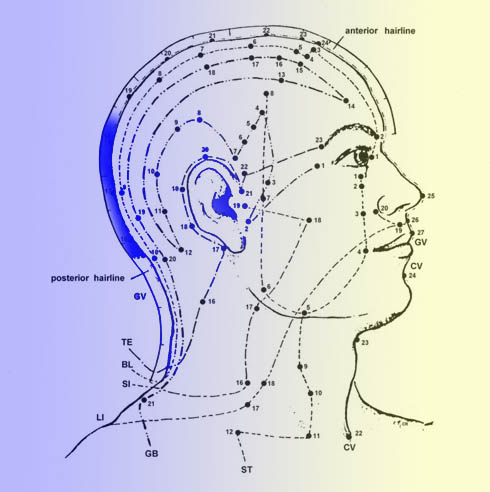
| --------------------------------------------------------------------------------------------- Alternative Ways By Sandee Rager With more and more people paying more attention to their health, they look for alternative methods to living healthier and longer. Modern medicine can be costly and toxic to a person�s body. There are numerous alternative ways to aid and heal a body and/or brain after an injury. After a brain injury, more attention should be place on care of the brain. And that can be a life long commitment. The benefits of Myomassology, proper nutrition, enzyme therapy, and acupuncture are numerous, therapeutic and long lasting. Myomassology (massage therapy) is a relaxing and healthy tool for the body. It increases blood flow, circulation and lymphatic drainage in the body. "Kind of puts you in a state of euphoria," Boguski said. Michelle Boguski, Dearborn, Michigan, has been a Myomassologist for the past nine years. She works for a health club and spa in Dearborn and also out of her home. Myomassology is an excellent way to help the brain and body to feel good and help healing. Before starting, people should talk to a doctor or a reputable Myomassologist and ask questions; such as references, affiliations and background information. If the answers aren�t suitable, keep looking. There are several types of therapy a person can receive in this field; touch for health, Cranial Sacral Therapy, deep tissue massage, and basic massage. Touch for health is a therapist holding fingers over certain acupuncture points to free up energy in the body, to release what is stuck. When a person sees a Myomassologist they should go with no expectations of any kind. Everyone is unique; energy, spirit. "We�re no healers, we�re facilitators," Boguski said. "Both people work together. The whole thing with massage is to unconditionally give." Cranial Sacral Therapy is gentle manipulation (five grams of pressure) working directly with the bones of the face and skull and the cranial sacral fluid to find where disharmony is in the body. This is good for someone with a brain injury from time to time, but not for all injuries such as brain tumors or aneurysm. The therapist works the rhythm and motion of the skull bones. There is motion and movement to every bone. If there is no movement or rhythm, there is pain and discomfort. "Whenever there�s pain, there�s dysfunction," Boguski said. "That�s what we try to do is get rid of pain and free up the energy." Deep tissue massage deals with Rolfing. It is done is a six week session, once a week. It is massage done on the muscle with more than average pressure. Structural integration is worked; posture and other things will be better. It is recommended for at least a year after an injury, but talk to a doctor about recover time for you body. Basic massage can be full body or to specific area�s of the body. Call an accredited massage school for referral for a therapist. Proper nutrition can augment healing. Looking at a food pyramid according to the RDA is a good map. With that, minerals and vitamins work well. A multi-mineral/multi-vitamin has a combination of all the basics in one form. Herbs to consider are Gingko Biloba, Gotokolu, St. John�s Wort, and Siberian Ginseng. Those are good for various aspects of the brain and stress in the body. Specifically, DHA is an essential fatty acid in fish oils and is extremely important for the brain and eyes. Jeanne Powers, Ypsilanti, Michigan, has been a nurse for 35 years and works with the geriatric. "That�s a long time, I�m getting up there," Powers said and laughed, Powers has a son with brain injury and has helped his healing with nutrition and her knowledge of the brain in connection with nutrition. When neurons are damaged due to injury, reconnection or those neurons helps if it starts soon enough. This will also help reconnect synapses as well. Along with essential fatty acids that fish oils provide, breast milk is good for the brain also. If a brain is looked at during development, a whole different set of nutrients is available to the fetus that is provided from the mother. Breast mild provides extra nutrients that are not available in other foods. Antioxidants are an important part of this healing puzzle to have. Most are in fruits and vegetables. People tend to be low in antioxidants to begin with. Vitamin C and E are good to take. The brain is 60% fat and 30% of that is from long chain fatty acids (DHA). The body needs more natural oils to function at it�s best. Partially hydrogenated oils are synthetic oil and should be avoided by a person with a brain injury, Powers suggests. Brain synapses require long chain fatty acids to be efficient. She waved her arm in an S motion to demonstrate the wavy and flexibility of it. L.C.F.A. are important to the brain and central nervous system. The biological importance of those acids is their role as a metabolic precursor. Melotonin is the most powerful antioxidant. It works in the water in a cell and in lipids. The body make is in the dark. Acetylcholine is a neurotransmitter for memory. Choline helps to reconnect neurons. "You don�t totally re-grow neurons," Powers said as she drew a diagram to demonstrate. "You get what you get. You wanna save everything you have. After a brain injury, perhaps they need to supplement melotonin and more choline." Powers is working on research in nutrition, antioxidants and more factors in addition to it. Every person is unique and so is his or her brain, with or without a brain injury. To help the brain in healing, each person may have to take different approaches to it. If a brain injury is looked at like a city in a hurricane, different parts of the city are destroyed. Those areas need different and specific attention and needs. One area may need water but not food, where as another area may need food but not water. Other areas need clothing, shelter and fire. The brain is very much like that after an injury. Various different areas that are damaged could require specific care and needs. Acupuncture is an ancient, yet complete system used to treat, help prevent disease, and aid in trauma done to the brain and body. It points are connected to specific organs and structures in the body. It deals with the energy that circulates throughout the body. Specific types of needles are used. Like with massage therapy, Acupuncture therapy does not treat disease, it allows the body to work and heal itself by correcting and releasing the flow of energy. According to Mark Rojek, Dexter, Michigan, acupuncture can stimulate the release of endorphins (the body�s own pain killer), alters levels of neurotransmitters (such as serotonin) and regulate hormones. Rojek is a certified Acupuncturist and works at the Optimal Health Medical Center, Ann Arbor, Michigan. He�s has formal education and training in Traditional Chinese Medicine in Chicago, Illinois and Racine, Wisconsin. He�s also had internships, certification and training in Guangzhou, China and Windsor, Canada. He also specializes in Enzyme Replacement Therapy. "Enzyme therapy is essential," Rojek said. "Using enzymes to do the work that the body is not able to do anymore." Every function in the body uses enzymes. It opens up the blood flow to places in the brain and body that is injured. Enzyme therapy is taken orally."You give the body specific nutrients and it will heal itself that much faster," Rojek said. |
 |
 |