| Q | |||
|
MUSIC :: ITS INESCAPABLE EFFECTS << back l page 2
Music is Food for the Brain
Researches on the effects of music on students while in the classroom and while studying discovered that students who study music lead to major improvements in math and reading skills and achieved better grades and had a higher retention rate that those who don't. Student listening skills are also improved through music education. Thus, Hungary, Japan, and the Netherlands, the top three academic countries in the world, all place a great emphasis on music education and participation in music.
Music and Math?!
Who would have ever thought that these two ideas would be so intertwined? True, music is dependent on beats and rhythm, but that’s about as far as math goes in music, right?
Wrong.
Turns out, many great composers, including geniuses such as Wolfgang Amadeus Mozart, inked their complex scores according to arcane mathematical formulas. A recent study in American Scientist magazine found that Mozart, who was also a whiz at math, used a ratio called the "golden" or "divine" proportion in many compositions. Mathematics magazine supported this by saying that Mozart was obsessed with math and divided the timing and variation of themes in more than half of his piano sonatas using the precise ratio of 0.618 – the ratio that has been considered an "aesthetically pleasing proportion" in art and architecture since 500 BC
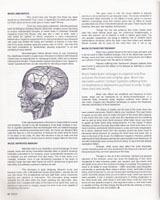
Neurobiologists believe Mozart knew he was harnessing the orderliness of math to create music. Structure is critical in both because context sets up expectancies for subsequent events, which set up derived meaning and emotion. These precise musical structures in turn, appear to "excite" specialized brain circuits essential for decoding complex ideas.
If the right hemisphere of the brain is responsible for moods and emotions, circuits in the left hemisphere of the brain mediate a number of cognitive operations that neurobiologists think are related language processing, numerical processing and music. As it turns out, Mozart either used the ratio as a tool of precision or because he wrote what he heard in his head. In any case, it's clear that structure is key to math and that mathematical patterns in music have an almost magical effect on the mind. Music Improves Memory
Melodies stay in your head like a second language. To most people, music with strong, hummable melodies takes on greater meaning. Intimately connected to our memory, music automatically transports you to whatever you are reminded of by that music. This is why music is so nostalgic. However, more to just reminiscing purposes in the realm of memory, music has also been found not only to remind one of good and bad times, but enhance a person’s memory as well.
This discovery is quite intriguing. Mozart's music and baroque music, with a 60-beats-per-minute beat pattern, activate the left and right brain. The simultaneous left and right brain action maximizes learning and retention of information. The information being studied activates the left brain while the music activates the right brain. Also, activities which engage both sides of the brain at the same time, such as playing an instrument or singing, causes the brain to be more capable of processing information
The good news is that the music utilized to improve memory is not constricted to just classical music. One study conducted in Pennsylvania State University on the effects of music genre on memory retention surprisingly show that musical genre has no effect on recall, provided that one of four instrumental pieces are used. These may be slow classical, slow jazz, fast classical, and fast jazz.
Though the first real evidence that music makes brain cells hop came several years ago, the continuous breakthroughs in music and science, not to mention in math is indeed good news. The one question researchers are trying to address now is, whether some mathematical structures prime the brain more than others and whether Mozart sonatas will do more for the mind than rock 'n' roll or rap.
Music is food for the Body
Music Leads to a Healthy Life Music has a potent impact on the mind, body and spirit, and it can be used to effect healthful changes. One of the oldest tools used for therapy, music has been used by medicine men (using drums and rattles) as a symbol of their power over the spirits of sickness.
It hasn’t changed much over the years (or centuries). Music can still help cure a headache or any number of common sicknesses. The previously mentioned production of endorphins triggered by particular sounds, tones and rhythms, varying from jazz, New Age, Latin, pop or even rock music can miraculously help to heal your body if you are sick.
But more than just curing the common headache, music is already being utilized worldwide as part of treatments to help patients stay healthy and recover more quickly from illness.
Patients suffering from Parkinson’s disease patients have been found to overcome the effects of the disease by listening to certain types of music. The music helps brain messages to organize and flow and puts the brain into a higher gear. Music has also been used to "contact" patients suffering from schizophrenia or depressive psychosis in order to get them back into reality.
Music also affects the amplitude and frequency of brain waves, which can be measured by an electro-encephalogram. In a California State University study, migraine sufferers were trained to use music, imagery and relaxation techniques to reduce the frequency, intensity and duration of their headaches.
The effects of rhythm and the beat of the music have also been studied extensively. Rhythm affects your heartbeat. The heart tends to speed up and slow down to match the pace of the music that's playing. It was found that slow music could slow the heartbeat and the breathing rate as well as bring down blood pressure while faster music was found to speed up these same body measurements. It is the impact of these vibrating sounds on the body that subtly alters our mood and many of our body functions--particularly blood pressure, pulse and body temperature. As a result, classical music from the baroque period has been found to decreases blood pressure by causing the heart beat and pulse rate to relax to the beat of the music. At a Baltimore hospital in America, patients suffering from heart diseases derived the same benefits from listening to 30 minutes of classical music as they did from taking 10 mg of the anti-anxiety medication Valium.
However, while music does affect the body physically, certain musical sounds are more beneficial to the body and a person's well being because they are more pleasing to the body.
Thought to link all of the emotional, spiritual and physical elements of the universe, music has, since the beginning of time, been recognized to have immense power over humans that has proven time and again to be one of the sources that create the energy of a society. The essence of music is its ability to move someone – either physically, psychologically, emotionally, or spiritually. Music helps to define, enrich, and mold a human being, and the best part is, you can choose this molding at your local music center. And while people have set out to define music, which just does not seem possible, it was in people’s perseverance to finding explanation to the “what music was, what music is and what music could be,” that they found out how powerful music is, how important music is, and what music is capable of doing. And like change, like life and like the universe, in music, the possibilities are vast and endless.
Powerful and phenomenal, music embodies...all.
© Valerie V. Mayuga, 2005
<< back l page 2
|
|||
| S | |||