| Q | |||
|
A CRASH COURSE ON EXISTING MUSIC GENRES a Part VI :: Hiphop, New Age, Classical1 Published in PRESS Magazine July 2004
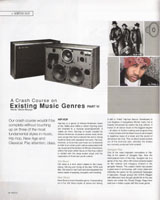
Our crash course wouldn’t be complete without touching up on three of the most fundamental styles in music – Hip-Hop, New Age and Classical. Pay attention, class.
HIP HOP
Hip-hop is a genre of African-American music of the 1980s and 1990s in which rhyming lyrics are chanted to a musical accompaniment. A viable art form, Hip hop is music created by African-American musicians whose early forms were songs that had a melodic line and a strong rhythmic beat with repeated choruses. Hip Hop, however, is more than just music as it is deemed to refer to an urban youth culture associated with rap music and the fashion of African-Americans, where the lyrics which focus on Hip-Hop culture is riddled with the deep-rooted angst and the captivation of American youth culture.
OLD SKOOL
Old skool is a term which relates to the music, dance, MC-ing and Dj-ing of the late 1970s and 80s. Old skool is hard core and encompasses the dance styles of popping, boogaloo and breaking.
NEW SKOOL
New Skool is more freestyle genre, incorporating all of the Old Skool styles of dance but mixing it with a "tribal" hip hop flavour. Developed in Los Angeles, it recognises African roots, but is heavily influenced by earlier hip hop culture. A fusion of all dance music to the biggest degree -- all styles of rhythm-making and programming – funky breaks and the Miami sound were based in repetitive loops of a break and the sound of old-school hip hop. The nu-skool sound comes out of the technical side, whereby the breaks are normally produced from scratch.
GANGSTA RAP
One of the most important innovations in Hip-Hop is the advent of Gangsta Rap. Now the most popular form of Hip-Hop, Gangsta rap is a genre of hip hop, often with lyrical subjects based on the violence and misogyny inherent in the gangster lifestyle. This subject matter has caused a great deal of controversy, with many observers criticizing the genre for the perceived messages it espouses, though groups like N.W.A (Niggas with Attitudes) have brought ghetto life to the pop charts and artists like Snoop Doggy Dogg have sold over 4 million copies with this music genre.
NEW AGE
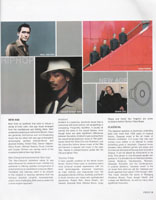
Born from an aesthetic that aims to induce a sense of inner calm, new age music emerged from the meditational and holistic fields. Both artistically satisfying as well as therapeutic, these are generally harmonious and non-threatening music that are allied with new age philosophies encouraging spiritual transcendence and physical healing. Robert Rich, Steven Halpern, Steve Roach, Michael Stearns, Rusty Crutcher and Coyote Oldman are among some of the musicians behind New Age Music.
NEO-CLASSICAL/INSTRUMENTAL NEW AGE
The Neo-Classical distinction refers to any style influenced by classical music, whether the performer is offering updated arrangements of actual works by an established composer (Bach, Pachelbel, and Debussy seem to be popular in this respect) or weaving elements from the baroque, classical, romantic, impressionistic, and/or more challenging 20th century styles into a more original approach.
AMBIENT
Ambient is a spacious, electronic music that is concerned with sonic texture, not songwriting or composing. Frequently repetitive, it usually all sounds the same to the casual listener, even though there are quite significant differences between the artists. Ambient music evolved from the experimental electronic music of '70s synth-based artists like Brian Eno and Kraftwerk, and the trance-like techno dance music of the '80s and became a popular cult music in the early '90s, thanks to ambient-techno artists like the Orb and Aphex Twin.
TECHNO-TRIBAL
A more specific variation on the ethnic fusion theme, Techno-Tribal music is combines man's most primeval musical expressions with his most technologically advanced inventions as tribal rhythms and instruments from the aboriginal cultures of Africa, Australia, and North & South America are mixed with sophisticated electronics. Robert Rich, Steve Roach, Jon Hassell, Gabrielle Roth, Michael Brook, Jorge Reyes and David Van Tieghem are some musicians behind Techno-Tribal Music.
|
|||
|
S |
|||