| Q | |||
|
CRASH COURSE ON EXISTING MUSIC GENRES :: INDIE, URBAN, ALTERNATIVE, EASY LISTENING, REGGAE
DREAM POP
Dream Pop is an atmospheric subgenre of alternative pop/rock that relies on sonic textures – both in terms of instruments and vocals – as much as melody, and often features breathy vocals and processed, echo-laden guitars and synthesizers. Though the Cocteau Twins, with their indecipherable vocals and languid soundscapes, are frequently seen as the leaders of dream pop, the genre has more stylistic diversity than their slow, electronic textures as it also encompasses the post-Velvet Underground guitar rock of Galaxie 500, as well as the loud, shimmering feedback of My Bloody Valentine. Other artists belonging to this genre are The Verve, The Sundays and The Flaming Lips
Ambient Pop
Ambient Pop combines elements of the two distinct styles which lend the blissed-out genre its name -- while the music possesses a shape and form common to conventional pop, its electronic textures and atmospheres mirror the hypnotic, meditative qualities of ambient. Essentially an extension of the dream pop that emerged in the wake of the shoegazer movement, it's set apart from its antecedents by its absorption of contemporary electronic idioms, including sampling, although for the most part live instruments continue to define the sound. Stereolab, Flying Saucer Attack, The Golden Palominos and The Cardigans are among some of the bands included in this genre.
Adult AlternativeAdult Alternative attracts a wide cross-section of listeners who are looking for something a little different without straying too far from the mainstream. Adult alternative styles -- whether acoustic, electronic, or electro-acoustic -- are heavily influenced by pop, rock, and jazz fusion elements. Though some albums feature a few vocal selections with lyrics, the main orientation remains instrumental. The best artists have a flair for melodic invention, colorful instrumentation, and rhythmic vitality while retaining a strong level of accessibility. Some adult alternative artists are Andreas Vollenweider, William Aura, Christopher Franke, William Ackerman, Philip Aaberg, Enya, David Arkenstone, David Lanz, Ottmar Liebert, George Winston and Yanni
EASY LISTENING
LOUNGE
Based on the lush styles of latter-day swing and big band music, lounge refers to a strain of easy listening music from the '50s and '60s. Occupying the middle ground and appealing to fans of traditional pop as well as space-age pop, lounge borrows ideas from the worldbeat exploration of exotica, as well as the futuristic aspirations of space age pop. Henry Mancini, Combustible Edison, The Gentle People, Walter Wanderley and Bob Thompson are some artists whose music fall under this genre.
Orchestral Easy Listening
Orchestral easy listening records are lush, string-drenched records that are hardly classical -- they use an orchestra to make sweet music that is easy on the ears. From George Frideric Handel, to Ralph Vaughan Williams, to the Royal Philharmonic Orchestra, this has been a staple of easy listening since the genre's inception in the '50s.
Easy Pop/Vocal Easy Listening
Relying on light arrangements of pop hits, Easy Pop is often instrumental, though it is not sweeping orchestral, nor is it processed. Performed in small groups, occasionally with unusual instruments (like the Harmonicats, who only played harmonicas), it is often balanced with some frothy strings, sweet vocals, and pop studio musicians. Ray Conniff, Percy Faith, James Last and Paul Mauriat are some artists whose music fall under this genre.
Classical Pop
Classical Pop is a strand of easy listening music that makes classical pieces more accessible by streamlining the arrangements and emphasizing the melody, thereby making it sweet and easy on the ears. Mason Williams, Mitch Miller, Arthur Fiedler, James Galway, Liberace and John Williams are just some of the arrangers who provide listeners with such soothing music.
REGGAEA music unique to Jamiaca, Reggae ironically has its roots in New Orleans R&B. Its direct forefather is ska, an uptempo, rhythmic variation based on the New Orleans R&B Jamaican musicians heard broadcast from the US on their transistor radios. Relying on skittering guitar and syncopated rhythms, ska was their interpretation of R&B and it was quite popular in the early '60s. However, during one very hot summer, it was too hot to either play or dance to ska, so the beat was slowed down and reggae was born. Since then, reggae has proven to be as versatile as the blues, as it lends itself to a number of interpretations, from the melodic rock steady of Alton Ellis and the rock and folk-influenced songwriting of Bob Marley to the trippy, near-psychedelic soundscapes of dub artists like Lee "Scratch" Perry.
SKA
Ska marked the true beginning of Jamaican popular music, coming to prominence during the early and mid-'60s right around the time the island was granted its independence. Ska ensembles are generally a blend of electric instrumentation and horns most popular in jazz (saxophone, trumpet, trombone). Although structurally simple, ska has a bevy of influences, synthesizing American R&B, jump blues (sax-driven instrumentals and vocal numbers), Jamaican mento (Jamaica's first indigenous musical form which is essentially a blend of Caribbean calypso and Jamaican folk music which uses the banjo to play chords on the off-beat), calypso and other Caribbean styles, big-band swing, Afro-Cuban jazz, pocomania and other local religious folk music, and European ballroom dances. Derrick Morgan, Laurel Aitken, Prince Buster, Desmond Dekker, Toots & the Maytals, Slim Smith, Clement "Coxsone" Dodd, Prince Buster, Clancy Eccles, The Ethiopians and The Skatalites are some of Ska’s most celebrated musicians.
© Valerie V. Mayuga, 2005
|
|||
|
S |
|||
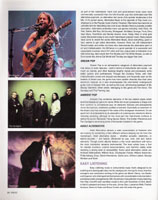 more commercially
successful than the left-of-center pop that dominated late-'80s alternative
pop/rock, so alternative lost some of its quirkier tendencies in the '90s. In
it's purest sense, Alternative Music is the opposite of Pop music (i.e.,
whatever is on the Popular music charts). However, Alternative has become an
umbrella term for describing new rock music. Modern Rock is probably a better
description. Alternative embodies many sub-genres including: Indie Rock, Alt
Folk, Gothic, Brit-Pop, Alt.Country, Shoegazer, Nü-Metal, Grunge, Punk, Emo, New
Wave, Post-Rock and literally dozens more. Today, Most of what gets called
Alternative today is very much mainstream popular music. Many people have come
to resent the words Alternative Music, since everything, good or bad, seems to
get called alternative. However, there are still Independent Record labels and
artists out there who demonstrate the alternative spirit of art and
intellectualism. Ani DiFranco is a good example of a successful and respectable
musician who's DIY ethic and truly unique style is indicative of an Alternative
tag. New bands like The Strokes and The White Stripes, as well as Emo bands like
Jimmy Eat World and Thurday are bigger than ever
more commercially
successful than the left-of-center pop that dominated late-'80s alternative
pop/rock, so alternative lost some of its quirkier tendencies in the '90s. In
it's purest sense, Alternative Music is the opposite of Pop music (i.e.,
whatever is on the Popular music charts). However, Alternative has become an
umbrella term for describing new rock music. Modern Rock is probably a better
description. Alternative embodies many sub-genres including: Indie Rock, Alt
Folk, Gothic, Brit-Pop, Alt.Country, Shoegazer, Nü-Metal, Grunge, Punk, Emo, New
Wave, Post-Rock and literally dozens more. Today, Most of what gets called
Alternative today is very much mainstream popular music. Many people have come
to resent the words Alternative Music, since everything, good or bad, seems to
get called alternative. However, there are still Independent Record labels and
artists out there who demonstrate the alternative spirit of art and
intellectualism. Ani DiFranco is a good example of a successful and respectable
musician who's DIY ethic and truly unique style is indicative of an Alternative
tag. New bands like The Strokes and The White Stripes, as well as Emo bands like
Jimmy Eat World and Thurday are bigger than ever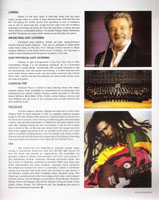 Easy Listening music
is instrumental music that was designed to be soothing and relaxing as it slips
into the background. Among the many inventive arrangers and conductors working
in the genre are Martin Denny, Les Baxter and Esquivel, who distinguished
themselves with unpredictable instrumentation and idiosyncratic arrangements.
Still, the primary characteristic of easy listening, from Ray Conniff's lush
wordless vocals to the Latin flourishes of Herb Alpert, is that it's pleasant
and easy on the ears. Jimmy Sturr, Lawrence Welk, Frankie Yankovic, Moms & Dads
and Brave Combo also fall under this genre.
Easy Listening music
is instrumental music that was designed to be soothing and relaxing as it slips
into the background. Among the many inventive arrangers and conductors working
in the genre are Martin Denny, Les Baxter and Esquivel, who distinguished
themselves with unpredictable instrumentation and idiosyncratic arrangements.
Still, the primary characteristic of easy listening, from Ray Conniff's lush
wordless vocals to the Latin flourishes of Herb Alpert, is that it's pleasant
and easy on the ears. Jimmy Sturr, Lawrence Welk, Frankie Yankovic, Moms & Dads
and Brave Combo also fall under this genre.