 |
|
|
|
|
|
|
|
|
|
|
|
|
|
|
|
|
Angkor Wat - February 2003 |
|
|
|
Angkor Wat's spires are one of the most memorable sights in the world. This "8th Wonder" represents the pinnacle of Khmer Art and was originally built in the 12th century as a mausoleum and temple for King Suryavarman II. What is even more astounding is that this well-known World Heritage Site is just one of thousands of Angkorian temples spread over 3000 square kilometers. |
|
|
|
 |
|
 |
|
|
|
|
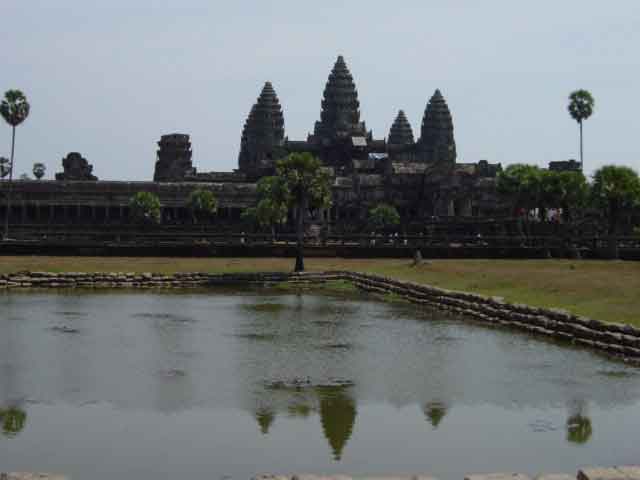
This is a view of the Angkor Wat temple complex taken by the reflecting pool. |
|
|
|
|
|
|
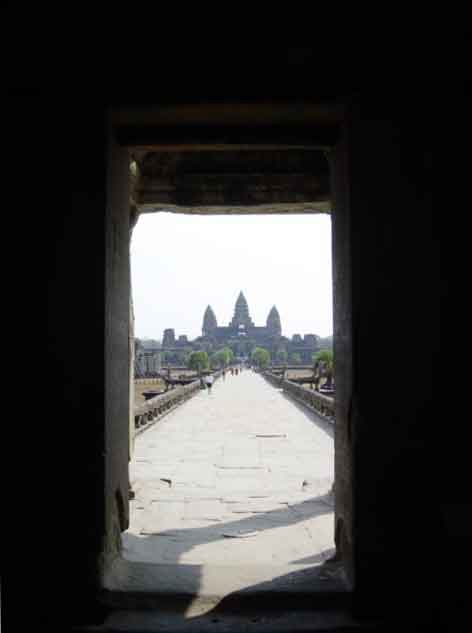
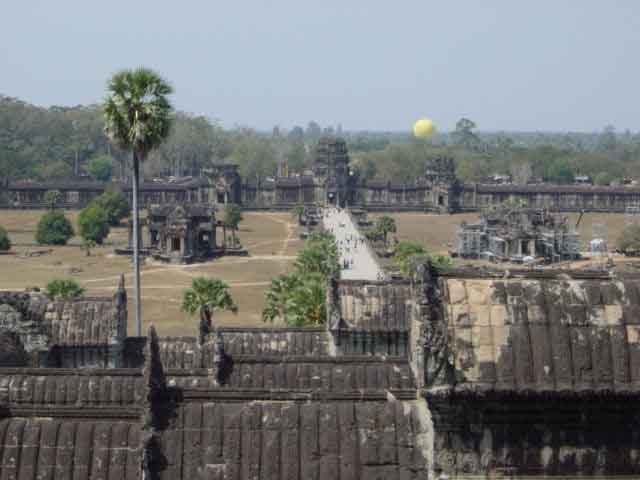
The inner temple complex is surrounded by a large moat and a high wall. This is a view taken from the western gate and it shows the 300 meter-long sandstone causeway that travels eastward to the central towers. |
|
|
 |
|
|
|
|
|
|
 |
|
|
|
|
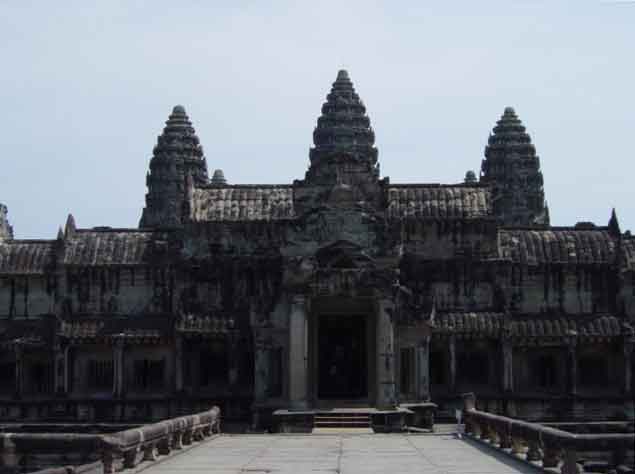
These are the lotus bud-shaped towers of the inner complex. It took a while for me to get a tourist-free shot. |
|
|
|
|
|
 |
|
|
|
|
|
|
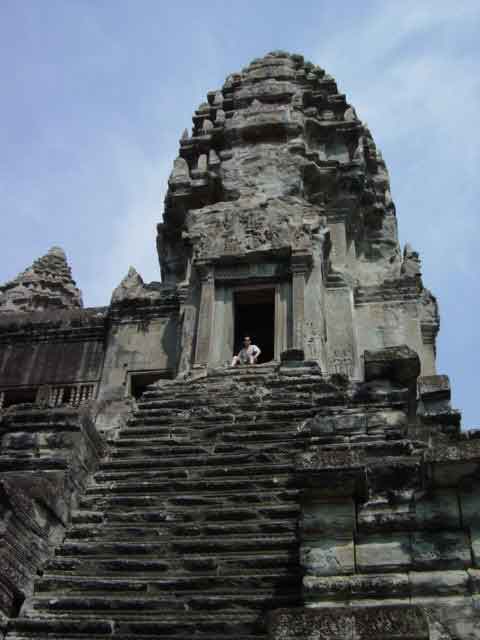
I'm not sure how long tourists should be allowed to climb the towers. They already show signs of severe erosion. Despite my conscience, I braved the steep climb... |
|
|
|
|
|
...and was able to sit alone atop the towers and do some reflecting. I also took this photo of the western entrance. |
|
 |
|
|
|
|
 |
|
|
|
|
|
|
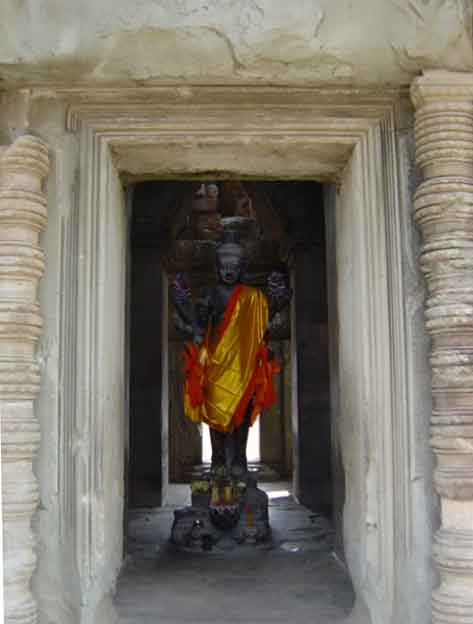
Despite the fact that it was originally a Hindu temple dedicated to Vishnu, it was later converted to a Buddhist monestary. As such, there are numerous statues of Buddha and orange colors throughout. |
|
|
|
|
|
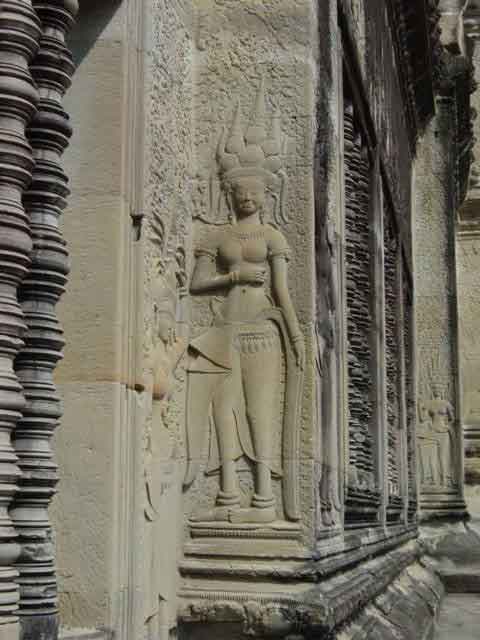
All of the temple walls are intricately carved and these photos do not do the work any justice. This is but one of the thousands of asparas (heavenly nymphs) that can be found on any Angkorian temple. Their positioning and dress can differ widely. |
|
|
|
 |
|
|
|
|
|
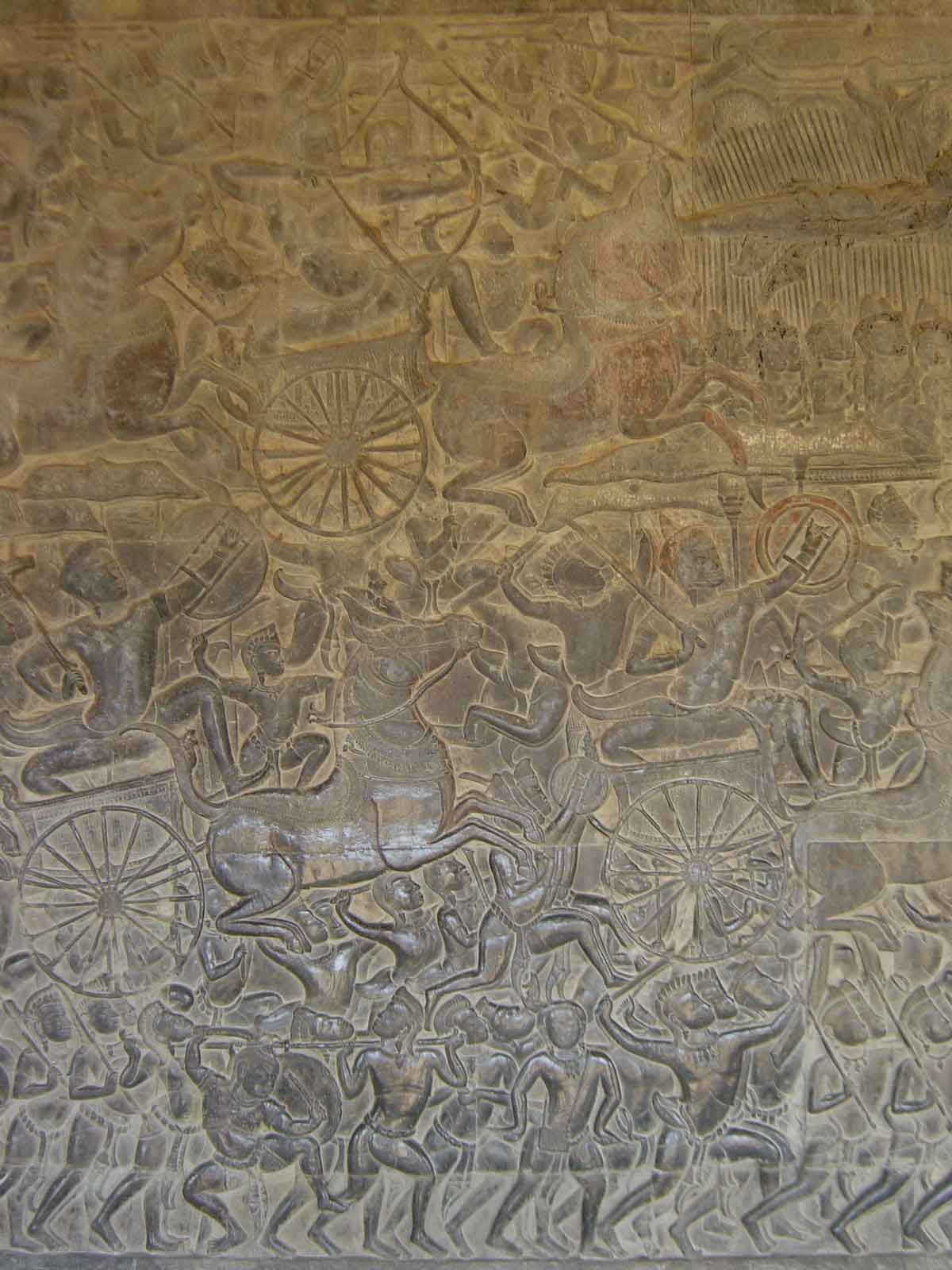
This is a carving of the Khmer army engaged in battle. Again, the photo does not do the work justice. |
|