
Welcome to my Website. I'm Pete. Just to give you some background on myself, I have been hiking for about forty years now. Hiked in New Hampshire, Vermont, Virginia, Colorado, California, Washington(the state not the capitol), and of course Wyoming.
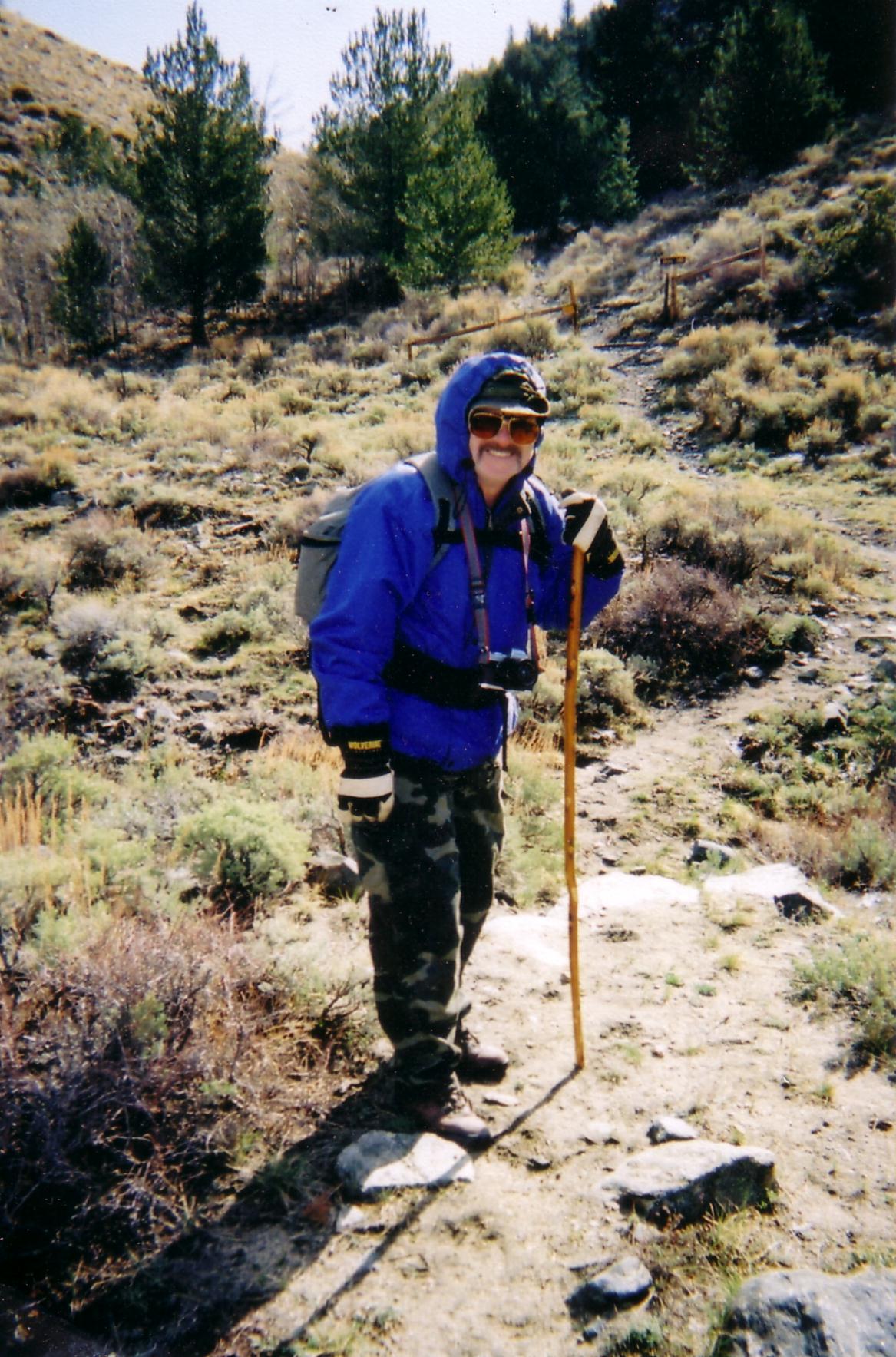
As much hiking as that sounds I never get to do as much as I'd like. I have hunted some of those states and even gold panned in others. I'm a member of the Gold Prospectors Association of America and a Life Member of the North American Hunting Club. If you don't believe in hunting thats ok, this website is not here to push any one point of view. One problem that I noticed on the Internet is that there seemed to be no central point for information on Wyoming. That is what this site is for. I intent to give you an overview of Wyoming with links to other sites for in depth information. There is something for everyone here and plenty of room for everyone.
First question I'm asked is "Where is Wyoming?" Wyoming is located in the region of the country known as the Mountain States. It is bordered by Colorado to the south and Montana to the north. The terrain is varied, changing from high plains in the east to the Rocky Mountains in the west. Most of the state is Federal land, split between the Bureau of Land Management(BLM), U.S. Forest Service(USFS) and National Park Service(NPS). Wyoming is best known for Yellowstone and Grand Teton National Parks and Devil's Tower National Monument. If you live at or near sea level and you plan to hike or hunt in Wyoming then there are some things you need to do to prepare yourself.
1. Arrive several days before your outing begins. Wyoming is a high altitude state, minimum is above 6,100 feet and some mountains go as high as 14,000 feet. You must give your body time to acclimate, generally 1-3 days. Altitude sickness is normally mild with headaches, nausea and weakness, but in severe cases you may find you only want to stay in bed. The best cure for a severe attack is to drop to a lower altitude.
2. Exercise! The mountains here are not like the mountains back east, they are steep and high. Do some running at home to buildup your lungs and your legs.
3. If you are bringing your own tent check it first and make sure you have all the parts. Have plastic stakes? Throw them away! There is a reason these are called the Rocky Mountains. Plastic stakes don't last long here. I've found that 9 inch or 12 inch steel spikes work great as tent stakes. You can find them at Lowes, Home Depot, Sutherland's or maybe your local lumber yard carries them. They are heavy compared to the plastic but well worth the extra weight.
4. Refresh your compass and map reading skills. A GPS unit works great and I recommend them, but practice using it and carry extra batteries. GPS works best when you have maps to work with it. We'll discuss GPS a little more later. Always carry a compass as a backup. I have been 'mis-placed' in Wyoming's woods and a compass got me out. After that trip I purchased my first GPS. Wyoming's woods, in some areas, are dense and you cannot see anything but trees, and they all look the same!
5. If you are camping during June thru mid-September a butane stove is fine. Just remember that butane does not work well at low temperatures. When the snow is flying a white gas or multi-fuel stove is best.
If you are interested in GOOD outdoor equipment or clothing then check out my Links page!
