 |
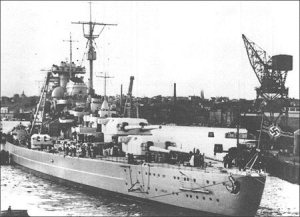
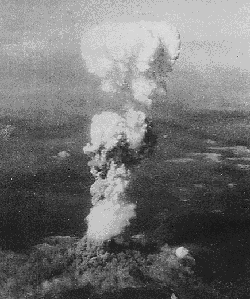
The World Wars and the Cold War |
 |
|
The World Wars and the Cold War |
|
 |
Below is the course curriculm for War in the Twentieth Century, an elective history course at Pope John Paul II High School for sophomores, juniors and seniors. Students, parents, and staff can view the course objectives, activities, and requirements below. Over time, I will add links to course assignments, essay requirements, lesson plans, and relevant educational websites. Check back often as the school year progresses to see and use the additional links. |  |
 |
The 2009-2010 academic year marks my eleventh year teaching and I have incorporated changes and improvements to course design, schedule, and tasks, based on my earlier teaching experiences and student and staff feedback. While the topic of the course is warfare in the twentieth century, the course is skills-based and has a seminar design. Therefore, the overall focus of the course will be the development of written and oral communication skills, research skills, and analytical thinking. While the course does not have an official textbook, lectures will be augmented with numerous primary source readings and various pieces of literature and film. |  |
Map Quizzes (1-3 per quarter)				20-35 points each
Debate Assignments (1-4 per quarter)			25 points each
Essay Assignments (2-3 per quarter)			25-50 points each
Research Project (1-2 per quarter)			50-100 points each
Tests (1-3 per quarter)					100 points each
Semester Exams (1 per semester)				150 points each
Unit One: German and Italian Unification to the Start of World War I
Sample topic: What events and movements led to the start of World War I?
Special Readings: Moltke, Garibaldi, Cavour, Bismarck, Kipling, Morel
Special Activity: Game of Risk
Time: Four weeks

Unit Two: World War I
Sample topic: How was World War I a war of failed expectations?
Special Readings: �Wilson�s Fourteen Points�
Special Movies: �Century of Warfare: Blood and Mud�
Time: Five weeks


Unit Three: Between the World Wars
Sample topic: How did the Fascists come to power in Germany and Italy?
Special Readings: �Mein Kampf�
Special Movies: �Animal Farm�
Time: Three weeks

Unit Four: World War II
Sample topic: How was World War II similar to and yet different from World War I?  How is our modern world a product of World War II
Special Movies: �Blunders of World War II�, �Pearl Harbor�, �Enemy at the Gates�, �Schindler�s List�
Time: Five weeks

Semester Exam

Unit Four: World War II continued
Sample topic: Compare and contrast Germany and Japan as aggressors and opponents in World War II.
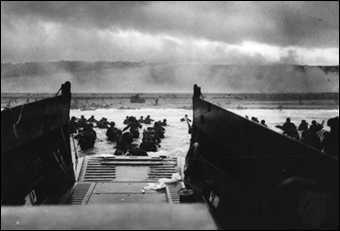
Special Movies: �Saving Private Ryan�
Time: Two weeks

Unit Five: End of the Grand Alliance
Unit Topics: Start of the Cold War, a Divided Germany and Europe, the Truman Doctrine and Marshall Plan, Alliances, Atomic Politics,
Brinksmanship, the Berlin Blockade and Airlift, the Berlin Wall, the Cuban Missile Crisis
Special Readings: �Truman Congressional Address�, �Vyshinsky Speech�, �Norikov Telegram�, �Castro Letter�
Special Movies: "Thirteen Days"
Unit Length: Five Weeks

Unit Six: The Cold War Throughout the World
Unit Topics: China under Communism, the French and Indochina, the United States and Vietnam, the Korean War, The Birth of Israel,
Wars and Conflicts in the Middle East
Special Readings: �Truman�s Far Eastern Policy�, �MacArthur�s Don�t Scuttle the Pacific�, �Jihad versus McWorld�
 Length: Three Weeks

Unit Seven: The Vietnam War
Unit Topics: Vietnam under French, US Involvement under JFK and LBJ, South and North Vietnamese leadership, Tet Offensive,
Major Operations, Battles, and Bombing Campaigns, Anti-War Movement, Nixon and Withdrawal, End Results
Special Movies: �We were Soldiers�, �Fog of War�
Unit Length: Four Weeks

Unit Eight: Communist China
Unit Topics: Mao Zedong, Great Leap Forward, Tibet, Little Red Book, Great Cultural Revolution, Visit by Richard Nixon,
Deng Xiaoping, Four Modernizations, Deng Reforms, 1980 Marriage Law, Beijing Spring, Tiananmen Square, New Issues, Taiwan, Hong Kong,
relations with Russia and with the US
Unit Length: Two Weeks

Unit Nine: The End of the Cold War
Unit Topics: Nikita Khruschev, De-Stalinization, Hungarian revolt, Leonid Brezhnev and Brezhnev Doctrine, Prague Spring
and Alexander Dubcek, Czechoslovakia Invasion, D�tente, Helsinki Accord, SALT II, Soviet Invasion of Afghanistan, Carter Doctrine,
Yuri Andropov, US President Ronald Reagan, START, Strategic Defense Initiative, Grenada, Chernenko, Mikhail Gorbachev, Glasnost,
Perestroika, Fall of Berlin Wall, Collapse of Communism in Eastern Europe, Attempted Coup against Gorbachev, Boris Yeltsin,
reunification of Germany, dissolution of Soviet Union
Special Movies: "Dr. Strangelove", �Fall of Berlin Wall�
Unit Length: Three Weeks

Final Exam