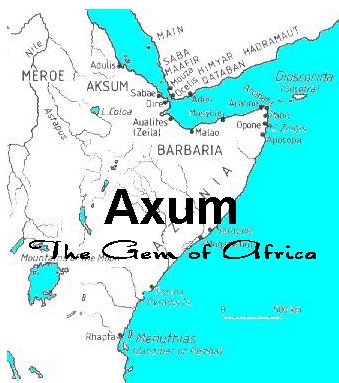
Cush, with its Egyptian-like civilization on the Nile, and the flourishing, irrigation-based culture of Sheba (or Saba, modern north Yemen) togheter contributed in about the 2D century AD to the rise of the kingdom of Aksum. This kingdom was located in the highlands above the Red Sea in and around what what is now the Tigre region of the northern Ethopia. Originally a colony of emigrants from Yemen, Aksum had begun trading with Grece, Rome, Cush, and Egypt. In the 3D century Aksum conquered Yemen. During the 4D century, Aksum farmed king Ezana unified his African holdings and converted himself and his kingdom to Christianity. The language was Ge'ez. Some visitors , especially the ARABS, settled and intermarried with indigenous residents.
During the centuries of the ascent of Aksum and the city-states, the pattern of life of innumerable interior Africans began to alter drastically. riculturists, endowed with new crops and new tools and weapons of iron, began to effect a major change in the preexisting arrangements of African life across a great belt of Africa from Nigeria in the west to Kenya in the east. The change included or was generated by a population explotion. This in turn propelled at least one set of agriculturists from their original based in eastern Nigeria southeastward toward the border of Zaire and Zambia; this group then traveled westward, southward, and northeastward until it met a southern- and western-moving flank of people involved in pastoral pursuits.
While the Meroitic Kingdom was growing in strength and splendor, the Aksum Empire was also gaining power. The Aksum Empire arose around 220c.e. in the African country which is called Ethopia today. Axum, like Egypt, grew up around a river, the Tekezze River. The blue Nile stars in Ethopia. As a powerful nation, Axum would conquer the rest of Kush around 320-350c.e. Much older cities than Adulis had existed and become famous in Axum Empire. Two earlier cities had become to fame in the time just before the Axum Empire became great.These were Yeha and Kaskase.
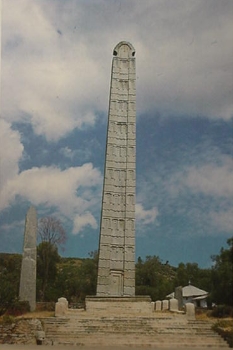
Axum was the most advanced civilization during this time in the northeastern part of Africa. Axum was the most important city of the kingdom. Axum wasreplendent in riches, having conquered the Empire of Nubia and consolidated its wealth. Although Axum's public buildings were square or rectangular like those of Nubia and Egypt, they still had their own peculiar Axumite style of architecture. The Axumites, like other ancient Africans, created buildings to express their faith in their religion and their belief in the grandeur of their kingdom. Among the important architectural archivements of Axum during this stage were Kaleb's tomb at Axum and the Giant Steale, both meant monuments to the kings.
The first king of Axum was Ezana I. King Ezana I was the paramout king of a large empire that included Axum, Arabia, Saba, Abyssinia, Beja, and Moroe. Few kings in ancient times could have found more powerful group of nations to rule. The whole region that included all these countries was later called Axum. As a great as Ezana I was, he still followed in the traditions of the kings of Nubia and Egyptin at least one way. He still fought the Beja people who live in the desert. Ezana, one of the greatest of the Aksumite rulers, conducted a number of successful campains in the early fourth century, and described them in a series of stone inscriptions which were written in Sabaean, Ge'ez and Greek. In these texts his expeditions to several parts of the country, including lowland areas ( where camels were the principal means of transport) and lofty Samen mountains, as well as westwards to the confluence of the Blue and White Niles in what is now the Sudan. The next important ruler of Aksum was King Kaleb. In the 523c.e. he undertook an expedition to the south Arabia, to avenge the persecution of Chritians there. One of the results of this expedition was that part of South Arabia was brought under Aksumite control and remained so until its occupation by the Persians half a century or so later.
The Aksumite kingdom began to decline about the 900c.e. At this time another kingdom emerged much further south in Lasta. A new ruling dynasty, named the Zagwe, gained power there. Their capital was at Roha, which was later renamed Lalibala, after king Lalibala, the most notable ruler of this dynasty. He is believed to have built the mayority of the town's twelve famous rock-hewn churches which have been said to rank among the wonders of the world.
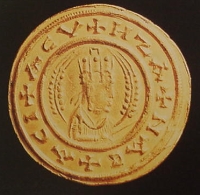
The kingdom of Axum profited from the strategic location of its two main cities, the port of Adulis on the Red Sea and the upland capital city of Axum. From about 200b.c. to 400a.d., Axumites commanded a triangular trade network linking Africa, India, and the Mediterranean world. Products from African interior such as ivory, hides, rhinoceros horn, and gold passed through tha city of Axum. To Adulis came ships carrying goods from farther down the coast of East Africa, or from India across the Indian Ocean. These goods would the flow north up the Red Sea to the Mediterranean, to the Middle East, Greece, Rome, and beyond.