| BrakeFest By Chuck Melton |
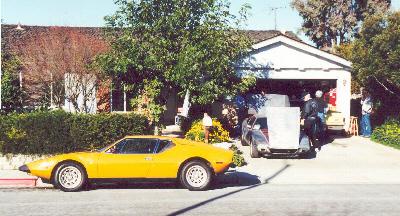 |
| The Pantera Club of Northern California held a mini-tech session on Jan 27th. The weather forecast was for rain, but the day turned out sunny and warm. Over 20 people attended the event, and 6 Panteras, where the topic of the day was the maintenance of the brake system. Tasks included the completion of a brake master and booster upgrade, flush of the brake system, oil change, chassis lube, ZF fluid change, flush of the clutch system, and troubleshooting of a spongy brake pedal. The work was followed by the typical BBQ. |
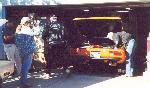
| PCNC member, Chris Clark attended to his brake system, and changed the ZF fluid in his very clean orange machine. |
 |
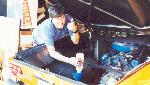 |
| Steve Liebenow rolled up later, driving his cougar, as his Mangusta sits in his garage as he rebuilds the motor and freshens the chassis. He brought one of his new Aussie heads. |
| Rod was not able to bring his car over for the maintenance session, here you see why! |
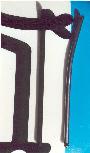 |
| In Rod�s words: His Pantera was sitting for about two months. He took it out for a quick ride. Got it up to operating temp, then punched it from a light and floated the valves, but it drove home fine. Two weeks later he was moving the car in and out of the garage to repair the MSD when he noticed zero oil pressure. After talking with Jack DeRyke, he pulled the left valve cover and inspected it. Found nothing unusual. Removed the right cover and found that he had a missing #2 exhaust valve pushrod. Removed the intake manifold. The lifter was out of its bore causing a loss of oil pressure and the rod was sitting on the engine block. Bought a stock replacement rod. Replaced the rod and bolted everything back up. Fired the engine and it ran fine at idle. Revved up to about 2,200 rpm and heard valve chatter but still good oil pressure. Shut down. Removed the right valve cover to find a bent pushrod. Removed the intake and right head to find a stuck valve. Brought both heads to Al's machine shop. Al told him that he was running two piece valves in the exhaust side (intakes were one piece) and strong springs. Stock pushrods are mild steel and not up to the task, apparently. The valve stem guides seized four valves due to lack of oiling in the top end. The piston smacked one of the valves. The solution is one-piece valves for a stronger unit that can resist heat (up to 1,000 degrees) and brass guides (wears faster but won't grab the valve). He ordered a new set of push rods to eliminate any bad ones. Everything is now waiting for reassembly. |