Just messing about in boats...
Storebought boats
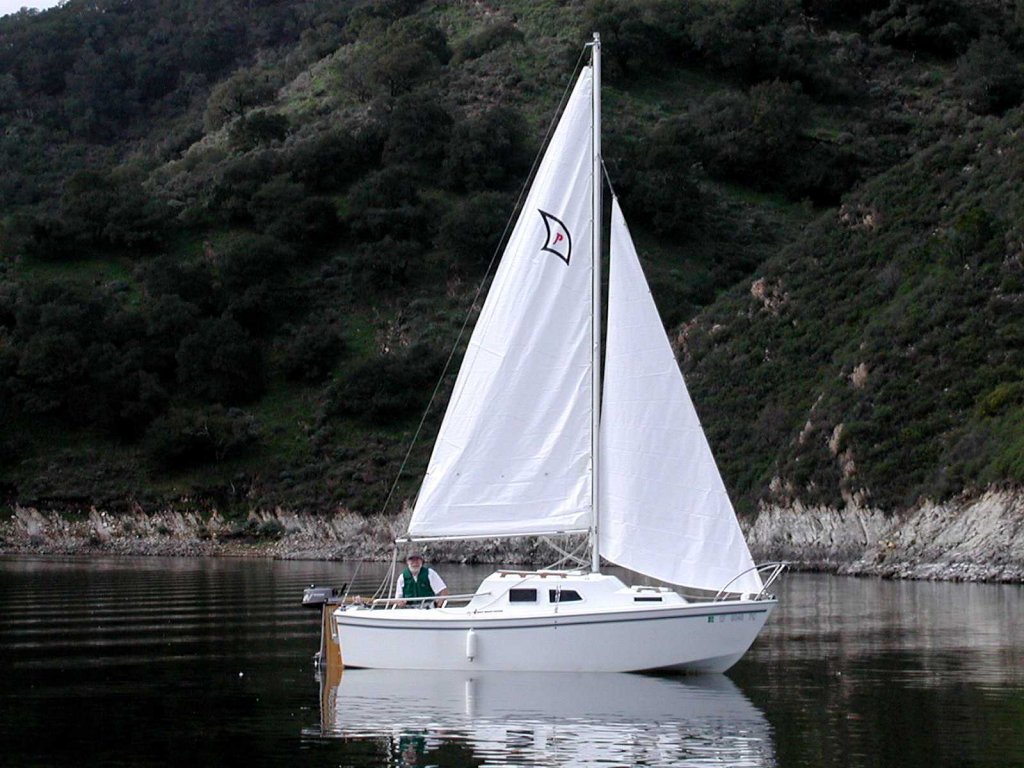
I'm a bi-costal boater. On the West coast, I keep a West Wight Potter at Lopez Lake (click image to enlarge):

I've added a few popular after-market features and modifications to this production boat.
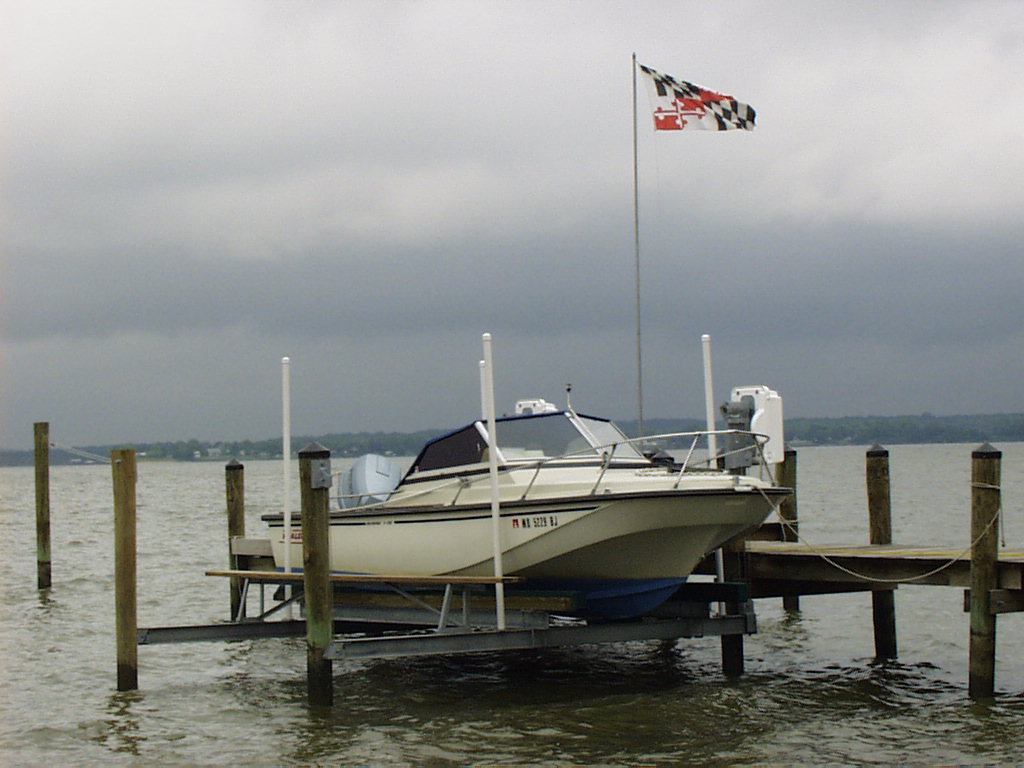
My East Coast boats are all Boston Whalers: an 8' Squall, a 13' Fisherman, and a 20' Revenge. Here's the Revenge:

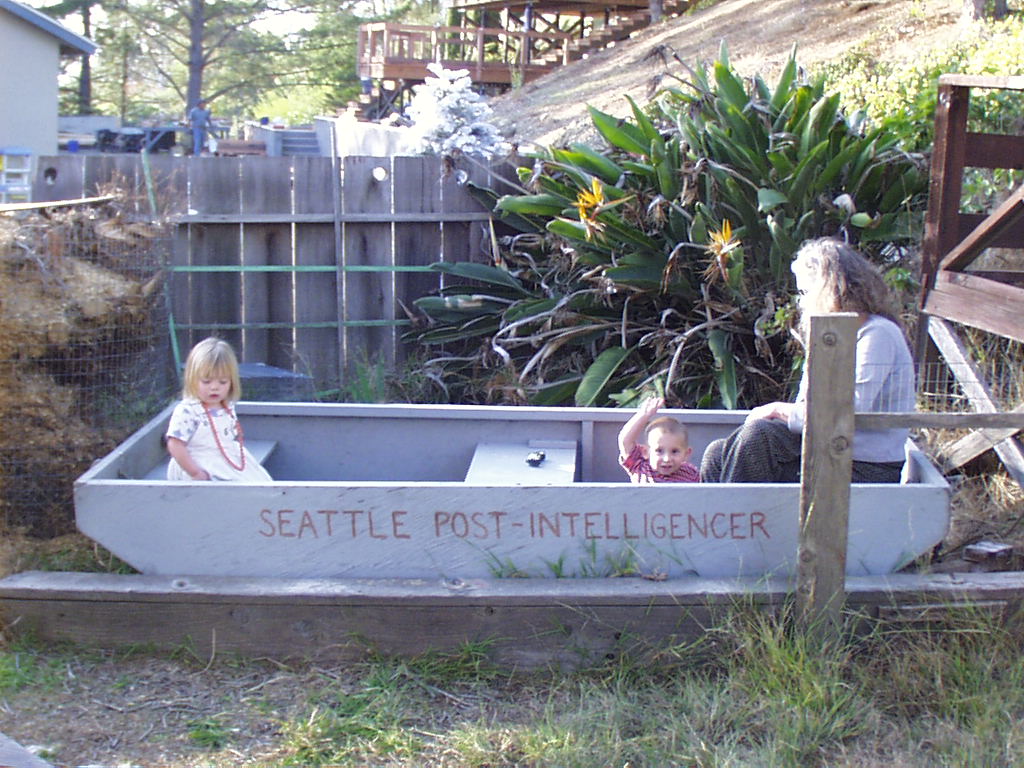
Homebuilt boat #1: Swamp scow (The Seattle Post-Intelligencer)
This was my first boatbuilding attempt. I designed it myself (can you tell?) based on the swamp scows featured in the "Pogo" cartoons by Walt Kelly back in the 50's. The boat actually worked quite well for what it was. It was very stable with its wide flat bottom and slab sides, and only drew about 2" of water with two adults aboard. It rowed satisfactorally and moved right along with a trolling motor pushing it. It was just way too heavy for one person to handle out of the water. I may try building one using stitch and glue techniques someday. It cost about $50 to build and took me a weekend.
Kelly always gave his boats two names: one for each side, and a slogan on each end. I think it was named "Chief Justice Earl" on the other side. It has been permanently retired from sea duty and is serving as a sandbox. Children seem to like the idea of playing on a boat, and some actually recognize it as one.

The picture doesn't quite do it justice but there aren't any of it in the water. Sorry.
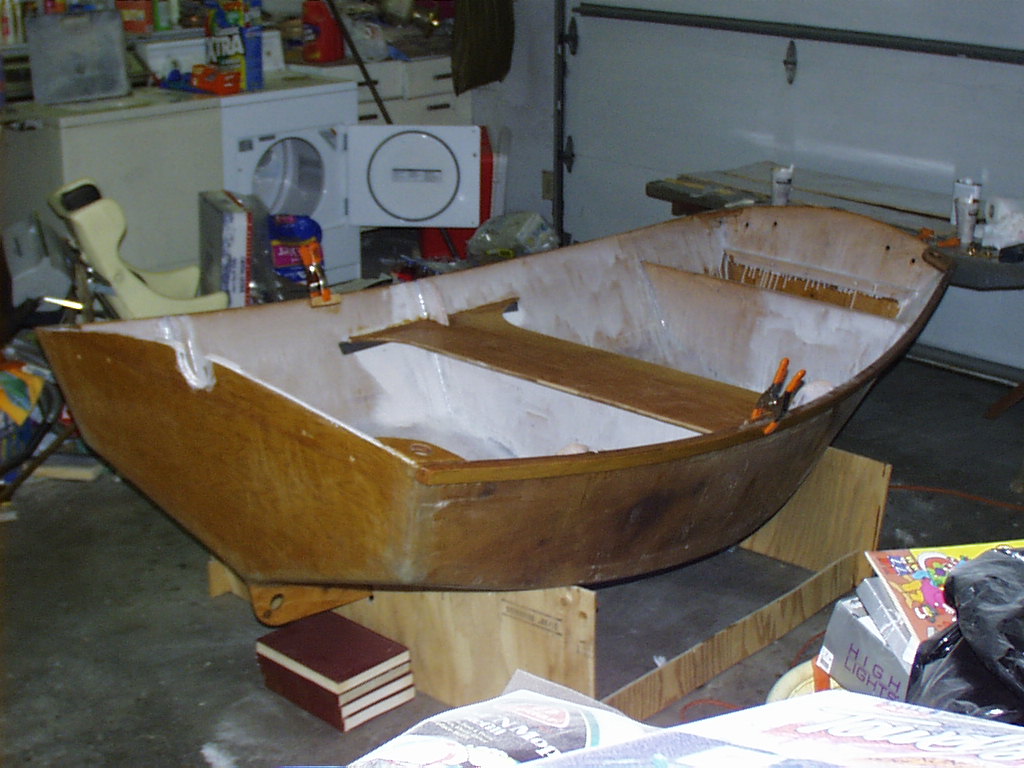
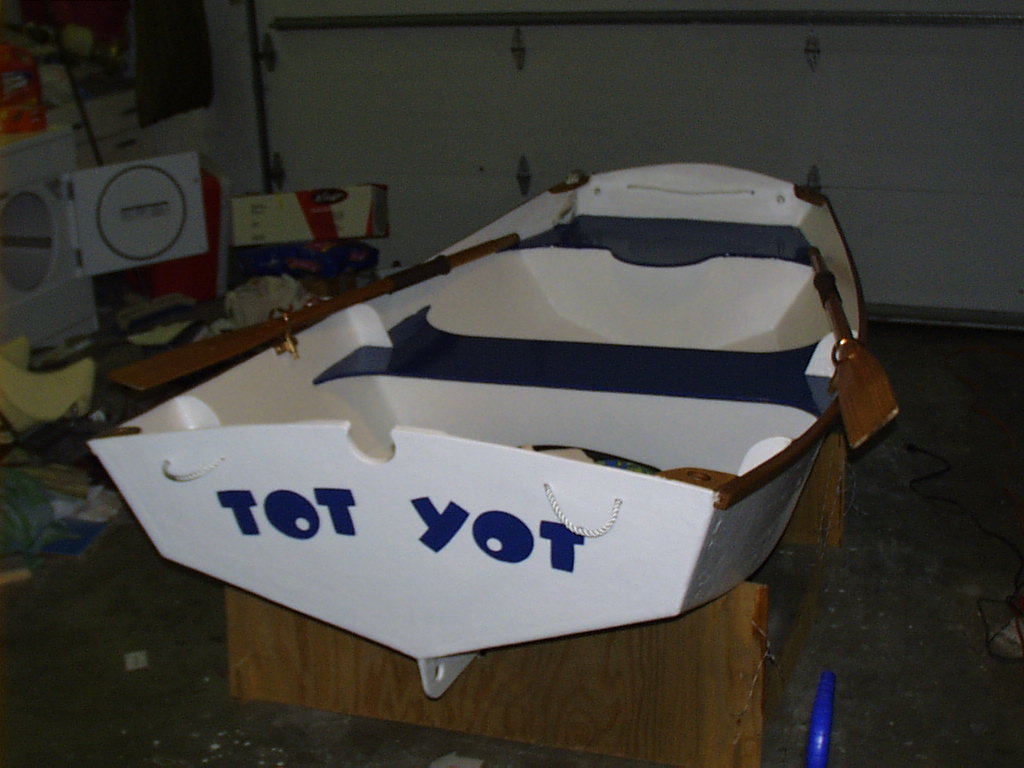
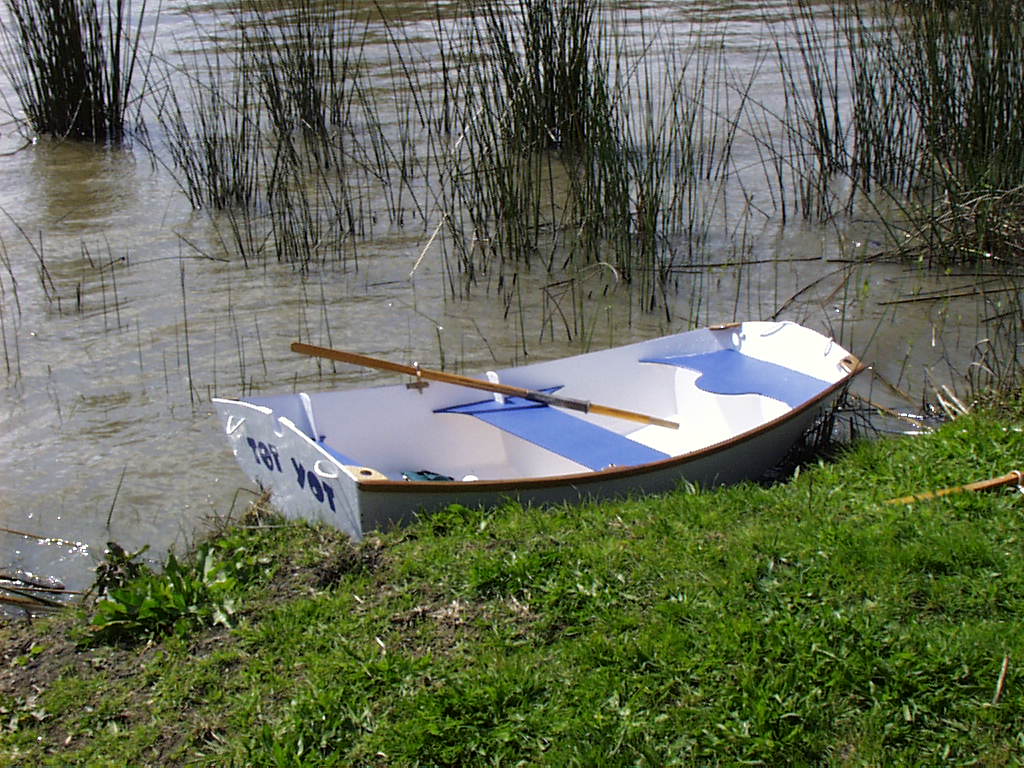
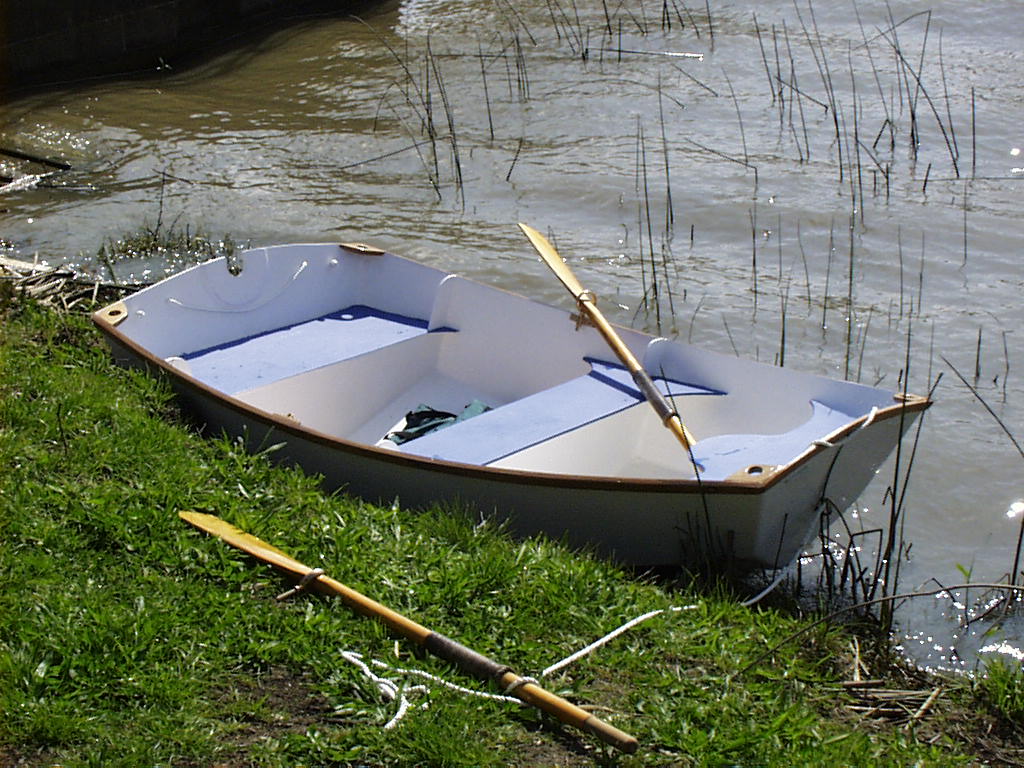
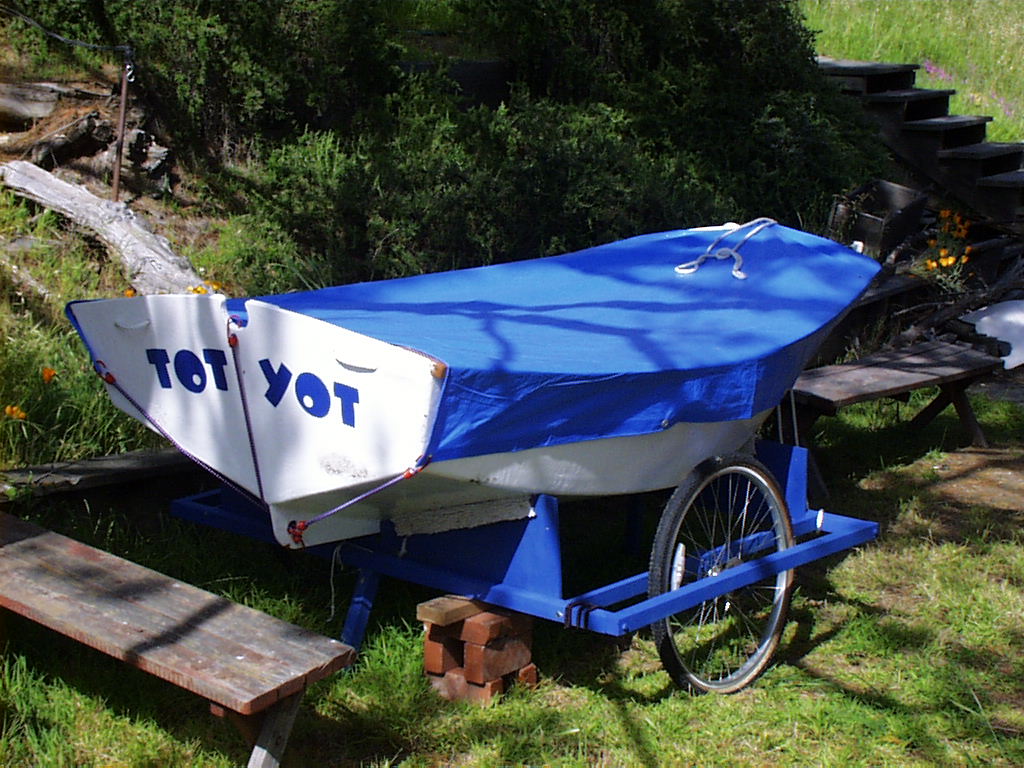
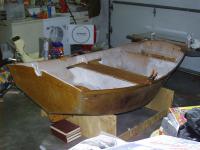
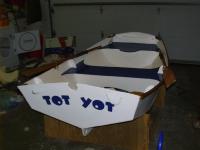
Homebuild boat #2: PK78 widebody pram (the Tot Yot)
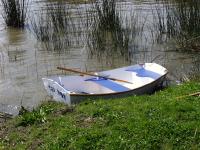
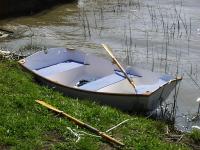
The PK78 is the first boat I built that really worked right. It is about 8' long with over 4' beam, and can carry two adults or one adult and a couple of kids. It can be fitted with a sailing rig. It is very sturdy and should be fairly safe in choppy water if the operator is careful.
Cost: I didn't keep careful track, but I guess it cost around $600 when all was said and done. But I wasted some materials.
Time to build: Around three months of spare time, which I don't have a lot of. Maybe 100 hours total.
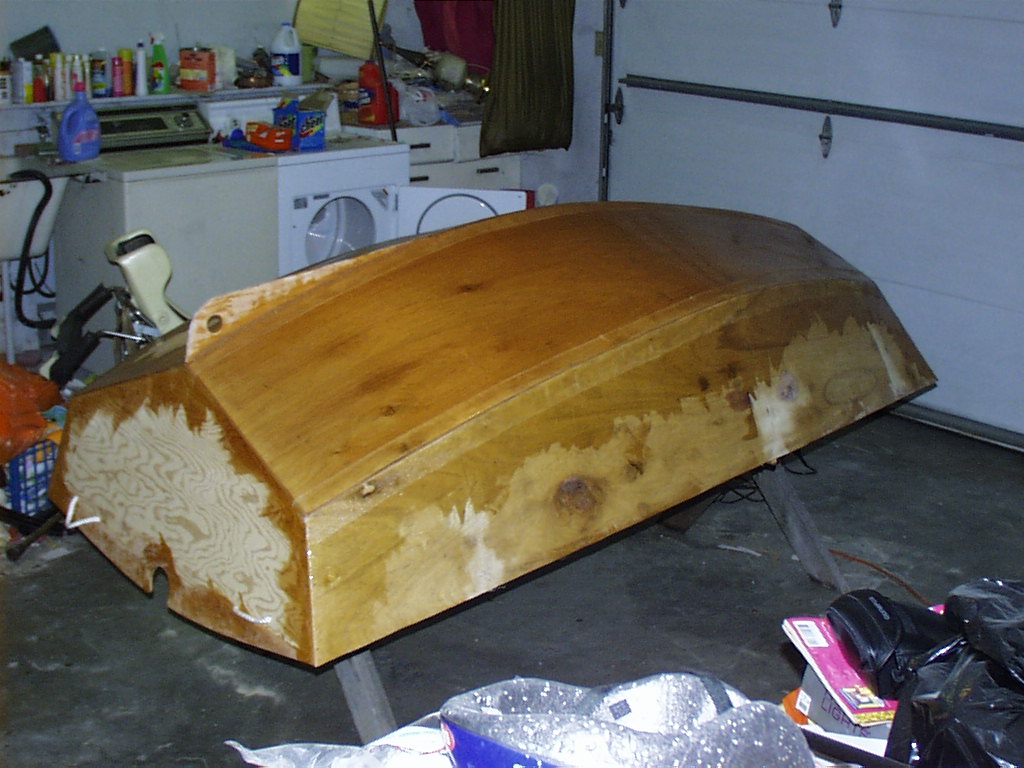
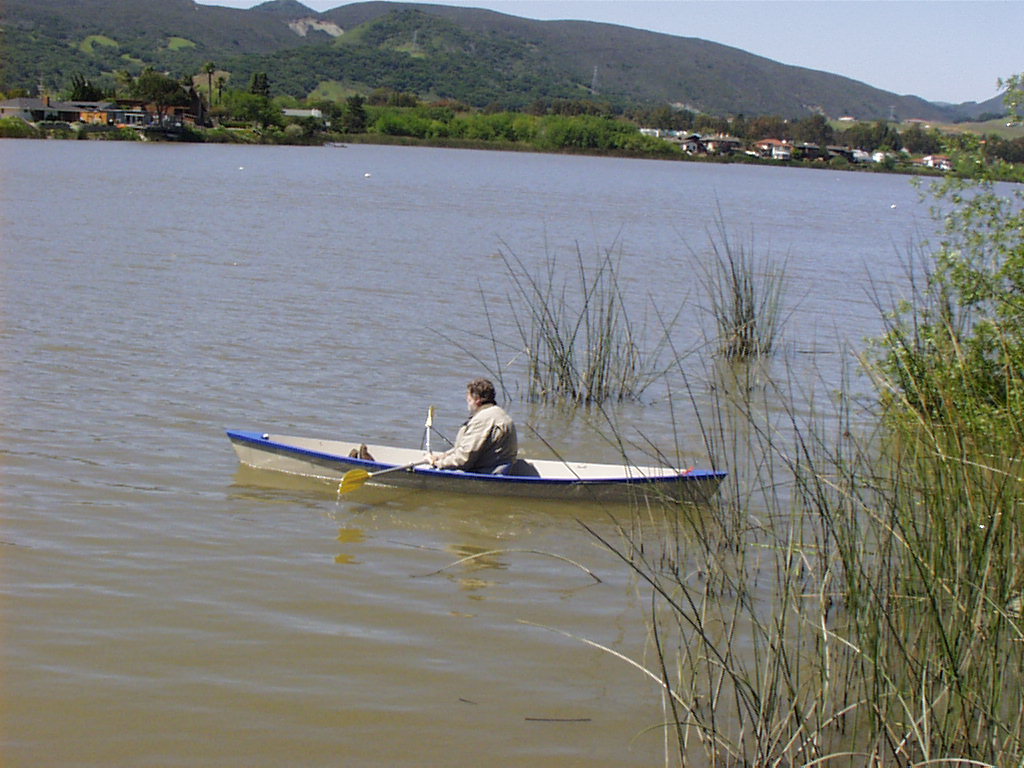
An experienced builder could build it for less, and much faster. I made the fillets too large and kept oversanding and having to recoat, etc., which wasted a lot of time and money. Here are a few pictures of the work in process and the finished product in the water for the first time:
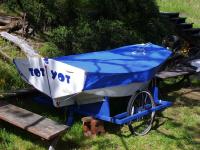
Homebuilt boat #3: Cheap Canoe
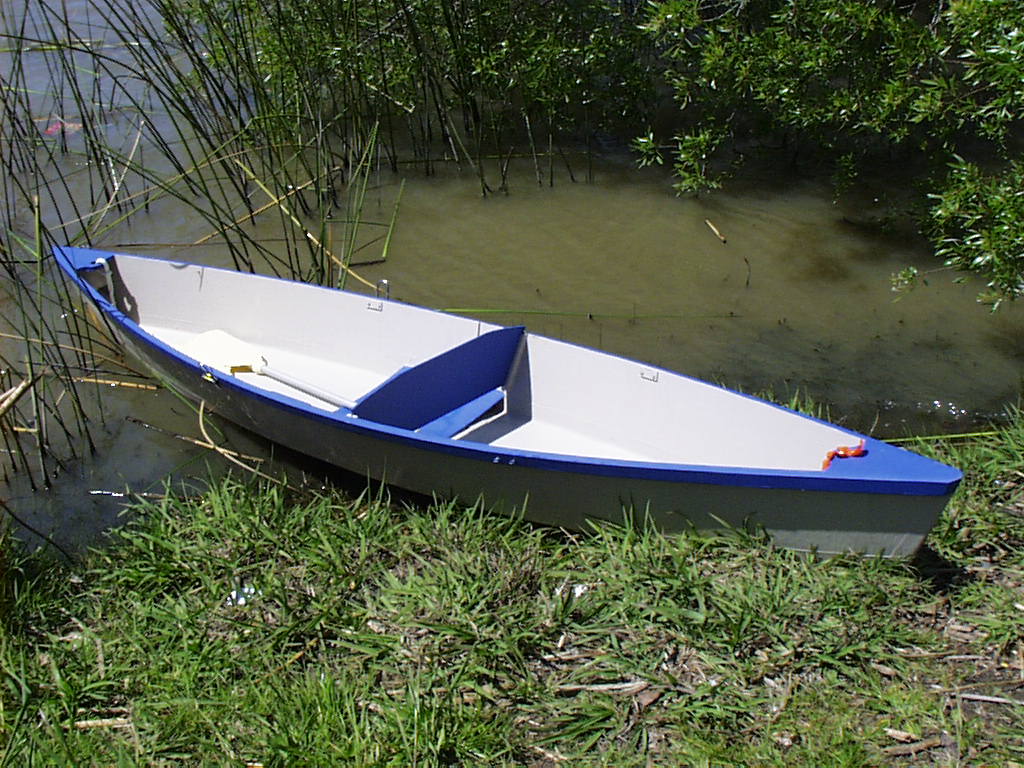
This is a much simpler boat and went together much faster. It is a one-person (or maybe one adult and one small child) boat. It has a flat bottom and flared sides. Not really a canoe, more like a pirogue. Suitable for protected waters, and especially good in shallow water as it only draws a few inches. This is a really nice boat for one person who just likes to sneak around in the wetlands and doesn't want to bother with a motor and trailer and all that. It can be rowed or paddled and can move surprisingly fast if you feel like working hard. Skims along pretty good when you are loafing, too.
Cost: Around $200. The plans are free. The epoxy and glass costs about $150, and it only uses two sheets of 1/4" plywood and some scrap lumber.
Time to build: Under 40 hours.
I believe that it could be built in a few days for as little as $70 if the builder wasn't fussy about appearance and used really cheap materials (and didn't need it to last too long).
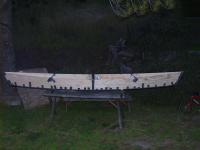
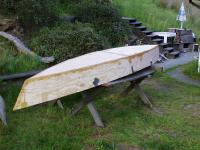
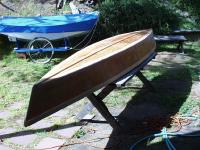
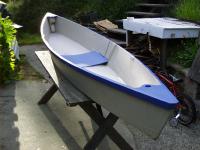

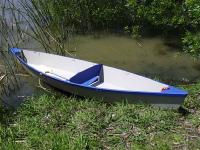
Both of these designs are by Mertens-Goossens; plans are available at Boat Plans Online. The Cheap Canoe plans are free. The PK78 plans are $35 as of this writing.
Lessons learned (about stitch and glue construction)
- Beginners waste materials. It is wise to buy some extra epoxy and filler up front rather than risk running out in the middle of the job. (Epoxy doesn't spoil, so there is no real harm in having some left over.)
- You can make very small fillets and still have a strong boat. In fact, small fillets are much easier to fiberglass.
- It pays to keep a running list of tasks. That way you can see what tasks will require what materials, and mix the epoxy for several small tasks in one batch rather than in several small batches. Saves materials and time waiting for the epoxy to cure.
- It is much easier to lay fiberglass over fillets while the fillets are still wet. It saves lots of sanding later and reduces the liklihood of voids under the glass.
- Cheap vinyl house paint can provide a pretty good finish and is much easier to work with than fancy urethanes and such.
- You can never have too many boats.
Thanks for stopping by. Send email if you like.