 |
| Plants and Animals at Arches |
| Plants |
| Animals |
| Cacti, grasses, lichens, moss, trees, shrubs, wildflowers and more. The plants have to have a way to survive so all of them have to adapt to the extreme temperatures. There are three groups of adapters. Grasses cover 8,000 acres 1) Drought escapers- grow only when water is available annualy- grasses and wildflowers 2) Drought resistors- small/spiky leaves that lessen impact of solar radiation and lose leaves if there is not enough water. Most water loss is then from evaporation-cati, yuccas(tap roots 30 ft. long), moss 3) Drought evaders- survive only where there is a lot of water- flowers and willows |
| Birds, lizards, skunks, ringtails, foxes, bobcats, mountain lions, bats, owls, deer, coyotes, chipmunks, porcupines, desert cottontails, black-tailed jackrabbits, songbirds, squirrels, snakes, mosquitoes, hawks, eagles, insects, kangaroo rats, packrats, reptiles, birds, mammels, amphibians and more. Most of these animals at Arches at nocturnal. Some are "crepuscular" or most active at dawn and some are "diurnal" or active durng the day. Many animals have a temperature range in which they are active, so the active time changes with the season. |
| Soil |
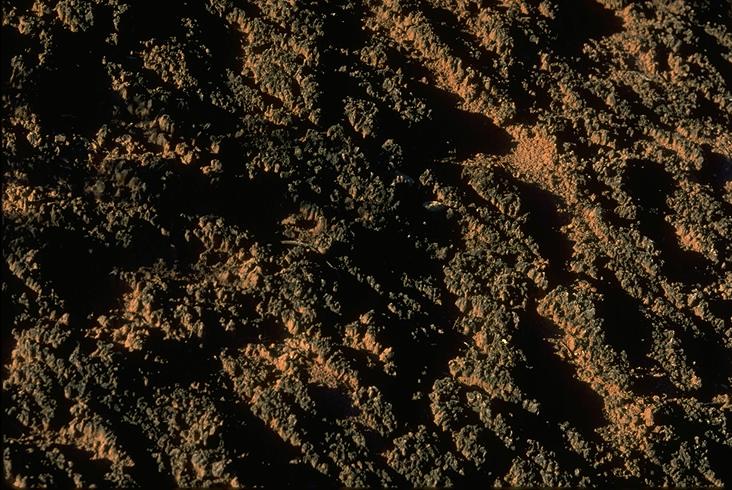
| Cryptobiotic Crust, once called cryptogamic soilm is a dark layer of crust that covers the parts of the desert that are not trampled. This covering protects against erosion and it is easily crushed: stay on the trails. It also retains water, stabilizes the soil and provides important nutrients to the plants. This plant feeds plants and animals so most of the "life" would be gone out of Arches if these were crushed. It contains many living organisims so it is alive. If crushed it may take decades to repair so be careful with the crushed crust! |
| 357 plant species 188 bird 20 reptile 38 mammal 8 amphibian 14 fish |
|
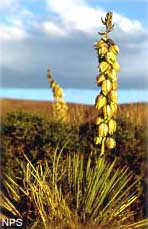 |
| yucca |
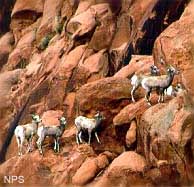 |
| bighorn sheep |
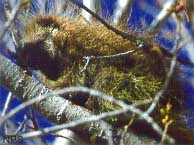 |
| porcupine |