
Sunday Independent
17 March, 2000
Larry the chemical
charlatan and the teabags of death
By Marlene Burger and Peta Thornycroft
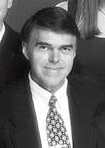 American scientist Larry Ford shot himself on March 2
An American scientist who committed suicide rather than face
trial for the attempted murder of his business partner taught
South African microbiologists how to assassinate enemies using
everyday items
contaminated with lethal germs.
South African scientists who were "tutored" by the American, Dr Larry Ford, were employed at the time by Project Coast, the apartheid government's top secret chemical and biological warfare programme, headed by Dr Wouter Basson.
For the past fortnight, the bizarre tale of Ford, 49, and Patrick Riley, his partner in the pharmaceutical company Biofem, has been unfolding in the Californian town of Irvine, where 48 families were evacuated from their homes as police dug up the yard of Ford's suburban house in search of potentially lethal toxins buried along with thousands of rounds of ammunition.
By this weekend, six "suspicious" canisters - believed to contain hazardous biological material - had been located and 21 containers of arms and ammunition found in secret hiding places in Ford's house.
Ford shot himself on March 2 after a five-hour meeting with his attorney as police closed in on him following the failed assassination of Riley four days earlier.
Ford and Riley were business associates for 12 years, but despite claims that they were making a fortune from an anti-Aids chemical suppository for women, their company was in serious financial trouble.
Los Angeles police believe this was the motive behind a gunman's attempt to kill Riley by shooting him in the face on February 28, an attack Riley survived.
Before going into business with Riley, Ford worked for the United States government as a chemical weapons researcher, his attorney has claimed.
It is believed that he was a US federal government employee when he came to South Africa in 1987 - at the height of Project Coast - to instruct scientists working at a South African Defence Force front company, Roodeplaat Research Laboratories (RRL), how to turn simple items like teabags, doilies and girlie magazines into biological "weapons". Ford also taught them how to manufacture biological agents.
Ford was introduced to the scientists - now known to have developed more than 600 biological cultures, including some of the most lethal germs ever to come out of a laboratory - by Basson as a chemical and biological warfare "expert". The briefing was also attended, according to former Roodeplaat scientists, by Lieutenant-General Lothar Neethling, head of the police forensics laboratory at the time.
Dr Mike Odendaal, a former senior microbiologist at RRL, told the Sunday Independent: "Ford spent the entire day showing us how to contaminate ordinary items and turn them into biological weapons. He explained how we could use various organisms, such as chlostridium oedimatiens, but that didn't make sense because it is not the normal pathogenesis for this organisms." Ford told scientists he would send them contaminated material and that they were to isolate the pathogenic organisms.
"Five black bags arrived at RRL about two days later. We didn't open them until we were in the isolation laboratories and wearing protective clothing," said Odendaal. It took scientists two months to identify the contaminants before Odendaal compiled their report on what became known as Project Larry, named after the visiting American scientist.
Odendaal said his colleagues felt cheated by Ford and saw him as "just another one of Basson's cronies with no valid scientific background" after finding nothing unusual in any of the agents they isolated. However, Ford did give the scientists "ideas about how to infiltrate innocuous objects such as perfume or household items" into close proximity of a potential target, said Odendaal.
Some of the scientists say they were insulted by Ford's apparent ignorance about the level of their scientific accomplishment, while others describe him as a charlatan.
It is not known how many times Ford visited South Africa, but American government officials have confirmed that during the 1980s they were aware that Ford had contact with the South African consulate in Los Angeles.
Ford also forged links with former SADF surgeon-general Niel Knobel, who told the Los Angeles Times this week that the American was an "informal consultant" and advised Project Coast on protection of protection of military personnel against chemical and biological attacks.
However Knobel told the Sunday Independent that he knew nothing of Ford's visit to RRL, or how he and Basson had come to know one another "or even if they did".
Knobel claimed he and Ford had met at a medical congress in America, where Knobel delivered a paper on HIV and Aids.
Quoted in the Los Angeles Times, Knobel said Ford played no part in weapons development in South Africa. Evidence presented since last October, when Basson went on trial in the Pretoria High Court on 61 criminal charges ranging from drug trafficking and fraud to murder, has indicated that no biological agents were turned into weapons by the SADF.
Basson declined to comment on his association with Ford when he was approached on Friday.
The closeness of Neil Knobel's relationship with Ford is illustrated by the fact that in his study at home in Pretoria, Knobel has a framed photograph of Ford with a lion he shot while visiting South Africa.
Ford's neighbours have described him as a devout Mormon and "Good Samaritan...devoted to his church and his family".