| Symbolisum Lesson Seven |
| Few memorials exist of more lowly beings. The general populous simply could not afford to invest in dying while living was such a trial and, with a life expectancy of a mere forty years and general illiteracy, there probably seemed little point in erecting expensive tombs with epitaphs which few could read. |
| The custom of erecting ornately carved headstones over graves is a surprisingly recent innovation, which found fashion in the 18th century. That's not to say that older headstones do not exist, but the tombs you'll find there are mainly of wealthy local dignitaries or men of the cloth. |
| The Georgians were the first to embrace the use of tombstones as permanent memento-moris. Their handsome sandstone memorials, the material chosen to enhance the setting of the burial place and to blend in with the stone-built churches, were flamboyantly carved with allegorical scenes. Grinning skulls nestled among winged cherubs (either smiling, weeping, or blowing trumpets, depending on those left behind), while flowery epitaphs expounded the worthiness and triumphs of the dearly departed. |
| During the early 1800's, Egyptian-style obelisks, adorned with lotus-buds and hieroglyphics became immensely popular, mirroring the vast quantities of sepulchral art and funeral pieces which were being pillaged from the temples and tombs on the Nile and shipped by the boatload for public display in British museums. Angels, gazing skyward, pointing meaningfully to the heavens, clasping wreaths, or even lying distraught across the grave, were so sought-after that vast quantities were shipped from Italy. Italian White Marble is a comparatively soft stone and the ideal material for carving into shapes like books and figures. Wordy epitaphs also succumbed to fashion and were replaced by the use of subtle, though apposite, symbols: cabalistic emblems that�s now forgotten meanings divulge a secret language of mourning. |
 |
| The reflective and conservative sobriety of God-fearing Victorians saw the wane of these funeral flights of fancy as imposing granite monuments, hewn and polished to reflect the clean lines of classical architecture, then embellished with gothic motifs, sculptured leafage and decorated caps, became the order of the day. Stonemasons nicknamed the monolithic and cripplingly heavy designs, 'Undertaker's Gothic'. |
| Here are some of the more popular headstone symbols and their explanations. Many you'll find in a cemetery near you. The next time you happen to tiptoe amongst tombstones, take a closer look - you'll be surprised at the wealth of information they display about the lives of the people who have gone before.
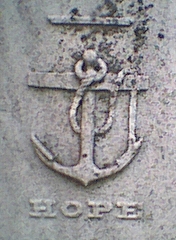
Anchor (or ships): Hope, or 'at rest' Not necessarily the last resting place of an old sea dog, the anchor is an early Christian symbol and attribute of Pope Clement who, in the 1st century A.D., was bound to an anchor and cast into the sea. Angels: Rebirth, resurrection, protection, judgment, wisdom, mercy, Divine love |
 |
| Ankh - Eternal life, peace, truth.
Arch - Victory in death, being rejoined with partner in heaven. Arrow - Mortality. Arches -Victory in death Bed - The deathbed , Like the empty chair, the bed poignantly transforms a household object into a memento-mori. |
 |
| Beehive - Domestic virtues, education, faith, abundance in the Promised Land, piety.
Bell - Mourning. Bird - Eternal life, winged soul, spirituality. Book - The Divine word or one's accomplishments. Broken or Draped column - Early death, grief. Burning Flame Life - or resurrection. Butterfly - Resurrection, short lived, early death. Bouquets/Flowers - Condolences, grief, sorrow Buds/Rosebuds: - Morning of Life or Renewal of Life |
| Broken Ring - Family circle severed
Bugles - Resurrection and the Military. |
| Page 2 of Lesson Seven ................ |