 |
| Symbolisum Lesson Two |
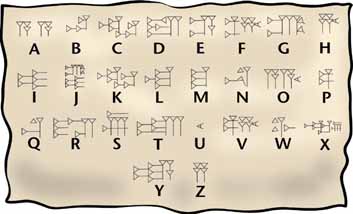
| Continue symbolism through time, the Mesopotamians started it with the cuneiform (wedge-shaped) symbols made by gouging tiny wedge-shaped marks with sharp sticks into wet clay. They were first used to keep track of offers at the temple, but later recorded deeds of the kings, religious rites, myths, poetry and even later divination, mathematics, medicine, and laws. |
| On the left is the Cuneiform alphabet, some looks pretty complex. |
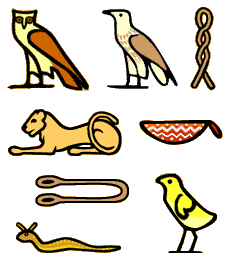
| The Egyptian created a very complex form of pictorial writing we call hieroglyphics (�sacred cravings�). Each glyph, or image, served three functions; 1. Representation of a thing or action. 2. Standing for a sound of a syllable. 3. Clarifying the meaning of adjoining glyphs. The concepts that could not be expressed in pictures, the scribes invented 25 special symbols for each of the languages spoken consonants, allowing the reader to sound out the words. This is the principle of the alphabet, however the Egyptian scribes failed to realize its potential and used it sparingly. |
 |
 |
| During Egypt�s New Kingdom (1550- 700 BCE) scribes resurrected an older alternative form called Hieratic (hy-RAT-ik) script, which began to replace hieroglyphics. They converted the glyphs representing the consonants into abstract letters. Unlike hieroglyphics, which could go into any direction, hieratic script was always written horizontally. Oddly, it seems not to have occurred to the scribes that they no longer needed the large number of glyphs (6,000 of them), which they still retained. The inhabitants Ethiopia selected just 23 out of the thousands of hieroglyphics to create a simplified alphabet known as Demotic. |
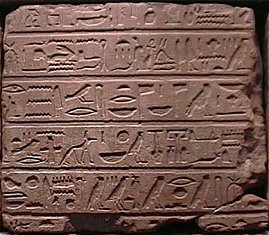
| Stonemasons would inscribe statures of kings and noblemen with the names of their owners in the belief that the stature would provide eternal resting places for their spirits after death. These slabs of stones were set up at the tombs of prominent Egyptians. Decorated with cravings showing the decreased beside a table filled with offerings to the gods and inscribes with magical symbols and ritual prayers to Osiris, lord of the two worlds, they were designed to ensure the safely of the dead one�s soul.
The most powerful symbols are always those of the gods. In Egypt, animals symbolized the gods that best represented their powers. The falcon, soaring high into the heavens and with a sharpness of vision form, which nothing can hide, symbolized Horus, lord of the sky. The fog, with its great fecundity, symbolized Many magical orders, past and present have drawn heavily from an ancient Egyptian background. For them, Egyptian hieroglyphics are an ideal magical alphabet. |
| Quiz: 1.) What shape are cuneiforms? 2.) What were the originally used for? 3.) What does the word 'hieroglyphics' mean? 4.) Name the 3 functions the glyphs served. 6.) Who feels that hieroglyphics are the ideal magical alphabet? |
|