| Symbolisum Lesson One |
| Welcome to �symbolism�, the first couple of lessons will deal with symbolism through time then we will focus more specifically on symbols and symbolism in art, science, and the like.
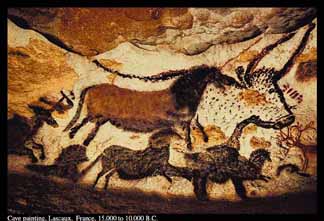
A �symbol� is something that represents something else by association. Many symbols are ingrained in our psyche or are visually recognizable through experience or life�s lessons or education. The word is derived from the Greek symbolon, which was a token used for identification by comparison with a counterpart. Symbols are profound expressions of human nature. They have occurred at all times; from their first appearance in Paleolithic cave painting they have accompanied development of civilization. Human communication depends largely on signs in the form of writing, spoken work, images, and gestures. We recognize, in symbols, objects, action and concepts a sort of universal understanding. Take American Sign Language, a form of hand gestures to communicate, and known throughout the world. |
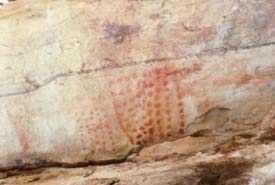
| Some symbols lose their original meaning through time or are so culturally specific that the meaning is lost. Some symbols are absorbed into conquering cultures but some symbols or types of symbols, are so universally understood, that the meaning tends to remain constant. So let us start with symbols in prehistory. The symbols found in cave painting fall into two categories, �naturalistic� depictions of animals, and �abstract�, sometimes geometric forms such as quadrangles, spirals and groups of dots or lines. We can only speculate at the meaning of the abstract ones. The animal paintings sometimes show a shaman leaping high above horses, bison, and mammoths. Many think these types are what are called �sympathetic magic�, where these depictions of success will translate into success in reality. Others think it depicts the Paleolithic peoples order in the world. |
 |
 |
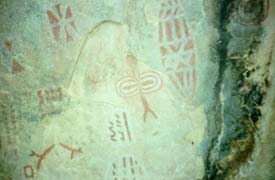 |
| The abstract symbols are interesting because they show very little variation in form over a period of 20,000 years! This tells us they had significant meaning, but what it was is unclear to us today. They could be a calendar, or could have had a magical function.
Many of the dots are grouped in sevens or paralleled lines, and the number seven is universally considered to be sacred, even to this day! |
| By the Neolithic period, there was more of a community type living with more organized public rituals done. Archaeologist found besides pottery, food and ornaments in funeral mounds, but also many funerary symbolism. So begins the thinking that death was but the next journey, this thinking continues to play out in history with symbols and everyday life. |
| 1.) What period can we trace symbols back to?
2.) What was found to prove this? 3.) Name two things these symbols depicted. 4.) What are the two categories cave painting fall into? 5.) Explain �sympathetic magic�, who was it to work? 6.) What number is considered to be sacred? 7.) What made the Neolithic period different for the previous period? 8.) What do we start seeing in burial mounds? 9.) What do these items indicate, what meaning was given to them? |
| Quiz: |