Instructions:
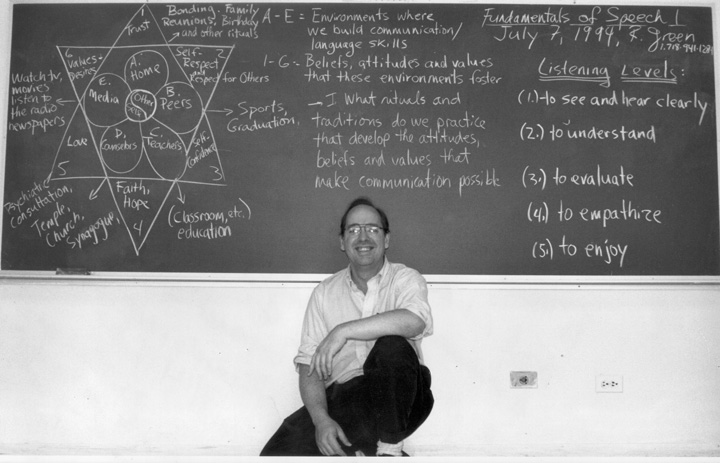
�����In this Fundamentals of Speech college class, we are surveying Attitudes as well as Values, across cultures, traditions, and traditional boundaries.
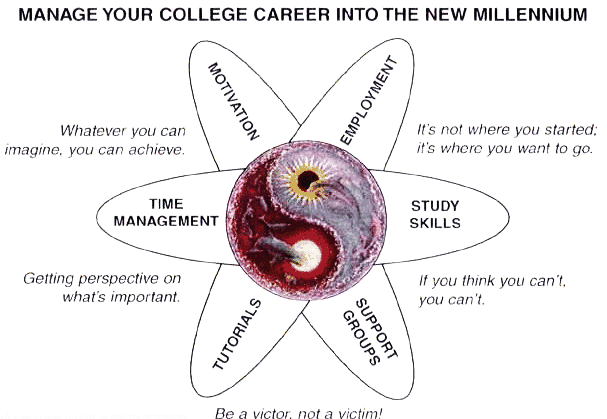
�����We are studying six fundamentals outlined by the star points above. These fundamentals point to universal elements that comprise Attitudes and Values that are fundamental to Speech. Each of the star points are keys for success in our personal and professional lives. A later model of the above sunflower diagram is shown below. This image displays skills and aptitudes that we are learning together:
1. Describe attitudes and values that this class is allowing you to strengthen and develop.2. What are the areas (communication circles) of your everyday life where these attitudes will continue to have the greatest impact?
3. How do you plan to strengthen these attitudes? Explain specific everyday and special occasion rituals and/or habits that will build the skills suggested by the second diagram above.
What does it mean to be cool? Look at the 6 points of the sunflower diagram charted on the board. What lessons can we draw from the two versions of this drawing? What points would you add or change?
When you are cool, you are not greedy like the baker in the story, "The Baker's Smell.� You know how to trust and respect others� needs as well as your own. You are able to cooperate and share.
When you are cool, you don�t run around like a chicken with its head chopped off, like �The Stonecutter,� who always wants to be something else. You have self-confidence and are happy to be who you are and do what you do best. It is not necessary to always compare yourself or your opinions to other people�s understandings. You are happy to be the way you are.
The story of �The Six Blind Men and the Elephant� reminds us to enjoy the attitude of the open mind. We all have different experiences, backgrounds, opinions, and feelings depending upon the quality of attitude we have learned in relation to these differences. The attitude of the open mind is what coolness teaches. With an open mind differences are accepted as inevitable. These differences are part of the beauty and complexity of life. Diversity and differences make life durable and more interesting. To embrace our differences means to accept the ability to see what is right in front of us all the time. Do you remember how the smuggler smuggled donkeys in the story called �The Smuggler?� The official at the border could not see what was right in from of him: donkeys.
To be able to see, we need light. The light of the sun shines when we are able to open our eyes and See. This Sight depends upon our moods and feelings. With an open mind our attitudes, our moods, and our feelings open up. We know what to trust and what not to trust. We know how to respect ourselves and others in the correct balance. Our self-confidence allows us to do things we could never have done before. It allows us to go places we might never have imagined possible. When we develop trust, respect for ourselves and for others, and self-confidence, then it becomes possible to find the courage, hope and love that will guide us through the diversity of circles that sustain us. (Where are these circles located in each of the diagrams on the board? Where is the star in relation to these circles?)
Let�s remember the lessons on coolness that the attitude of the open mind teaches. The story, �A Farmer's Horse Ran Off,� will show us that different opinions are not good or bad, just different. Nor does the lesson of this story teach or imply indifference, rather, as the story of �The Six Blind Men and the Elephant� teaches, we need to accept more than just one point of view or perspective to reach the truth. We also need to open up all of our Senses (eyes, ears, nose, mouth, touch, intuition, etc.) to be able to See in order to truly Be Ourselves. Self-Confidence depends upon this kind of trust and respect for our own feelings as well as the feelings and opinions of others. Love (#6) is impossible without trust (#1), respect (#2), self-confidence (#3), courage (#4) and hope (#5).
The starflower diagram teaches us that self-confidence depends upon openheartedness as well as the open mind.
