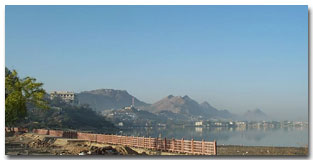
Ajmer derives its name from Ajaya Meru (the
invincible hill) founded in the 7th century by Raja Ajai Pal
Chauhan is
situated in a valley surrounded by Araveli hills. The Chauhans
dominated
till the end of 12th century when Prithvi Raj Chauhan was
defeated at the
hands of Mohammed Gauri. Since then , Ajmer became home of many
dynasties
.which left behind indelible marks of their culture and
traditions. Sir
Thomas Roe, the ambassador of King James 1 of England, presented
his
credentials to Jahangir herein 1616. From 1818 onwards it came
under the
domain of British Empire. Today ,Ajmer is popular pilgrimage
centre for
the Hindus as well as Muslims
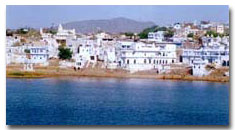 |
Pushkar : Holy Lake in Pushkar is surrounded by 52 bathing Ghats, has its religious significance which rooted in myth. A gigantic fair is held every year on Kartik Poorima ( Full Moon in Oct. - Nov.). The Fair is also biggest Camel Market. |
|
|
|
|
|
|