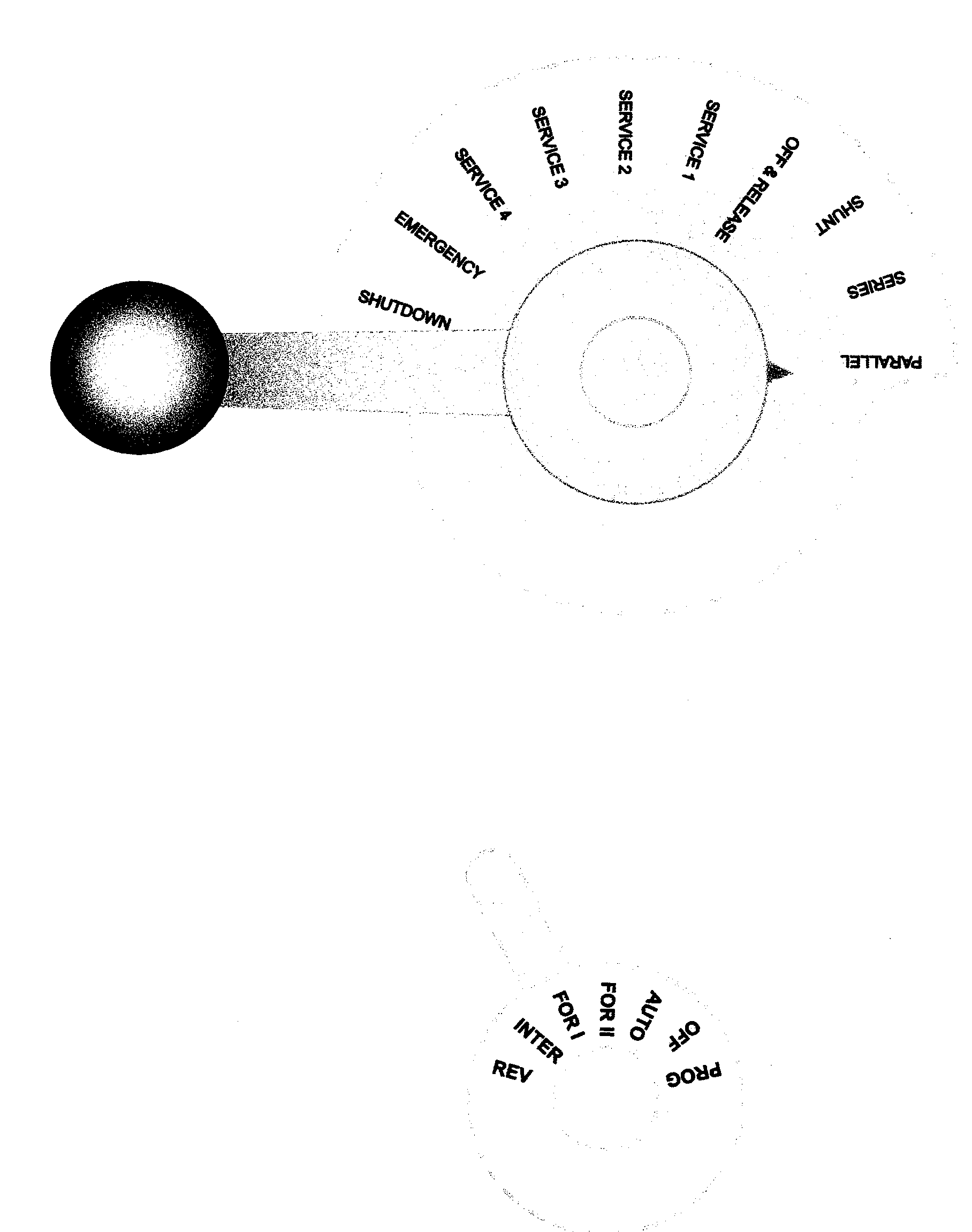
 combined traction brake controller (ctbc)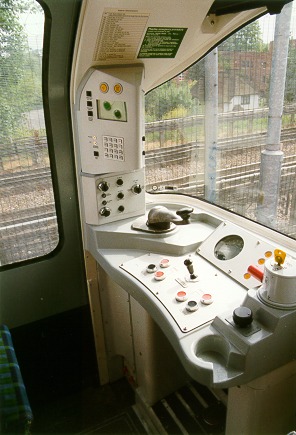
the ctbc has 10 positions
5 braking positions:
- service 1
- service 2
- service 3
- service 4
- emergencey
3 motoring positions:
- 1 shunt (extrmely slow speed)
- 2 series (intermediate speed)
- 3 parallel (normal line speed)
2 other positions are
- shutdown
- off and release
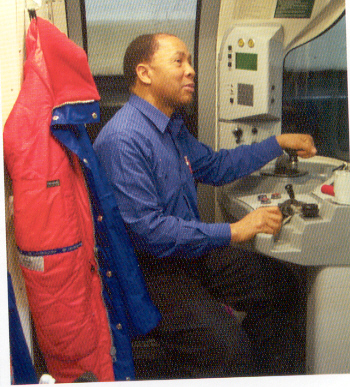 with one hand the driver controls the train, leaving the other hand free for the very important task of holding a mug of tea.
 this hand can also be utilised for using the pa, operating the automated announcer, waving at passengers, picking your nose, stuffing your face, using a mobile phone etc etc
the ctbc is truly an ingenious device
now, the idea behind the deadman is that it needs to be constantly depressed to release the breaks on the train. if a driver is incapacitated and releases the handle, all the brakes are applied and an alarm signal is sent to the line controller.
what the clever designers did not think about is what happens if the incapacitated driver falls on the handle (i will leave that to your imagination)
There are 2 types of service brakes fitted to the 1973 stock. the electrical failsafe westcode air brake system which is controlled by selecting service 1 - 4 on the ctbc.
A rheostatic brake on all motor cars that cuts in between 21 - 50 mph and drops off at 10 mph
now if you had a fleet of cars, had different people drive them, had them serviced at different intervals over a 30 year period, all the cars would react differently.
it is the same with the 1973 stock. some accelerate faster than others. some brake harshly, some smoothly. in fact you can drive the same train from the opposite end and it will react completly differently.
it is an unknown quantity for the driver and anyone who has driven a train knows that a train does not stop like a car. in fact a train does not stop, it kind of slows down untill it eventually comes to a standstill, so you are constantly judging breaking distances.
add that to gradients, poor adhesion, adverse weather conditions, different loads and its quite a challange to hit a platform at 40 mph and smoothly stop, bang on the platform monitors.
all that without spilling your mug of tea.