Five California Architects: Irving Gill
by Esther McCoy, Los Angeles: Hennessey & Ingalls, 1960. p. 79-83
 Today some of his houses are entirely covered with the Bignonia tweediana which he envisioned as tracery,
 and the Ficus repens meant as embroidery now strangles many a pergola. But when a gnarled and twisted leptospermum trunk and lacey foliage is glimpsed through the clean lines of an arch in Scripps Hall at Bishop�s School, Gill�s ability to extend architecture into planting becomes beautifully clear.

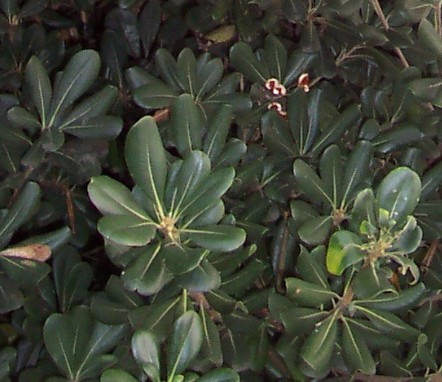 He liked the dark glossy greens of pittosporums
 and the Coprosma baueri as screens, or as cool depths to look into from porch or terrace. The trim on his houses was invariably dark green, borrowed from his plantings. One of his favorite effects came from massing red geraniums near the house.
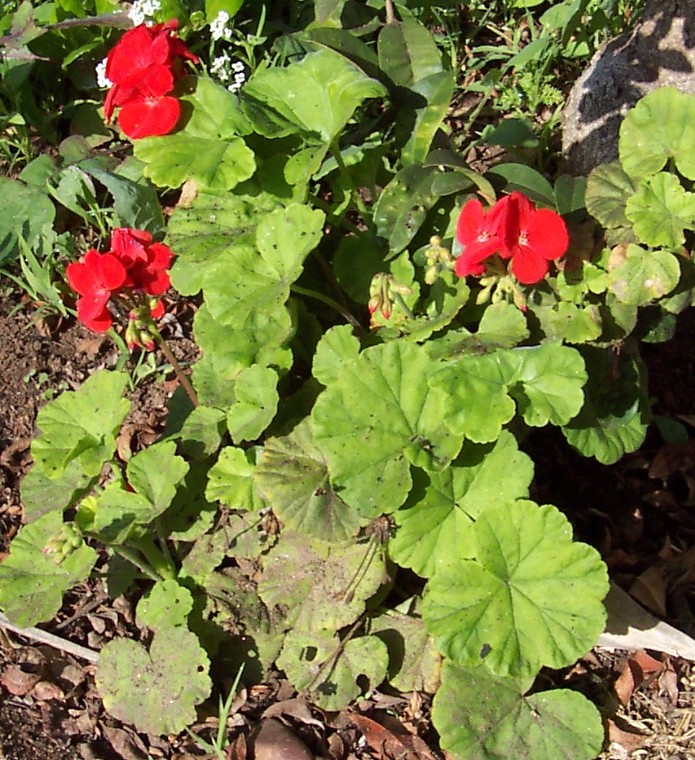 The geraniums, in Eloise Roorbach's words,"took a second blooming upon the walls of the rooms," because Gill had devised a paint which reflected color. What first appeared to be monotone walls were sensitive surfaces which received the impressions of all colors inside the room and of the planting near glass doors and windows. The paint was a mixture of the primary colors, added to white. By varying the proportions of the pigments, a wall could be keyed to the blues, the violets, or any color he wished.