Olden
Times
From
A.D. until the 13th century
|
The Latvian territory 1st through 4th
centurywas inhabited
by Liv and Baltic nations. In North Kurzeme lived Livs, also in Vidzeme
and part of Latgale.
Kurshi
people inhabited the centre and south part of Kurzeme. Zemgali inhabited
Zemgale, and near them were Seli. Latgali inhabited the centre and south
part of Latgale.
The
Kursh nation were sailors, they travelled to Sweden and Danish islands.
Other nations were crop-growers, cattle-breeders, fishermen and hunters.
From
9th until 11th century Baltic nation’s neighbours
were Finnish, Slavish and Germanic nations. In the end of the 12th
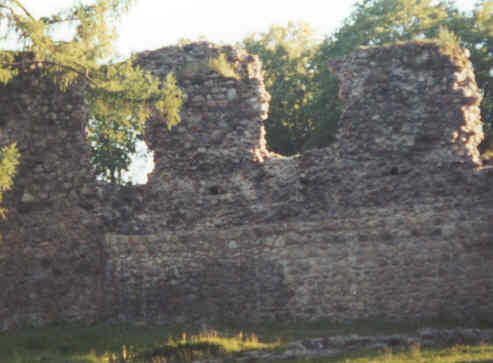
century in Latvia’s territory there were five regions - Kursa, Zemgale,
Selia, Vidzeme and Latgale |
 |
The
Middle Ages From 13th
century till 16th century end.
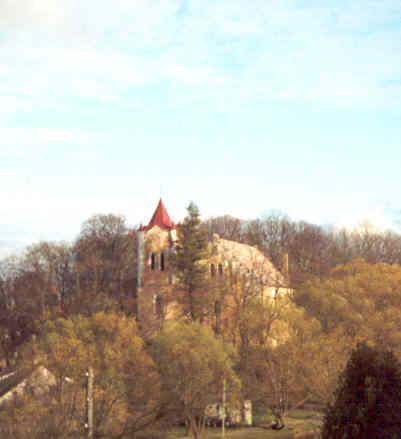 |
In the beginning of the 13th century
German aggression started with the purpose of introducing Christianity
in Latvian territory. The first to accept Christianity were the Livs.
The
Germans named the conquered territory Livonia.It
was the common possession of the Roman pope and the German emperor.The
bishops and the knights divided the power in Livonia.All
the knights received land, which they could pass on to the next generations,
after the conquest of Latvia and Estonia.
The
responsibility of the conquerors was to rule over and protect the land.The
peasants were supposed to pay taxes, because their farms were on the lands
of the rulers.They also were supposed
to build now castles and take care of the roads.
The
inhabitants of the city were primarily craftsmen and merchants, who formed
different associations. The
towns of Livonia were also part of the Hanseatic League:Riga,
Kuldiga, Straupe, Tallin, Cesis, Aizpute, etc. Livonia
existed for more than 350 years. |
From 16th
century end till 18th century.
The New Times
Poland
had taken over the territory of Latvia before the Polish-Swedish War (1600-1625).After
the war, Sweden conquered all of Vidzeme, as well as Riga.
In
the 17th century, the economic situation in the duchy of Kurzeme
and Zemgale rapidly improved, and shipbuilding, paper manufacturing, and
amber working were developing.For
a short time, the duchy of Kurzeme-Zemgale owned Tabago in the Carribean
Sea, and Gambia on the Atlantic Ocean in Africa.But
this economic prosperity did not last long, because the next dukes of Kurzeme-Zemgale
though only of a luxurious lifestyle.
In
the 17th and 18th centuries, many writers lived in
Latvia, mostly in the capitol city, Riga.They
were, unfortunately, mostly of Germanic origin, but they did understand
the difficult condition of the Latvians in society.
In
1700, the North War began, which continued to 1721.This
war was between Russia and Sweden, which were two of the most powerful
nations at that time.In 1795, all
of Latvia was under Russia; that had happened in stages.
In
1812, when Napoleon invaded Russia, he also “stopped in” in Latvia.
In
the first half of the 19th century, the serfs were set free
in Kurzeme and Vidzeme. The
serfs in Latgale were set free in l861.
In
1905, there was a revolution in all of the territory of Latvia.It
began just after the events in Russia, where the Czar’s forces began to
shoot the farmers.In the course
of the revolution, many estates were burned, and with them many notable
literary and art works.
During
World War I, Latvians gained the right to serve in the Russian army.
Newer Times
From 1918 till 1940.
The
Republic of Latvia was proclaimed independent on November 18, 1918.In
fact, Latvia did not yet exist, because it did not yet have its own army
to fight for independence.In that
same year, the national army was formed, and immediately afterward, until
1920, it participated in a difficult fight for independence.
In
the newly formed republic, the education system was developed and agricultural
reform was affected.In this period
of time, many internationally known culture workers came on the scene.
The
railroad and highway system were also developed rapidly.Latvian
goods were in demand in Europe, and exports exceeded imports, improving
the monetary situation.
Latvia
was known for its inventions, for example, the smallest camera in the world,
the Minox, which was invented in 1938.Unfortunately,
the Second World War interrupted all these positive beginnings.
Soviet Occupation Times
From
1940 to 1991.
After
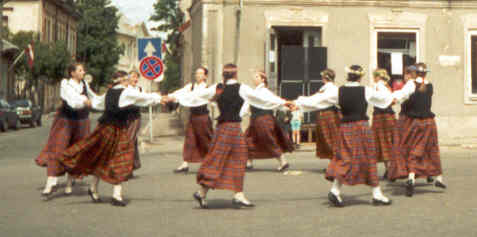
50 years of occupation, Latvia regained its independence in 1991.
Latvia: Geography and other information
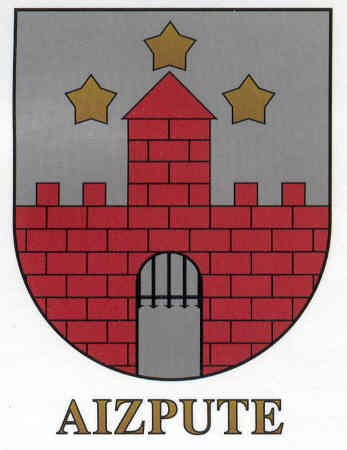
| Our town Aizpute is a small town through which flows the Tebra River.
Eco-tourism is widespread in Aizpute. Once a year our school goes on hikes,
it is in September. Each class goes according to its plan and time. There
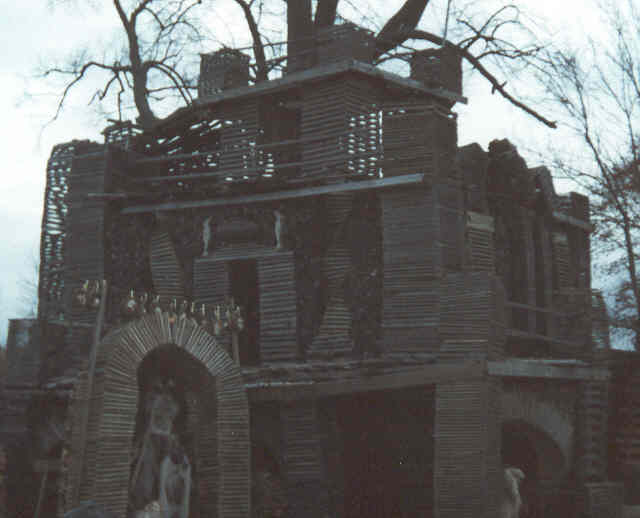
is a man in Aizpute who builds castles out of firewood.You
can read more about him at www.gramata21.lv/maineng/
.Not far from Misinkalns, a hill
near Aizpute, there is a spring, the ruins of an ancient castle, and other
interesting places. |
 |
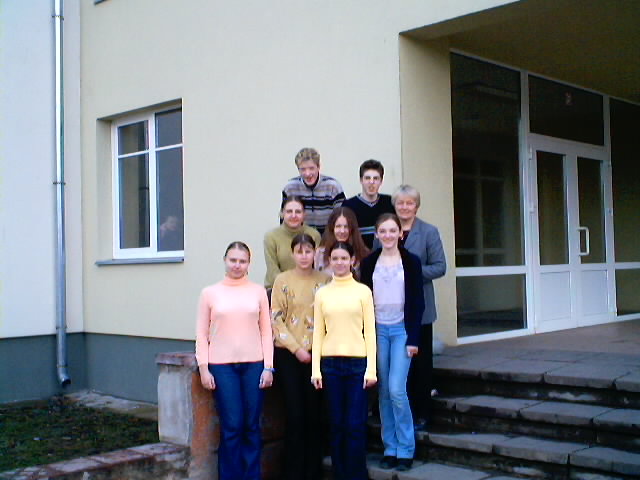
Finally, meet Aizpute's Secondary School's Team