Cyprus
Past and Present
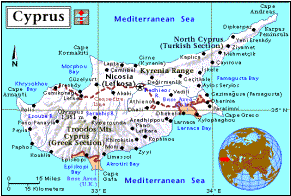
Cyprus, though a small island, has always played an important role in
the history of the Mediterranean, far exceeding its size. The first sings of
undisputed human activity can be traced back to the 8th millennium BC when the
first settlements an encountered Vestiges of such early communities are found
all over the island, like at Khirokitia, Kalavassos-Tenta, Apostolos Antreas-Kastros,
Phrenaros etc…
Neolithic Cypriots
built circular houses with small undressed stone for the lower structures and
sun-dried mud bricks and clay for the middle and superstructure.
The daily life of the
people in those Neolithic villages was spent in farming, hunting, animal
husbandry and the lithic industry, while women were engaged in spindling and weaving
cloths, in addition to their probable participation in other works as well. The
lithic industry was the most individual feature of this aceramic culture and
innumerable stone vessels made of grey andesite have been discovered during
excavations.
Land
Area: 9,251 sq km (3,572 sq mi).
Capital and largest city: Lefkosia (Greek name--changed from Nicosia February
1995; Lefkosha is Turkish version.) (1991 est. pop. 166,500).
People
Population (1993 est.): 723,371; density: 78.2 persons per sq km
(202.5 per sq mi).
Distribution (1990): 62% urban, 38% rural.
Annual growth (1993): 0.9%.
Official languages: Greek, Turkish.
Major religions: Greek Orthodoxy, Islam.