 |
|
|
|
|
|
|
|
|
|
|
|
|
|
|
|
|
|
|
|
|
|
|
|
|
|
|
|
|
|
|
|
|
|
|
|
WWII |
|
|
|
 |
|
|
Ever since I was young, I have always been interested in World War II. On June 4th, May 4th and May 5th my thoughts go out to the many soldiers that risked or gave their lives to liberate Europe and the rest of the world. With my heritage in Holland my main interests have been D-Day, the Battle of the Bulge, a Bridge too Far and liberation day. There has always been that mysterious connection that draws me to events, commemorations and calibrations honoring those who fought for freedom during WWII. |
|
|
|
|
|
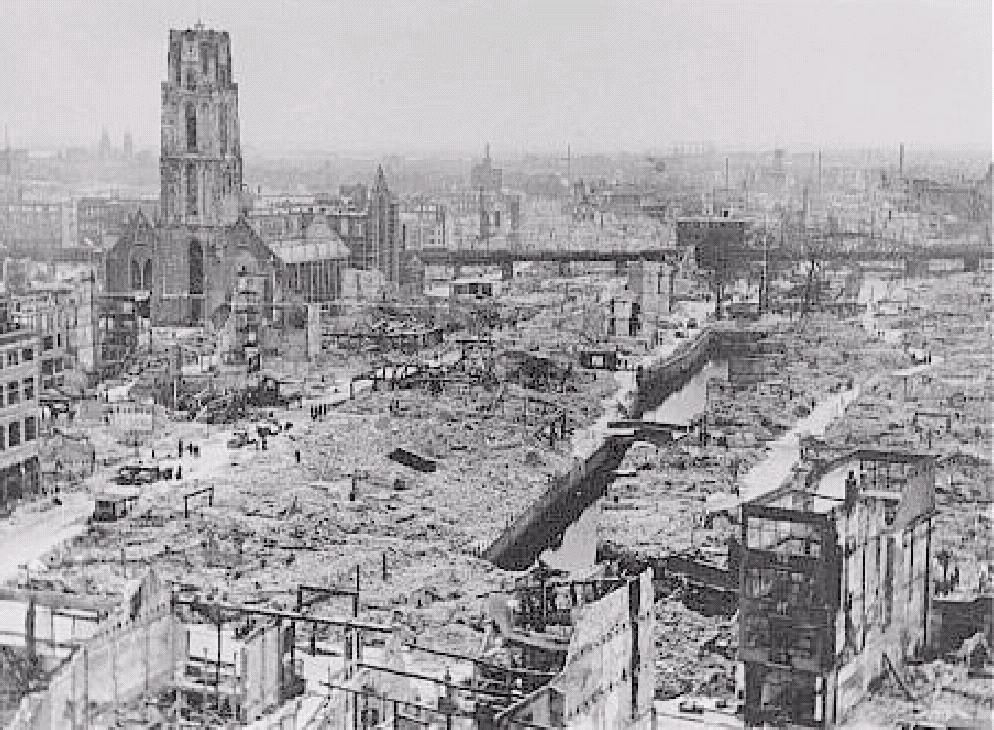
During WWII the Germans took both my grandfathers from their families to work in Germany. Both survived the war and returned safely to Holland. Their home city Rotterdam was bombed on May 14th where 6,000 people died and 80,000 people lost their homes. The city center was famished and bombs fell less then a mile away from my grandparent's (Fam. Bakker) home.� It was at their home where I started reading WWII books and looked at the photos of warships and the bombed city of Rotterdam. I guess it runs in the family. |
|
|
|
|
The first confrontations, 40 years D-Day and Liberation Day 1984/1985: |
|
|
|
It was 40 years after the Allied forces started the landing in Normandy, operation Overlord, D-Day. I was drawn to the television where I saw veterans marching by, a fly-by performed by WWII planes, a fleet of allied warships and world-leaders speak about freedom, peace and prosperity. I had a desire to experience it at least one more time in my life. |
|
|
|
One year later on May 5th 1985 I never forget the first sight of WWII airplanes flying over the city of Maassluis. Spitfires, Hurricanes and WWII bombers were catching my breath and I remember that I was fascinated by the shape and sound of these beautiful airplanes. They were on a mission to commemorate the fallen in the city of Rotterdam. It was 18 years later that I was in one of these bombers in Kansas City at a local display of WWII planes |
|
|
|
Keep Them Rolling, 50 years Liberation Day 1995: |
|
|
|
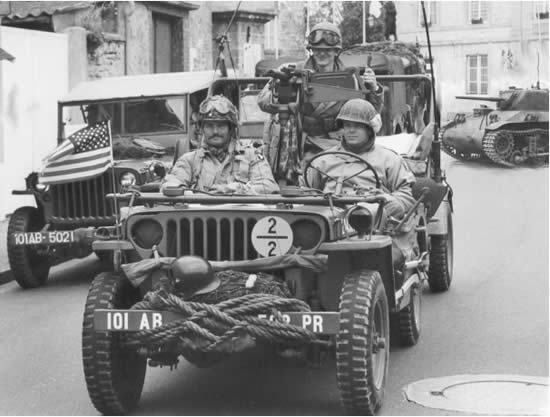
In 1995, 50 years after the liberation of Holland, I was invited to ride with the Keep Them Rolling club (www.ktr.nl). This club is a collection of WWII vehicles. Willys MB's, tanks and all sorts of trucks are part of this fascinating 'riding museum'. Dressed as a soldier I was riding in the front of a Willys MB from a former communication unit and we were part of a group of 120 jeeps, trucks and tanks. |
|
|
|
It was an amazing experience; hundreds of thousand of people were lined up in the streets of Vlaardingen en Schiedam to see this spectacle. In the Dodge truck behind us the emotions were too much for many of the Canadian and British war veterans whom 50 year ago liberated this part of Holland. At the end of the 4-hour tour they thanked us and I wondered why, because we owed them so much more. |
|
|
|
 |
|
|
|
 |
|
|
|
|
|
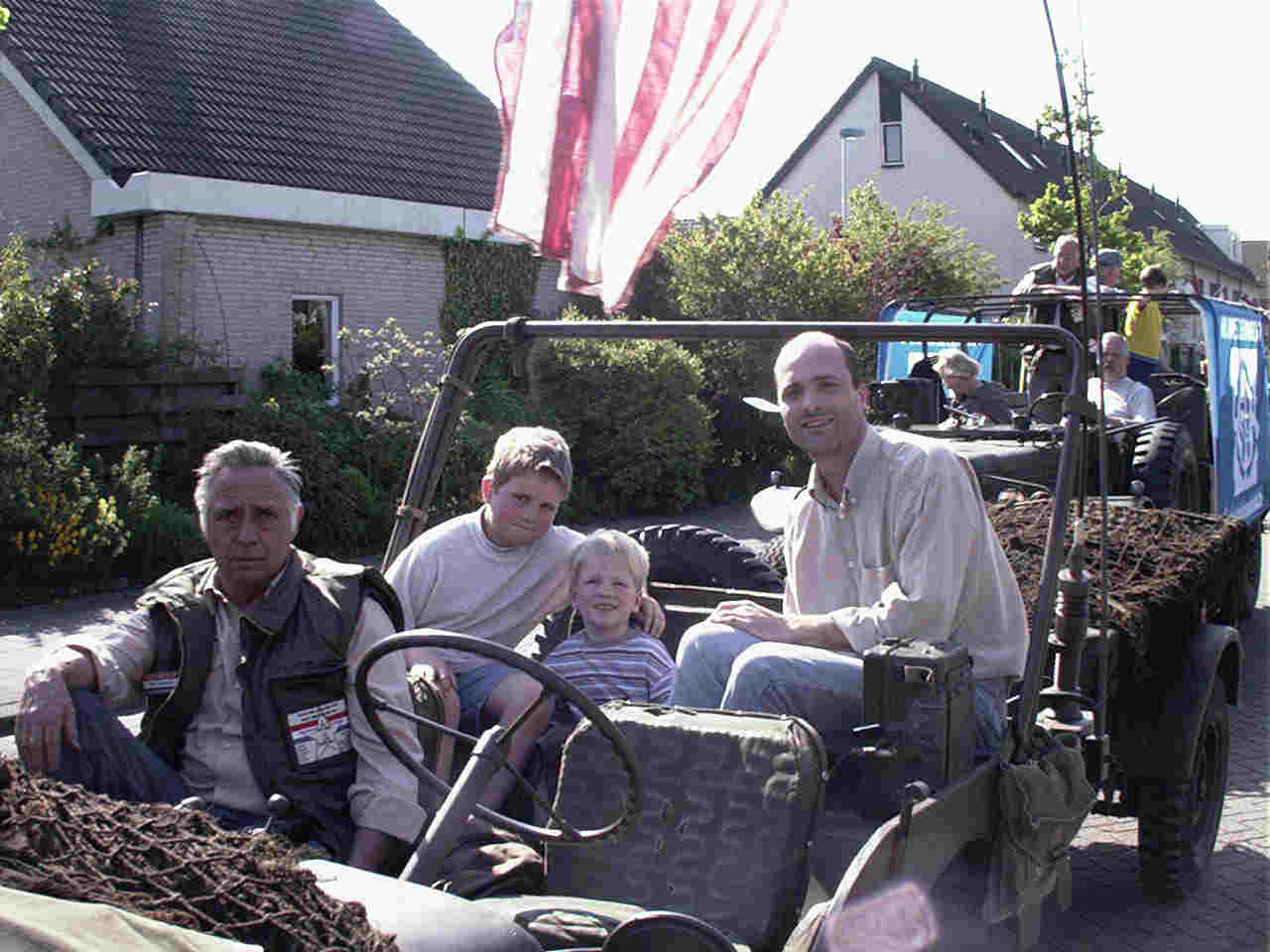
5 years later I had my personal reunion and when KTR showed up in Hoek van Holland, a small town in Holland. In the picture I have Steven and Steven sitting next to me. |
|
|
|
Hoek van Holland, The Atlantik Wall: |
|
|
|
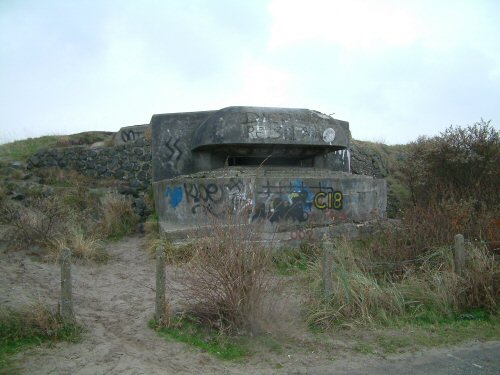
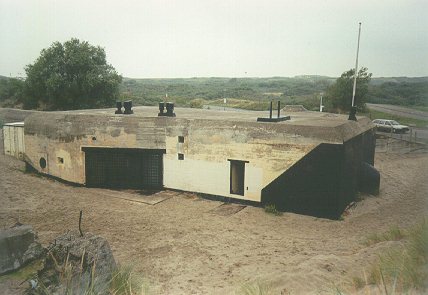
I lived in Hoek van Holland for 5 years. With interest in WWII this could not be a better place to live. This town remained to have a big number of bunkers as part of the German Atlantik Wall, a belt of fortifications constructed along the coast of western Europe in 1942-44 to repel an anticipated Allied sea borne invasion launched from Great Britain. To build this "wall," the Germans employed Fritz Todt, the engineer who had designed the West Wall along the France-German border, and thousands of impressed laborers to construct permanent fortifications along the Norwegian, Danish, Dutch, Belgian and French coasts facing the English Channel. The line consisted primarily of pillboxes and gun emplacements embedded in cliff sides, dunes or placed on the waterfronts of seaside resorts and ports. Included were massive blockhouses with disappearing guns, newsreels of which the Germans sent out through neutral sources in an effort to awe their adversaries (though the numbers of big blockhouses actually were few). On the French southwestern and southern coasts, similar though less formidable defenses were erected. |
|
|
|
The Allied military buildup in southern England in 1943 signaled to the German high command that an invasion was indeed coming and early in 1944 Field Marshal Erwin Rommel was assigned to improve the defense of the French and Belgian coasts. Rommel found the existing coastal fortifications entirely inadequate and immediately began strengthening them. Under his direction, a string of reinforced-concrete pillboxes or bunkers were built along the beaches or slightly inland to house machine guns, antitank guns, and light artillery. Minefields and antitank obstacles were planted on the beaches themselves, and underwater obstacles and mines were planted in the waters just offshore to destroy Allied landing craft. By the time of the invasion, the Germans had laid about 5,700,000 mines along the Atlantik Wall. More gun emplacements and minefields extended inland, along the roads leading out from the beaches. |
|
|
|
The Allied's did not land in Hoek van Holland and many of the bunkers were deserted without a fight. This is one of the reasons that many of the bunkers are still intact. Hoek van Holland remained to be a strategic town for the Port of Rotterdam. Development of tourism and housing prevented that many of the bunkers were destroyed after the war. For that reason you can visit many of the bunkers in Hoek van Holland. Hoek van Holland has also the Fort. It was built in the late 19th century and occupied by the Germans in WWII. Today it is a beautiful museum with many reminders of the Dutch army, German Army, Canadian army and weapons and tools used in the Fort. In the late 90?s the Fort got back the canon housing on top of the Fort. |
|
|
|
I have visited the Fort and bunkers many times. Together with Steven and Melanie I spent hours in and around the bunkers. In 1999 three crazy Dutchmen went back in to history. Dressed like soldiers they visited the bunkers of Hoek van Holland, The Fort and had a lot of fun. The crazy people;..Patrick, Hans Bodenstaff and Marcel van Goozen. |
|
|
|
 |
|
|
|
 |
|
|
|
Normandy June 4th 2002 (D-DAY 58 years later): |
|
|
|
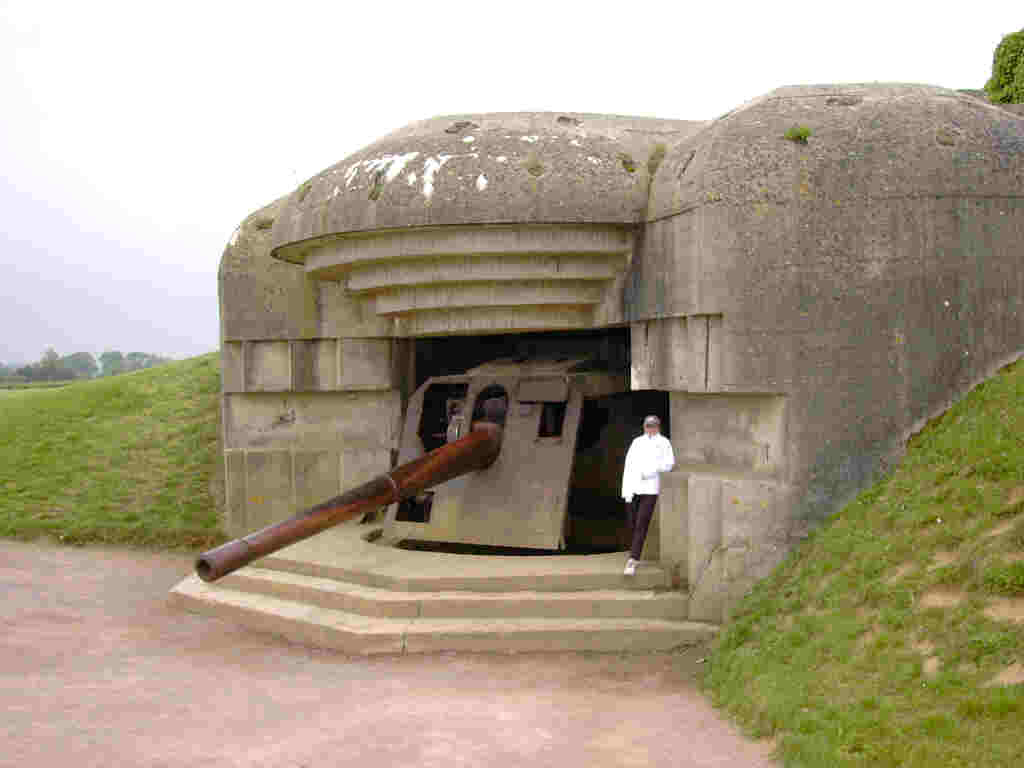
It had been a wish for me to visit Normandy on June 4th, D-Day. On June 4th, 2002 my wish came true. Michele and I decided to go visit Normandy to remember Operation Overlord. It was a special event and days to remember forever. In the midst of the veterans we remembered those who landed, fought and fallen on the beaches of Normandy. Bunkers, vehicles, reenactments, parades and many emotions made it very special. With enthusiast driving in old army trucks and jeeps, dressed in WWII uniforms and the never changed landscape made it feel like we were actually there, 58 years ago. Moving to the USA I knew that this was probably the last chance to experience D-Day the way I wanted. With the every day decreasing number of veterans there will come a time that D-Day will not be remembered as it has been the last 60 years. The emotions were there and seeing the crosses of so many, made me think about the sacrifices these people made for a cause that many of us today do not understand. I hope that the next generations will be taught to know about and remember Operation Overlord and the sacrifices made that day. |
|
|
|
 |
|
|
|
 |
|
|
|
|
|
What is it with me and WWII: |
|
|
|
I don't know and understand the connection, but it is there. What is drawing me to the events, and what is building up the emotions when I see or experience WWII moments? Whether it is a movie, a real site, people that have served in the war or just a thought I experience a feeling that I cannot describe. In 2002 I moved to Kansas City in the USA. In Kansas City it was a monument that caught my attention the very first time I visited Kansas City. The monument gives the best view over downtown but that is not what drew me to this beautiful monument. The monument is a memorial for the war veterans of Kansas City and it houses a treasure of World War I and II artifacts.
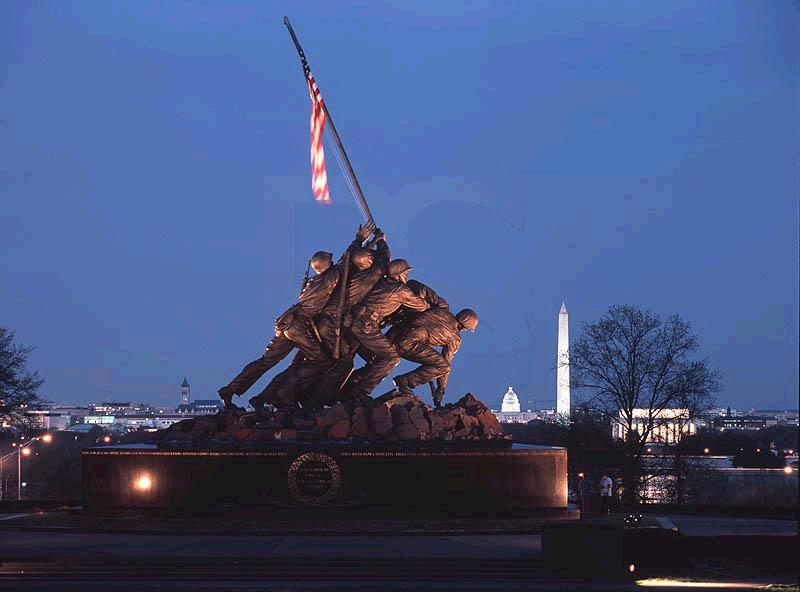
During my visit in Washington DC I visited the Iwo Jima memorial. This is a memorial for the 'other' war, the war in the Pacific ocean.The memorial shows the 6 US soldiers raising the Stars and Stripes on top of the mountain. It symbolizes the famous picture made by a US war photographer and that same picture became a symbol of courage and strength of the US Army fighting the Japanese on the Island of Iwo Jima. In 2004 the new World War II memorial site was finished and opened for public. In my next visit I will certainly visit this memorial together with the Netherlands Carillon. The Carillon expresses the gratitude to the USA for their aid during and after WWII. At the same time it charactirizes the friendship by a common allegiance to the principles of Freedom, Justice and Democracy.
I am sure that my move to the USA will bring me to many places where I can continue to be emotionally connected to this time in history. In the mean time I think, remember and pray for those who fell victim of this sad part of history. |
|