 |
|
|
|
|
|
|
|
|
|
|
|
|
|
|
|
|
|
|
|
|
|
HISTORY OF LUCKNOW |
|
|
HOME |
|
|
|
|
|
|
 |
|
|
|
|
CLICK TO SEE THE SLIDE SHOW ON THE PICTURES OF LUCKNOW |
|
|
|
|
|
|
The journey to Lucknow begins with its famous railway station, Charbagh, from where the main arteries of the city emanate. |
|
|
Prehistoric time of Ram and Sita: Lakhshman the archer establishes settlement near the Gomti River. |
|
|
|
Tenth Century AD: Mahmud of Ghazni penetrates. Sheikhzadas settle around muddy Lakhshmanpur. "Qila Likhna" built and named after its architect and thus the name Lucknow emerges. |
|
|
|
1720: Great Moghul Emperors began appointing Nawab-Wazirs from Delhi in lieu of a local subedar. |
|
|
|
1720-1739: Nawab Sadat Khan who committed suicide in Delhi. |
|
|
|
1739-1756. Nawab Safdar Jang founded Faizabad, purchased Qila Likhna and established the fish emblem for rules of Oudh (the area ranging from Ganges to Gorakhpur). |
|
|
|
1756-1775. Nawab Shuja-ud-daula, son of Safdar Jang, lost his influence to the British at the Battle of Buxor. He is buried in Faizabad in a mausoleum that he built for himself. |
|
|
|
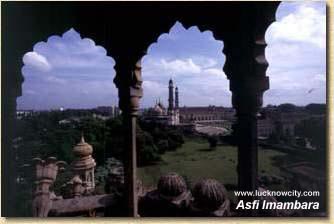
1775-1797. Nawab Asaf-ud-daula, son of Shuja-ud-daula, quarreled with his mother and moved his quarters from Faizabad to Lucknow, which was a mere village which he turned into a rather grand place. The fame and luxury of Oudh rivalled that of the Nizam's Hyderabad and adventurers flocked to his court from allover. One of his famous portraits by John Zoffany hangs in the famous LaMartiniere College. Nawab was quite playful; once he got upset with one of his fifty barbers and hung him to a large baloon and flew he went. The Nwab had fourthousand gardners, several hundred cooks, a thousand dogs and 300,000 fightingcocks and pigeons. He loved the racing of old women in sakcs. His benevolence is recited with,You may return from the Gates of Heaven empty handed, but not from the darbar of Asaf-ud-daula. Began building the Great Imambara with a true labyrinth where people have been said to have disappeard into some of thepassages and never come out. From the roof, the view of Lucknow is breathtaking. He also build the British Residency, the Asifi Mosque, Turkish Gate and Chowk Bazar. The British did not his spendthrift habits. |
|
|
|
1798-1814. Nawab Saadat Ali Khan, the half-brother of Asif-ud-daula took over after the British removed the son of Asif-ud-daula, Wazir Ali, who was pronounced basard by the court. Gave up the self-indulgence of the dynasty. He built Dilkusha Palace, Bailey Guard Gate to Residency, Lal Baradari, Begum Kothiand Khursheed Manzil (for his queen and sweetheart). (There is a small crumbling pavilion away from the main buildings where one can imagine the ladies of thecourt in their cool chkkan-work saris (for which Lucknow is still famous), sipping rose flavoured sherbets passing the summer days.) Nawab Saadat died of poisoning and is bured in the larger of the two-domed mausoleum at the edge ofKaiser Bagh. Besides him in the lesser tomb was bured his chief wife, Khurshid Zaidi. |
|