Equip and integrate children in the global village
People say that every year the world is getting smaller. That doesn't mean that we are geographically shrinking. What it means is that we are culturally and commercially getting together. Let me ask a question -- can anybody deny the fact that if we look back over a decade, a quick retrospection, and the world has shifted from an industrial age of machines, staticness and distances to a new information age of data, movement and closeness. The emerging concept of global village can be illustrated with the splendid example of the European community. What applies to a continent in a fast age like ours wouldn't take much to spread all over the world. One community, a union of economic powers and cultural relatives, isn't that beautiful?
Today's children would be forced to grow up in an arena that is rapidly directed towards a common nation that is the world, towards a common culture, call it global culture et al. What I am saying is not a figment of imagination of some remote possibilities, but it is happening phenomenon, a reality witnessed by everybody in today's world. Now that is the truth. Let us exercise a little bit of imagination based on the present day's scenario and nothing speculative. Our children would grow up not into Indian citizens or American citizens but into world citizens. They would have to mix with peers of different nationalities, cultures and attitudes, dexterously. More than that they would have to contribute to the society, as they are the world of tomorrow. There shouldn't be any moral handicaps or any exerted migration of our children to this new fusion.
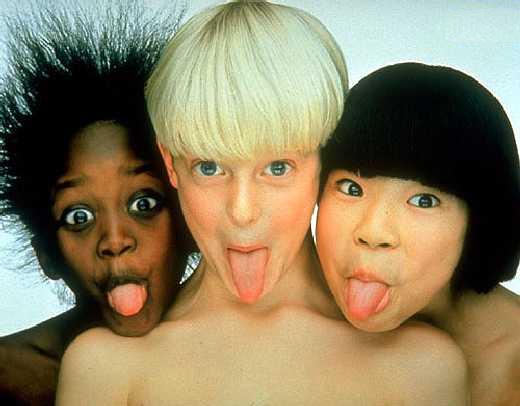
The changes should appear natural to them, well anticipated, almost invisible to their eyes. This is where we come into picture that is how are we going to train our wards to make this shift, a very smooth one. I think this is a new responsibility to today's teachers when compared with yesterday's. A very common question that would arise in every body's mind is "why we?" "What can we do about this?" Higher bodies are pulled into the virtual theater and we would say, "Let the protagonists decide among themselves". In a developing country like India, such an attitude would definitely hamper the healthy growth of values and there would certainly be induced a lag between Indian children and the children in the rest of the world. Now that's not what we want to happen to our kids, do we?
It is our responsibility that we mould our children minds emphasizing on social values, teaching them ways of living together in harmony, stressing ethics and principles of conduct, saving them from the deadly fangs of discrimination based on race, sex, caste, creed, color, religion etc., bring children together from different cultural backgrounds, enable assessment of different perceptions of cultural heritage and their conception of this heritage in this universe. We should help them set the limits, break the limits, enforcing them, differentiating between the good and the bad, the right and the wrong using less restrictive means. We have to make them understand that we no longer live in a district, state or country but in an interdependent world, a fact that is becoming more obvious as technology and commerce open up the global village. The most important, they have to be taught the differences between a developing nation and a developed one.
Now a fundamental question pops up naturally in everyone's mind. "How are we going to do this " In layman's language this idea can be put forth during the academics of educational pattern. Then intention is introduce concepts tangentially in a math class. Despite appearing controversial, I claim that this is politically neutral because it is the roots and solutions that may be contentious, not the problems may be. However that even raising the question is seen by some as contentious. Let us give a second thought on the issue. Evolvement of education and curriculum started from essentialism where the sole aim was only to sustain a just society, then came knowledge assimilation in encyclopaedism and then use the knowledge procured to live a productive life in the society by polytechnism. Pragmatic curriculum theory evolved to help children tackle problems that they are likely to meet as adults in a democratic society. So isn't the need of a critical research paradigm for the issue a very reasonable one. Something like a 'formal curriculum' with math, language and sciences, and a 'hidden curriculum' with emphasis on thinking shifts, moral and spiritual, social and emotional values. After all we have to agree that knowledge is socially constructed. So teaching should be planned and overall personal development should be accredited more than academic achievements. We have to feel responsible for placing our children in the global village. We should modify our perspective first. We should alter our pedagogy to arrange a bright future for our students. By the way, they do not inherit this world from us; it is we who have borrowed it from them.
Home | Essays Main Page