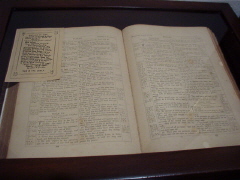
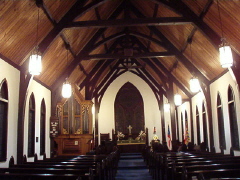
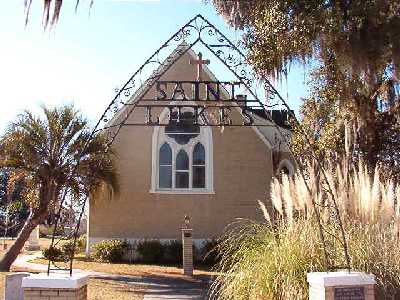
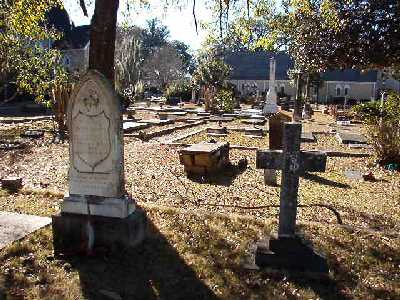
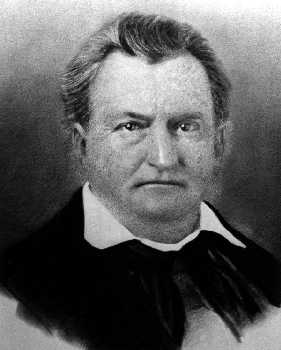
St. Luke's was organized March 7, 1838. The first church was constructed in 1854 and was soon declared unsafe. A new wooden structure was finished in 1862. On September 27, 1864, during Battle of Marianna the church was burned to the ground by Union troops. Those who sought shelter in the church attempted to exit the burning building with their arms raised in surrender, but they were executed on the spot. Five of the injured, unable to move from inside the church, screamed for help from the flames. But they were left to die in the fire. Later, the charred remains of a couple of the young boys could be identified only by their boots and belt buckles. The officer in charge of the assaulting force, Major Nathan Cutler, rescued the church's Bible from the burning building and presented it to the rector. This Bible is on display at the rear of the church and we have it pictured below. A new church was constructed in 1879 and lasted until 1941, when it too was consumed by fire. With the aid of sympathetic townsfolk another church was begun, but the onset of World War II and the scarcity of materials delayed its completion. The basement of the church had been completed, which the congregation used it for a sanctuary until the superstructure could be added and the church completed in 1947. Some of Florida's most distinguished citizens are buried in the churchyard cemetery. To name a few Governor John Milton (served 1861-1865...more information about him below), the wife and son of Dr. John Gorrie (created the ice machine), Caroline Lee Hentz, a nationally know author or the 19th century, a U.S. Senator, many early pioneer's of note and numerous witnesses to the tragic bloodshed and terror in 1864 when the Federal troops raided Marianna. Soldiers killed there are buried at Riverside Cemetery, also visited by GCGC!
Also located in the cemetery is a statue that GCGC is fascinated by. Click here for those pictures!
Page Two St. Luke's Episcopal Church |