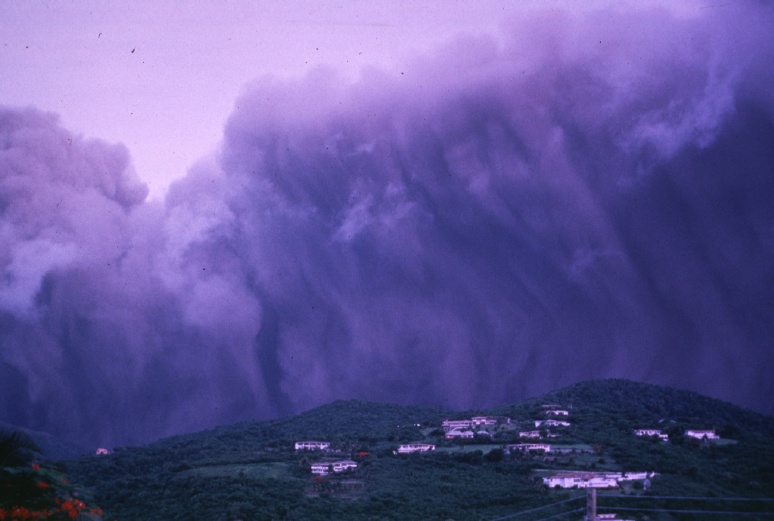
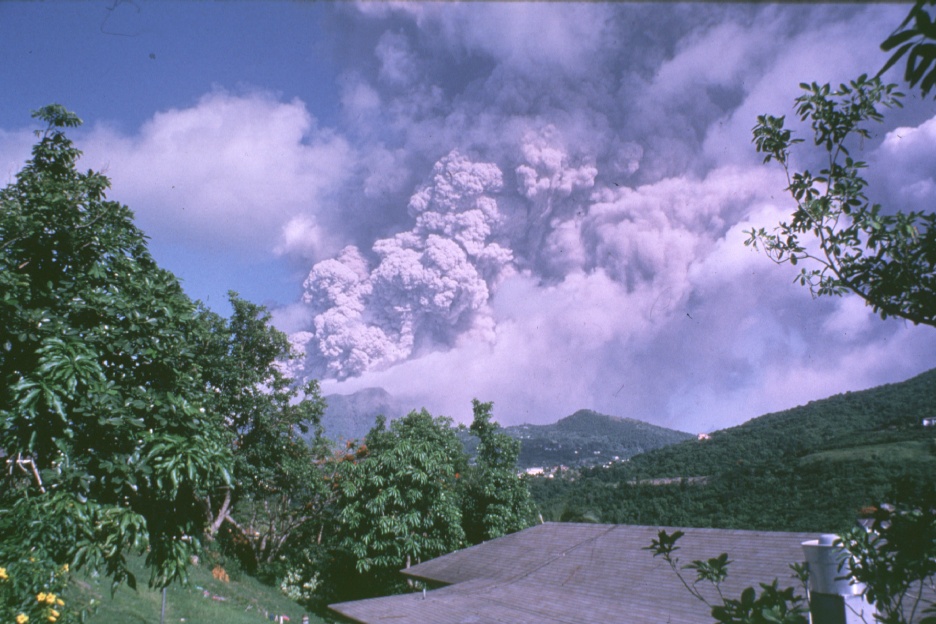
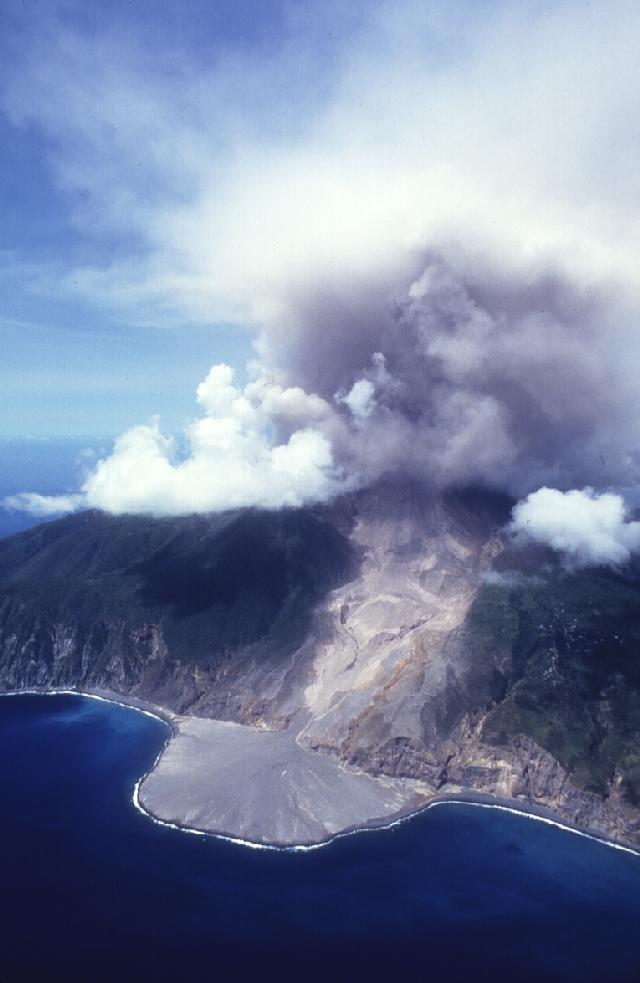
Air pollution has the potential to affect the health of Nevisians, especially children, the elderly and those with respiratory and cardiac conditions. Generally in Nevis, we don't pay much regards to the quality of our air, probably because it is usually very clean. However, the growth of air pollution sources has the potential to create problems. The occasional eruptions of the vulcano in Monsterrat (see photos below) have caused some respiratory discomfort, in recent times, though relatively minor.
Smog and Your Health
While smog is not a significant problem (or more likely not even an acknowledged problem) in Nevis, we should still be aware of its implications, especially for persons with a high sensitivity.
.
Smog is made up of a mixture of pollutants in the atmosphere. Two of the primary pollutants that make up smog are ground-level ozone and fine airborne particles called particulate matter (PM). The more smog you breathe in, the more likely you are to experience adverse health effects. Sensitive people may experience symptoms after only one or two hours outdoors.
The people most at risk from smog are elderly people, those with heart or lung disease as well as children, because they breathe faster and spend more active time outdoors. Even healthy young adults breathe less efficiently on days when the air is more polluted.
Ground-level ozone affects the body's respiratory system and causes inflammation of the airways that can persist for up to 18 hours after exposure ceases. It can cause coughing, wheezing and chest tightness. It can also aggravate existing heart and lung conditions. There is evidence that exposure heightens the sensitivity of asthmatics to allergens.
Airborne particles that are small enough to be inhaled can also have a significant effect on health. Those sensitive to ozone are also sensitive to airborne particles � people who already suffer from heart or lung disease, children and the elderly. Of greatest health concern are very fine particles that can penetrate deeply into the lungs and interfere with the functioning of the respiratory system. These fine particles have been linked to increases in asthma symptoms, hospital admissions and even premature mortality.
Protecting yourself
Take a detour. Avoid exercising near heavy traffic areas, especially during rush hour, to minimize your exposure to pollution from motor vehicles.
Take action. There are many things you can do to help to reduce production of ground-level ozone and other smog components.
Little Things Make a Big Difference
It may be one small lifestyle change or a major decision, but every small choice we make to limit the emissions that cause air pollution will make a difference for cleaner air.
Decrease the use of air conditioning by planting plenty of trees, using a few ceiling fans.
Consider a more fuel efficient car when making your next purchase.
Remember there can be pollution from lawn mowers and outboard motors. Look for low-emission engines.
Don't idle that engine! Turn it off, even if it is only for a few minutes.
Try walking, biking for an errand or to work.
Choose cleaner fuels. There are some alternatives on the market.
Have the emissions system on your vehicle checked to ensure it is in top working order
.
Remember we can all make choices for clean (or even cleaner) air!