Custom Search Movie Poster in My Web Pages by Cast or Director  www.posteryu.com
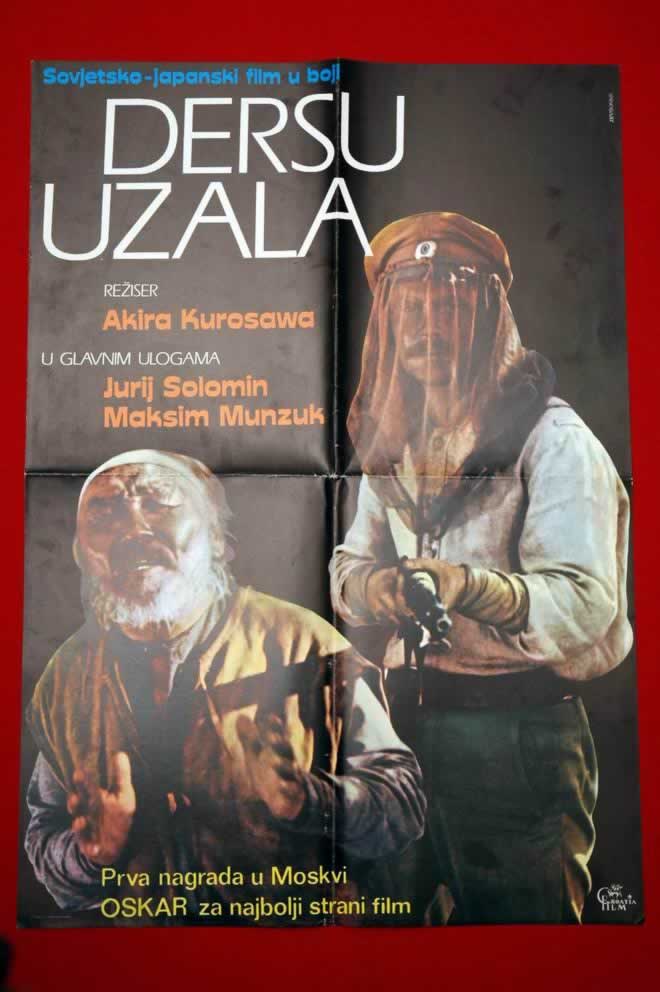
Album 1-156/Dersu Uzala (1975) Maksim Munzuk Akira Kurosawa
Previous | Home | Next
Album 1-156 .. Album 157-239 ..Album 240-280 .Album 281-361 . Album 362--477 .. Album 488-571 . Album 572--698 . Album 699-980



 (Complete credited cast)


 11%
11% 


For a variety of reasons (that are well known in the darker period of the Director www.posteryu.com
 www.posteryu.com
To give an idea of who Dersu Uzala is to someone who hasn't seen the film, picture Yoda without the ability to lift objects with his mind and to kick ass with a light-saber, but still contains all of the direct wisdom and strength that make him one with his surroundings (and, as well, uses his own kind of 'force' for knowledge and defense, and for attack as an ultimately final resort). As a lonesome hunter and drifter with a family tragically lost, Dersu comes upon a team of explorers led by Captain Aseniev (Yuri Solomon, not the best performance but sturdy enough to sustain the physical scenes). He goes along with them as a guide of the sights and smells and feelings that the others just can't sense (out of lack of experience). Aseniev and Dersu end up becoming friends as they brace a torrid windstorm over a bare, wintry landscape, as Kurosawa brings out one of his towering sequences (topping anything David Lean could've drummed up for sure).
It's always of interest to me to see characters doing things on screen, having to go against the elements that almost dwarf them in the face of nature (i.e. Cast Away's hour and a half second act). Dersu Uzala seems to be of few 1-156s and mostly actions, and soon gains respect and admiration after an odd introduction to the team- he shoots with a keener than keen eye, he spots tracks, he sets up protection in the harshest of conditions, and is always a step ahead of the pack. And bringing all this out is actor Maksim Munzuk, who appears here (like Falconetti in Passion of Joan of Arc) in the performance of a lifetime out of an otherwise obscure and small career. Munzuk never brings anything to Dersu that isn't in his character, and he makes at least a quarter of the film's success a reality (the other three-quarters could be attributed to Kurosawa alone). He can be tough, smart, funny (in an off-beat way), and if nothing else, humble. But more than anything, Munzuk makes Dersu seem alive in a way no other actor could've accomplished, and also brings out the better in Solomon's performance.
The story itself has a superb appeal most of the way, but it is in it's last act that 'Derzu Uzala' reaches an intensely tragic plane. Dersu does something (which I won't reveal here and has been discussed elsewhere on the message board) that brings great shame to his own self-worth. In this part of the film, Kurosawa brings out what can be said to be some of the saddest moments in any of his work, however not without logic. While it was likely a major dramatic function in the novel, Kurosawa doesn't just throw these last twenty minutes or so to let steam flow out of the picture. I sensed something almost cathartic about these scenes, that rose the qualities of the rest of the story to a higher level, to one of almost spiritual in nature. It's hard to really pin-point to one who has not seen the film (and, indeed, I have seen the film all of one time). But once its over, you may feel you have seen a work far more rewarding than imaginable- even in awe.