 |
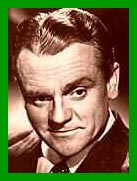
James Cagney, actor; born July 17, 1899, New York, New York. James Cagney was born in the tough Yorkville section of Manhattan, to James Cagney Sr. and Carolyn Nelson Cagney. (James Cagney Sr. was a bartender and an accomplished amateur boxer.) After years of working in vaudeville and musical shows, Cagney finally got his big break, starring on Broadway with Joan Blondell, in Penny Arcade in 1929. Soon after, the two were both invited to Hollywood for screen tests, and Cagney made his film debut in 1930 with Sinner's Holiday. |
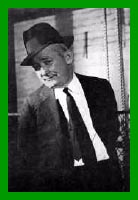 |
George M. Cohan (1872-1942): The father of American musical comedy, Cohan was born into theater. He gradually worked his way from his family's vaudeville troupe to Broadway, where by the 1920s he was doing ten productions in a single year. In his long career as author composer, director and performer, this powerhouse of the popular stage had a favorite theme: star-spangled patriotism. His World War I composition, Over There, won him a Congressional Medal, while I'm a Yankee Doodle Dandy brought the honor of defining what it meant to be an American. |
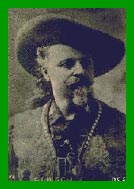 |
Buffalo Bill Cody was one of the most colorful figures of the Old West and he became the best known spokesman for the New West. He was born William Frederick Cody in Iowa in 1846. At 22, in Kansas, he was rechristened "Buffalo Bill". He had been a trapper, a bullwhacker, a Colorado "Fifty-Niner", Pony Express rider (1860), wagonmaster, stagecoach driver, Civil War soldier, and even hotel manager. He earned his nickname for his skill while supplying Kansas Pacific Railroad workers with buffalo meat. He was about to embark on a career as one of the most illustrious prairie scouts of the Indian Wars. |
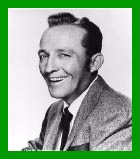 |
Bing Crosby (born Harry Lillis Crosby), was an entertainer who made over 850 recordings and appeared in over 50 films, including "Going My Way" for which he won an Oscar in 1944. Born in Tacoma, Washington 3rd May 1903, Bing was the fourth of seven children born to Harry Lowe Crosby and his wife Catherine Helen (nee Harrigan) Crosby. Bing's mother was of Irish descent and his father was descended from a Scandinavian maritime family. The family moved to Spokane in 1906 where Bing grew up and attended Gonzaga High School and Gonzaga University until he left home to seek his fame and fortune in California with friend Al Rinker in 1925. He was known as "Bing" from a young age, when he got the nickname from the comic "The Bingville Bugle". Other nicknames included The Old Groaner, El Bingo, Le Bing and Der Bingle. |
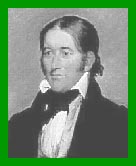 |
Davy Crockett (1786-1836): Born to a pioneer family living on the Nolichucky River in east Tennessee, Crockett eventually made his home in the northwest corner of the state. A member of the Tennessee militia, Crockett's second enlistment was under Andrew Jackson at Pensacola. His political career advanced quickly; he spent several terms in Congress as a Democrat, but eventually broke with Jackson. After only one term as a Whig, he gave up on politics and reportedly said, "You can all go to Hell and I'm going to Texas." He settled in east Texas in 1835 and died when the Alamo fell a year later. |
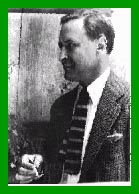 |
F. Scott Fitzgerald (Francis Scott Key Fitzgerald - 1896�1940), American novelist and short-story writer, born in St. Paul, Minn. He is ranked among the great American writers of the 20th cent. Fitzgerald is widely considered the literary spokesman of the �jazz age��the decade of the 1920s. Part of the interest of his work derives from the fact that the mad, gin-drinking, morally and spiritually bankrupt men and women he wrote about led lives that closely resembled his own. |
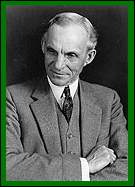 |
Henry Ford (1863-1947), was born to Irish immigrant farmers, William and Mary Ford, in Dearborn, Michigan. Ford left Dearborn when he was 16 to find employment in Detroit. He worked for several years as an apprentice in a machine shop where he learned about the internal combustion engine.
Ford�s first vehicle, the Quadricycle was completed in 1896. The Quadricycle was a vehicle with a buggy frame mounted on four bicycle wheels, which he sold to raise money to create more vehicles. In 1908 he introduced the Model T to the public, it was manufactured for 19 years. In 1926, Ford introduced the Model A and a little later he introduced the V-8.
Ford�s only son, Edsel, was named president of the Ford Motor Company in 1919, but his father remained in control of the company. When Edsel died in 1943, Ford resumed the presidency, but because of illness he handed over the presidency to his grandson, Henry Ford II. |
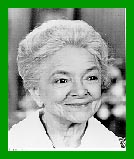 |
Helen Hayes (1900-1993): The "First Lady of American Theater," was an actor and a star personality throughout most of the 20th century. Hayes progressed from adored child star to sexy "flapper" to whimsical young matron, to playing Shakespeare and grand historical figures, and finally to character parts and film roles which didn't do her justice. She was generous, witty, wise, and upstanding in her personal life, and peerless in the conduct of her public persona. She was a champion of worthy causes throughout her long career. She knew tragedy and success, but never succumbed to drink, drugs or depression like many performers who live in the spotlight from their earliest childhood into old age. |
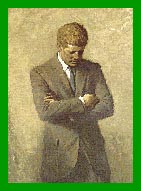 |
John Fitzgerald Kennedy (1917-1963) Kennedy's political career began in 1946, in a run for Congress in the district where his parents had been born. The working-class community which elected him was not his; Kennedy had gone to Choate and Harvard and lived an almost aristocratic life. Yet he had a sense of history and learned quickly. His election in 1960 as the 35th President of the United States -- the first Roman Catholic to hold that office -- was a crowning triumph for the Irish. |
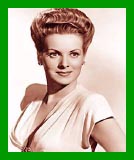 |
Maureen O'Hara was born in Ireland and acted from an early age. By the time she was 14, she was receiving awards in festivals and drama contests. She made her stage debut with the Abbey Players of Dublin and went to the London stage in 1938. Hitchcock gave her a role in the 1939 movie 'Jamaica Inn' with Charles Laughton. Laughton brought her to Hollywood to play Esmeralda in his next picture 'The Hunchback of Notre Dame (1939)'. Successful from the first, her next big hit was Ford's 'How Green Was My Valley (1941)'. Films with swashbuckler and films made in technicolor only increased her popularity. |
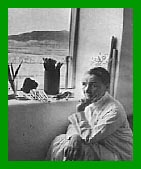 |
Georgia O'Keeffe (1887-1986) was born on November 15, 1887, the second of seven children, and grew up on a farm in Sun Prairie, Wisconsin. As a child she received art lessons at home, and her abilities were quickly recognized and encouraged by teachers throughout her school years. By the time she graduated from high school in 1905, O'Keeffe had determined to make her way as an artist. Georgia O'Keefe is known for her brilliantly colored paintings with confident shapes and simple patterns. She painted a great many floral paintings which were large pieces with the flower exaggerated and enlarged to completely fill the canvas, then stylized to their most essential forms. She is also known for her Southwest paintings which include adobe buildings, desert mountain panoramas or floating cow skulls against rich blue skies. The emphasis on the simplest aspects of the shapes created a surrealistic dynamic that is captivating. |