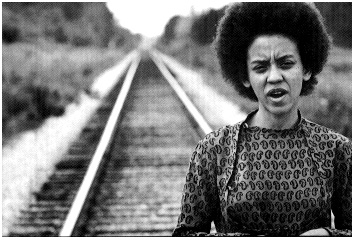
Giovanni believes that change is necessary for growth*. Many of her essays confront America's insistent obliviousness to the existence of race hatred. Her poetry is renowned for its call of urgency for Black people to realize their identities and understand their surroundings as part of a white-controlled culture. She is considered one of the most prominent leaders in the Black poetry movement. Her collection of poetry, Black Feeling, Black Talk, Black Judgment, captures the militant attitude of the Civil Rights and Black Art movements of that time. Giovanni also focuses on her family and personal relationships.
She is known for her recordings of her conversations with prominent African-American writers such as James Baldwin and Margaret Walker. Giovanni to this day continues to write, speak and teach about the history and future of Black people and has become a symbol of the Black Arts Movement, as well as for Black women and women writers today. Giovanni's poetry strongly relates to several other writers of her time. She once said, �We must include as many writers of as diverse backgrounds as possible. Just as we identify with white males, so must we identify with Black men, Black women, Chinese-Americans, etc.�(Day, 86). |