| Alice Walker |
| "Ignorance, arrogance, and racism have bloomed as Superior Knowledge in all too many universities." - Alice Wlaker |
| Zelda Beckford AFAM 398.01 April 30, 2002 |
 |
 |
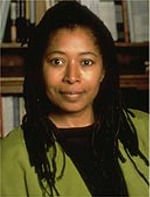
| Well known author and activist, Alice Walker, was born on February 9, 1944 in Eatonton, GA. and was the eighth child of Georgia sharecroppers. After a childhood accident blinded her, she went on to become valedictorian of her local school, and attend Spelman College and Sarah Lawrence College on scholarships, then graduating in 1965. She is best known as the author of The Color Purple (1982), even though her first book of poems came out in 1968 and her first novel was published just after her daughter's birth in 1970. Her early poems, novels, and short stories dealt with themes of rape, violence, isolation, troubled relationships, multi-generational perspectives, sexism and racism. When The Color Purple came out in 1982, Walker became famous to an even wider audience. Her Pulitzer Prize and the movie by Steven Spielberg brought both fame and controversy. She was widely criticized for negative portrayals of men in The Color Purple, though many critics admitted that the movie presented more simplistic negative pictures than the book's more tinged portrayals. |
| Walker also published a biography of poet Langston Hughes, and worked to recover and publicize the just about lost works of writer Zora Neale Hurston. She's credited with introducing the word "womanist" for African American feminism. Her works are known for their portrayals of the African American woman's life. Many of her novels depict women in other periods of history than our own. Just as with non-fiction women's history writing, such portrayals give a sense of the differences and similarities of women's condition today and in that of history. She depicts vividly the sexism, racism and poverty that make that life often a struggle. Nevertheless, she also portrays as part of that life, the strengths of family, community, self-worth, and spirituality. She continues not only to write, but also to be active in environmental, feminist/womanist causes, and issues of economic justice. |
 |
| Catherine Lavender. Women's History and Feminist Theory.The College of Staten Island of The City University of New York. May 1998. |
 |
|
 |