STATISTICAL MECHANICS AND THERMODYNAMICS
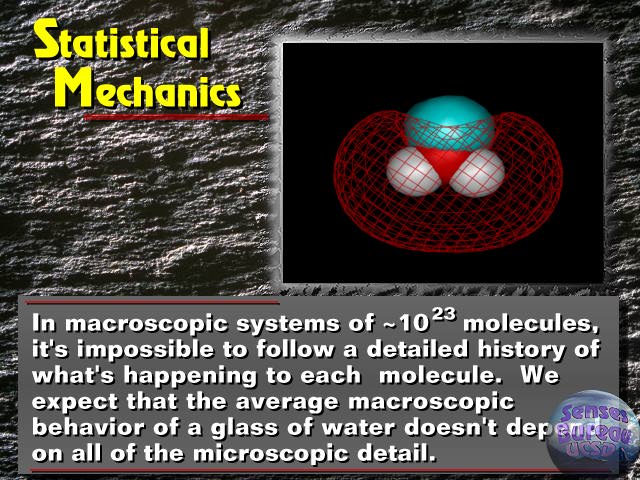
A typical amount of material, let's say 1 gram, contains about 6x10^23
molecules: Avogadro's number. ...Continued Below...
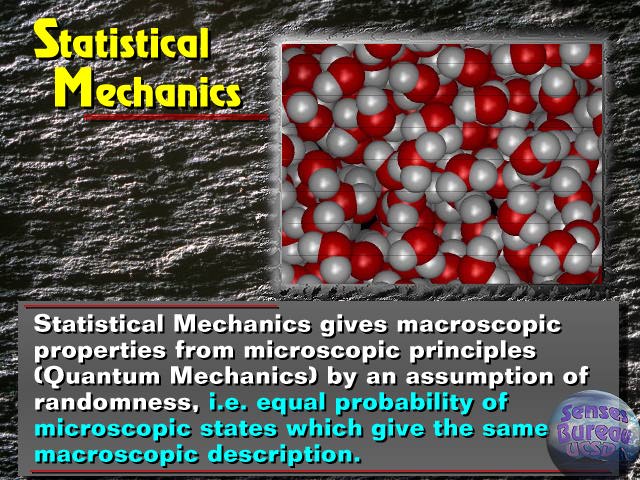
The water molecules shown above are randomly placed and randomly
oriented.
Statistical Mechanics uses laws of probability to compute AVERAGE properties
of both ordinary materials and of exotic elementary particles.
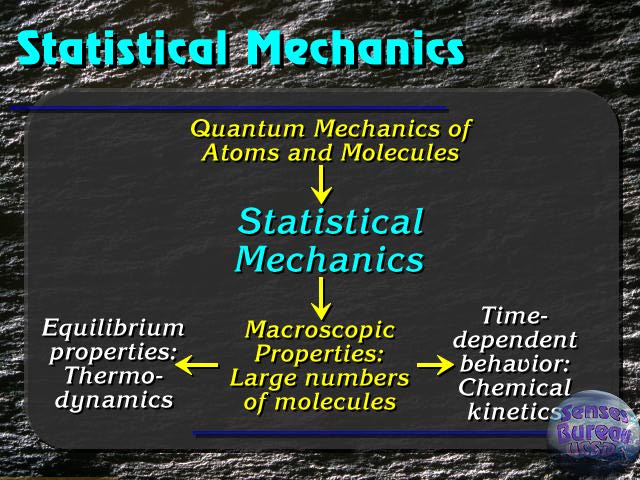
Macroscopic Quantities are: Energy, Entropy (S), Enthalpy (H), Gibbs Free
Energy (G), etc.
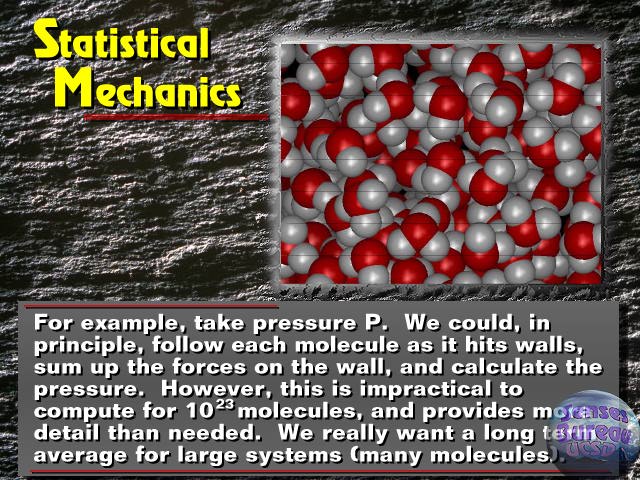
Pressure is the result of the molecules all imparting momentum to a
wall.
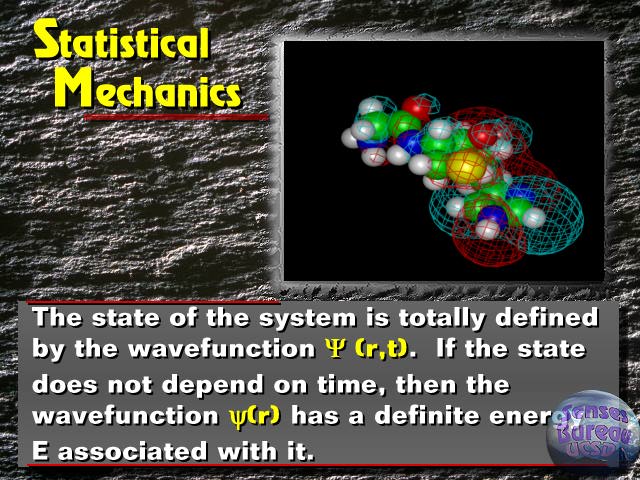
Stat. Mech. is an easy way to treat a very complicated quantum mechanical
problem of many particles.
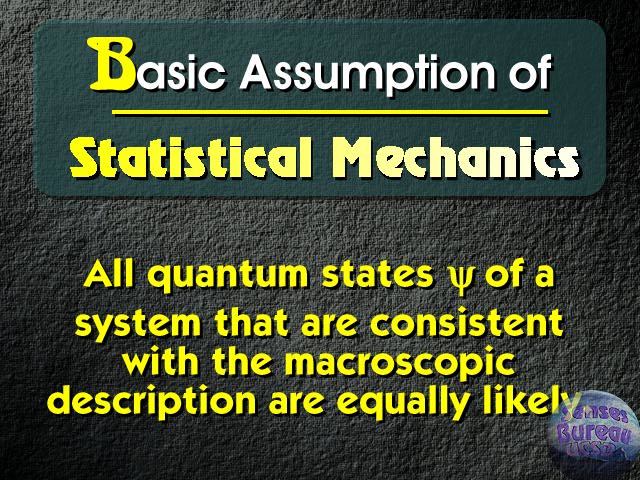
The Fundamental Postulate of Statistical Mechanics.
Each particle can have a different energy - often quantized, as shown
below.

Three Systems (Left, Middle, Right) each having available energy levels. The
particles in each system are distributed differently among the energy
levels.
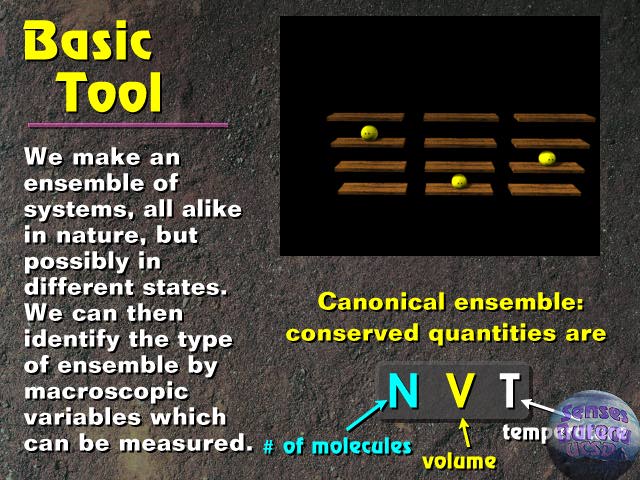
In the laboratory, we can't measure the indiviual energy levels of each
particle. Instead we can only measure macroscopic quantities, such as N, V, T,
P.
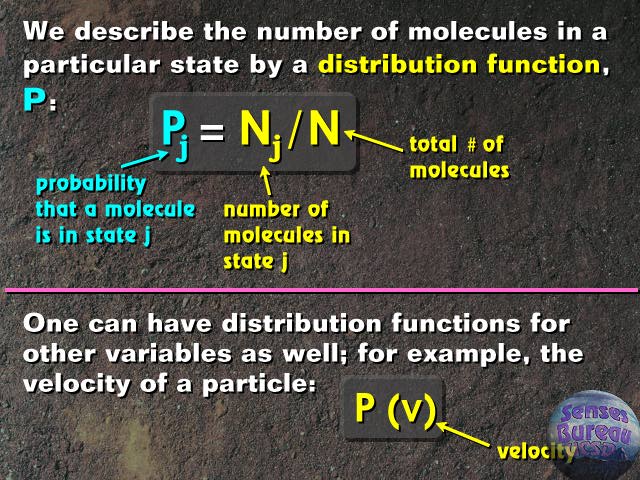
The probability that a particle lies in energy state "j" is P_j.
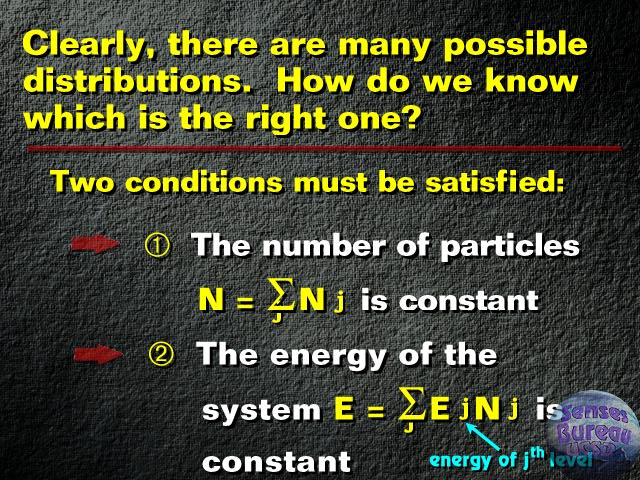
The number, N, and total energy, E, of particles is set in a given
system.
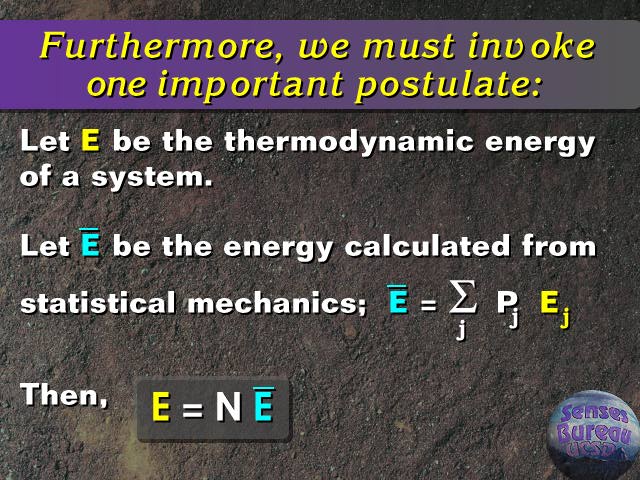
The total energy of a system is the number of particles times the average
energy per particle.