


Quando o primeiro
homem nasceu , pombo velho teve o prazer de dar a primeira cagada em um
ser humano. Apartir desse dia , naqual criou a maldição da
"cagada do pombo" , pombo velho vem observando as cagadas
e os acertos dos
mais famosos humanos que já existiram ou existem.
Esse quadro
é dedicado totalmente aos ilustres contos reais do
pombo velho. A cada mês teremos
um novo conto , uma nova personalidade , uma nova cagada e/ou talvez um
novo acerto.
texto ainda em inglês - tradução em 1 semana
GANDHI - A NÃO-VIOLÊNCIA EM PESSOA
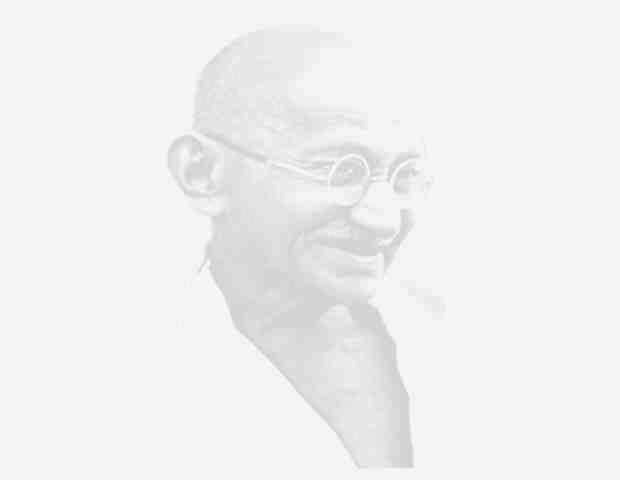
Mohandas K. Gandhi was born on October 2, 1869,
in an average family, in an obscure town in India. He was the fourth and
youngest child of the fourth wife of his father. Though a below-average
student, Gandhi became the first person in his family to complete a high
school education. His father had died when Gandhi was still in Grade 10.
Gandhi joined a college but faired very poorly and dropped out after just
three months. A family adviser suggested that obtaining a Barrister's title
from England was easier and more helpful in earning a living than the rigors
of earning a B.A. degree in India. After a great deal of discussions it
was agreed that Gandhi would go to England for 3 years to obtain the Barrister's
title. The family sold about half of their land and his wife sold more
than half of her jewelry to finance his education.
Three years later, in 1891, Gandhi returned to
India with the Barrister's title and tried to build a law practice. But
despite his best efforts for more than one and a half years, Gandhi could
hardly earn enough to support his own room and board in Bombay. In 1893
Gandhi received an offer to go to South Africa for one year to assist a
senior lawyer in a particular case. Although the remuneration was just
nominal, he accepted the offer for the experience.
Within days of reaching South Africa Gandhi had
his first experience of racial discrimination and resolved to do his best
to eliminate it. He worked equally hard on two fronts: fighting the authorities
on legal grounds and educating the Indians for becoming better citizens.
By the end of the year he had succeeded in bringing a mediated settlement
of the case for which he had been hired and prepared to return to India.
But a sudden discovery of a Bill aimed at disfranchising the Indians caused
Gandhi to stay longer and to fight. For the next eleven years Gandhi fought
numerous cases on legal grounds and although he won most of them, the net
change in the status was minimal, because the government passed new bills
to cancel the effect of every victory. Gandhi then decided to fight his
cases on moral grounds.
In 1906 Gandhi conceived a new weapon that he
called Satyagraha. Literally it means 'insistence on truth using non-violent
non-cooperation'. Gandhi started weekly newspapers to educate his people
on the use of the new weapon as well as to gain public support. Bit by
bit he refined the technique of Satyagraha and succeeded in achieving a
significant reduction in the racial discrimination in South Africa.
In 1915 Gandhi returned to India and spent more
than a year traveling through the country in order to know the people and
their problems. Then he started employing Satyagraha to win some cases
for the poor farmers and factory workers in India.
After the 1919 massacre in Punjab, in which 319
innocent men & women were killed and more than 1200 were seriously
injured, Gandhi decided to severe his allegiance to the British Empire
and resolved to fight for the independence of India. But unlike other leaders
Gandhi did not believe in building a powerful force to kick out the British.
Gandhi believed that the British were ruling India because the Indians
needed them. Gandhi claimed that when Indians could manage all their affairs
themselves then the foreigners would find themselves unneeded and would
want to leave voluntarily.
Using two weekly newspapers that he started in
1919, Gandhi undertook the huge task of educating the 300 million Indians:
to grow their own food; to weave their own clothes; to run their own schools,
colleges, hospitals, courts, railways, police system etc. etc. And Gandhi
also taught them the need of unity among the different religions, languages
and classes of society. In 1933 he started a third weekly to help uplift
the untouchables in India.
Slowly but steadily Gandhi kept perfecting his
unique weapon, Satyagraha and succeeded in gaining the independence of
India (in 1947) using peaceful means.
On January 30, 1948 Gandhi was assassinated by
a Hindu who believed that he had been supporting the Muslims too much and
at the cost of the Hindus.
Many world leaders, including Martin Luther King,
Jr. of the United States and Nelson Mandela of South Africa have successfully
employed Gandhi's technique of non-violence to achieve extraordinary success
in their own political struggles.
PEÇA UMA PERSONALIDADE!!!!
Para fazer um pedido para o pombo velho BASTA:
Mandar um e-mail para: [email protected]
Em assunto escreva "POMBO VELHO - nome da personalidade"
Diga no e-mail até quando vc precisa do
conto
E seu e-mail.
NÓS MANDAREMOS , ATRAVÉS
DA NOSSA SECRETÁRIA POMBA , A RESPOSTA!!!
NOVO...
MATÉRIAS CURIOSAS DO POMBO:
GEOGRAFIA
MATEMÁTICA
BIOLOGIA