| We pass by a group of Franciscans saying Mass in Latin at a side altar, and strains of �Venite Adoremus� filter through to the cloister where we have gathered, beneath the somewhat surly gaze of Saint Jerome, immortalized in stone amid various and sundry momento mori. Outside, we wait for the bus in the cold drizzle, at the mercy of vendors and merchants who descend upon us with uncanny speed, hocking postcards and olive wood nativity scenes. On the bus we drive to the Gardens Restaurant, where Arabic music mixes with Christmas decorations. We eat an interesting lunch and reboard the bus, traversing the intermittent streets to the �Milk Grotto.� Outside, the same inscription is written on either side of the entrance (on the left in Latin; on the right in Arabic): �An angel appeared to Joseph in his sleep and said, �Take the child and his mother to Egypt.�� Inside, low stone arches and steps descend into yet another labyrinth of stone passages with myriad niches and alcoves. |
| Day 13 continued... |
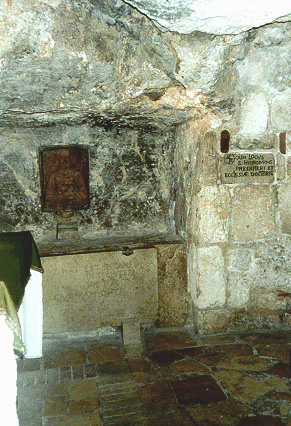
| After making our way through a maze of stone hallways and winding staircases, we find the cave where Saint Jerome worked on his translation of the Bible. |
 |
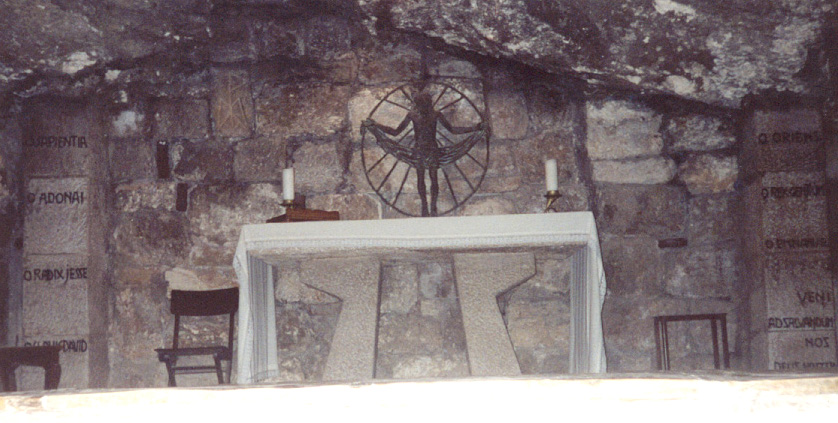 |
| In another grotto is the altar of Saint Joseph bearing the Latin inscription �Et tu, Bethlehem terra Juda, ex te exiet dux qui regat populum meum.� On the right, the scriptural passage, �Dabit Dominus ipse vobis signum: ecce, virgo concipiet et pariet filium, et vocabitur Emmanuel, nobiscum Deus.� The altar is flanked on both sides with titles of Jesus; on the left: �O sapientia, O Adonai, O radix Jesse;� on the right: �O Oriens, O rex Gentium, O Emmanuel, Venite ad Salvandum nos.� |
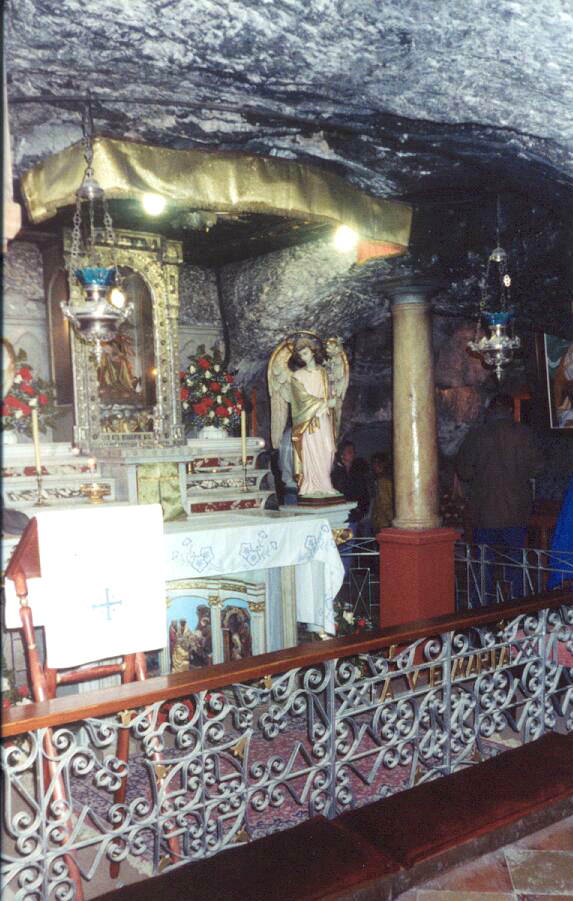 |
| According to tradition, this is the place where the Holy Family stopped on their flight to Egypt and Mary fed Jesus. Some drops of her milk fell to the ground, and legend has it that the stones turned white. Muslim and Christian women venerate this spot, and barren women will come here to take a bit of rock, which they will grind to a powder and mix with water to drink. Avraham tells us that all the local people believe in this, and he can remember hearing of the Crypta Lactis from his youth. Side altars and alcoves are filled with pictures and letters from women who have had children after praying here. |
 |
 |
 |