Landfilling and incineration are two
common methods of solid waste disposal. Incineration is a more expensive method
to deal with solid waste than is disposal in a landfill, so in Hong Kong most
solid waste is disposal in landfill.
Disadvantage of
landfilling
In Hong Kong solid plastic wastes are often been disposed of in landfills. However, we are rapid running out of dumps to accommodate the huge volume of solid waste we produced, as land in Hong Kong is very scare. These plastics, are being synthetic polymers tailored for long life, are waterproof and resistant to the action of microorganisms. The plastics may take several hundred years to be being broken down into water and carbon dioxide.
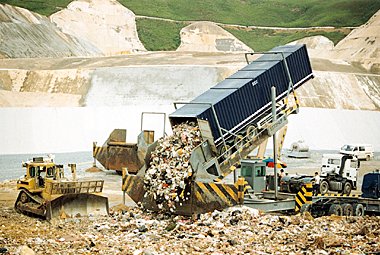 Landfill in Hong Kong
At present there are 13 landfills in Hong Kong, of which 3 are still operational. There is a high content of methane in the landfill gas produced and it presents a potential hazard at both the landfills and nearby residential areas. Highly polluting leachate from the old, inadequately designed landfills can pose a risk to workers in sewers and cause water pollution problems. In addition, excessive ground settlement and slope instability can limit the beneficial use of landfills for further development.
The potential environmental problems associated with landfilling of waste result mainly from the generation of landfill gas (mostly methane) and leachate (groundwater) from landfills. To ensure there are no harmful discharges from the landfill to the environment, landfill gas and leachate in the landfill sites are collected and treated.
Disadvantage
of incineration
Another way to dispose of discarded plastics is to burn them. However some plastics such as PVC contains such additives that will convert into toxic gases during incineration. When discarded items such as cans, jar lids, and batteries are incinerated, many toxic metals, including beryllium, cadmium, lead, and mercury, are released and carried up the incinerator stack in fly ash. Some plastics, including Teflon, poly (chloroethene), produce irritating or toxic gases (such as HCl) when they burn. Combustion of plastic products such as PVC also produces hydrogen chloride, which can cause acid rain that damages the environment.
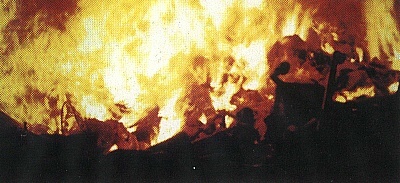
Refuse Combustion In The Furnace
Incinerators are being corroded by acidic gases and clogged by those plastics that melt from the heat but do not burn. The large amounts of carbon dioxide gas emit from the chimney of incinerator inevitably adds to the problem of greenhouse house effect on the globe. In Hong Kong, while the municipal waste incinerator at Kwai Chung is being equipped with electrostatic precipitator for the removal of particulates and dust from the flue gases, other gaseous emissions still present an air pollution problem to nearby residence.
Advantages
of landfill
The high methane content of landfill gas provides an opportunity for its beneficial use as an energy source. A gas turbine can fuel by the landfill gas to generate electricity. The total gas production of all the operating and closed landfills is being estimated to be 200 million m3 per year. This is equivalent in energy to some 30% of town gas consumption or 5.5% of electricity consumption.
Advantages
of incineration
The volume of the solid waste is reduced by approximately 55%; the high temperature kills disease-causing organisms; there are no risk of ground water pollution (as in the case of landfills) and the heat produced can be used as a source of energy. Some incinerators in the United States also have facilities to recover valuable metals like iron and aluminum from the incinerator waste (the ash). The hot flue gas from the incinerators also can generate electricity in the turbine. In 1995, about 700 tonnes of municipal waste were been incinerated daily at the Kwai Chung incinerator.
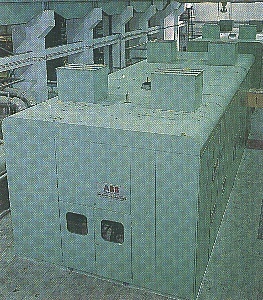
Turbine Generator