
About
The Team
Past Issues
Competition
Contact Us
Submissions
Celebrity Connections
Claire Adams For Part One Click Here
The forest�s harvest provides food for the wildlife and also clues for humans. Nuts can identify what has been eating them by how the remaining shell looks. Mature squirrels crack hazelnuts open skilfully with their incisors so they can clean and hide the kernel. Teeth marks may be seen on nuts where young squirrels practise figuring out how to do this. Mice gnaw holes rather than cracking it clean open. Other signs are the seeds spat out by birds normally around rotting tree stumps, nibbled fungi and the purple stains on bramble leaves where the blackbirds have cleaned their beaks after feasting on the blackberries.
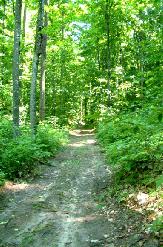
Trees are marked in many ways. Bark is gnawed by rabbits, rodents and deer when wearing down their teeth or getting to the sap. Stripped bark on the other hand is a sure sign that deer have been able, they do considerable damage to trees and kill saplings. Deep scratch marks inflicted into the trees bark are the signs of a badger cleaning and sharpening their claws after changing their bedding. Badgers will use many different things apart from trees too as scratching posts so long as they are upright. (Although I had come across scratches on a bump of uphill ground also)
Dead fauna may not be what you set out to see on your walk but you�re bound to come across it and it tell you two things. One, that the dead animals species are living within the area and secondly, that whatever killed it is living there also. A typical remains of a foxes kill are the feather of the bird.
Eggs Shells and baby birds, whether when nests have been raided, or when they have fallen out, indicate there is a nest and that species of bird present.
Keep your ears open as most species are very vocal and use this is many situations such as courting calling to parents/babies and alerting of food and danger. With time you will get to know the different calls and different meanings.
On every walk you should be able to see wildlife, there are always birds around and the most likely mammals to be seen are squirrels, rabbits, foxes and deer (based on an English deciduous woodland). I have found that the best time for sightings is early morning or late evening as this is when they seem to be most active. The best habitat I would suggest is where woodland meets with pasture as a lot of the animals live and shelter within the woodland, venturing out into the meadows in the hours they are awake. I think most people get a special feeling when watching wild animals in their natural habitats even when they are regularly seen and this is topped when you see an action or species that is rarely seen.
Should you be wanting to photograph or film the wildlife, once you have located where a species lives, you will need to wait around patiently for sometimes long periods of time, taking into consideration many things, such as: the direction of the wind -will the animal pick up on your scent?, how to disguise yourself �using clothes, hides, or maybe climbing a tree, if the animal has young �never disturb the young and some animals such as foxes may endanger their young�s lives if they pick up on your scent by moving them to another place.
There are many books and sites on the Internet that will help you to differentiate between which mark was left by what if you�d like to look into it further.