'Poetic Pete' Karplus
Interview Talk Points I Book Excerpts
Peter Karplus (AKA Poetic PeteTM) of Martinez,
CA knows all too well what it is like to spend your life afflicted with
a neuromuscular disorder. He has Spastic/Athetoid Cerebral Palsy (CP). Unlike many who are thrust into a life of special schools
and special handling, Peter's parents 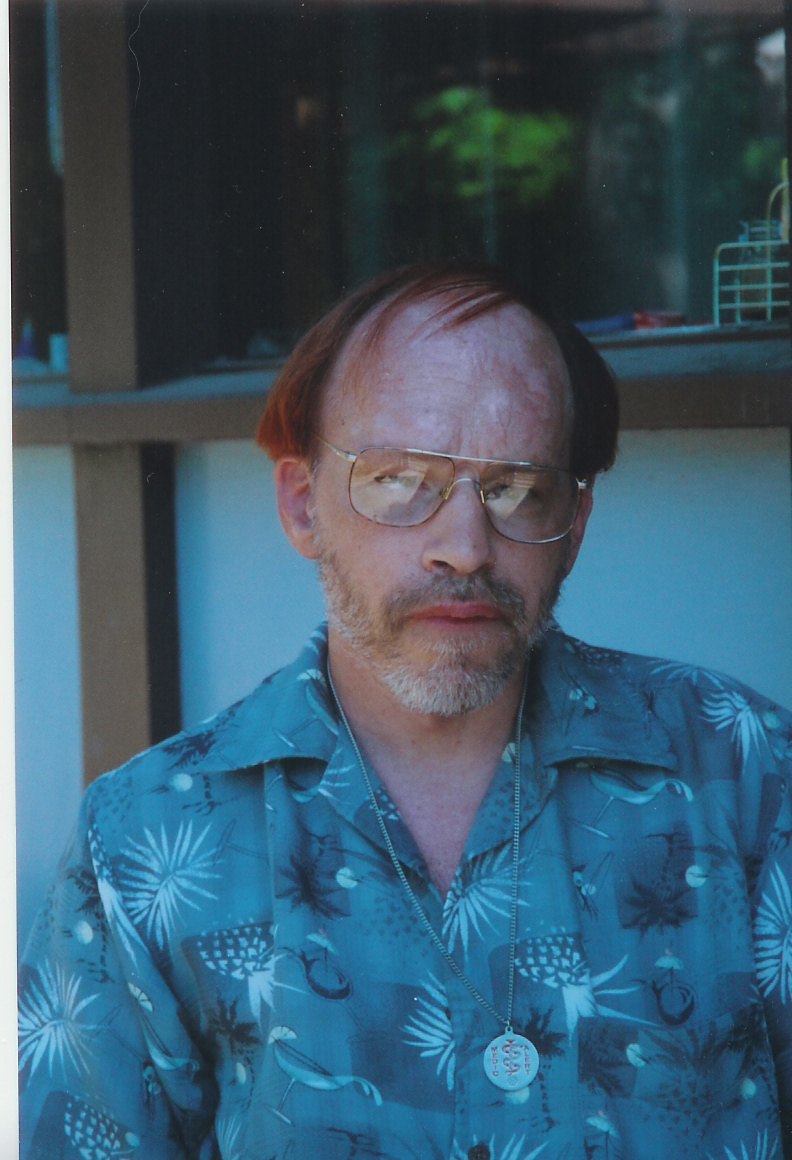 took their son down a different path in his development, schooling and
everyday activities. Sure he has impairments, and his speech and mobility
are restricted, but he does not consider himself disabled. This most certainly
would not have been the case had it not been for the support and encouragement
of his parents and six siblings. Peter could have turned out like many others
who often spend their lives living with fear, rejection and doubt. That
was not to be the case, and his attitude and outlook on life is far better
than many of us who have no health or physical afflictions at all. Peter
has become a shining example of how courage, attitude and support can make
all the difference in a person's life.
took their son down a different path in his development, schooling and
everyday activities. Sure he has impairments, and his speech and mobility
are restricted, but he does not consider himself disabled. This most certainly
would not have been the case had it not been for the support and encouragement
of his parents and six siblings. Peter could have turned out like many others
who often spend their lives living with fear, rejection and doubt. That
was not to be the case, and his attitude and outlook on life is far better
than many of us who have no health or physical afflictions at all. Peter
has become a shining example of how courage, attitude and support can make
all the difference in a person's life.
In an effort to offer support and encouragement
to others and their families, in dealing with a debilitating illness, Peter
has released two beautifully written books of poems and prose. It is his
hope that his works will provide understanding and hope to all.
His first book is titled, 'DANCING
WITH FEAR,
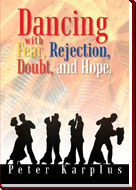 REJECTION, DOUBT AND HOPE,' and his second was just recently released;
'A POTPOURRI OF POEMS.'
REJECTION, DOUBT AND HOPE,' and his second was just recently released;
'A POTPOURRI OF POEMS.'
Although Peter's speaking voice has been
affected by his illness, his message is loud and clear in his poetry and
prose.
Peter is the youngest of seven children,
and his loving parents, and supportive brothers and sisters never gave
him special treatment. Regardless of where he was, or what he was doing,
he has ignored his illness and always tried to fit in, which has had quite
an impact on others.
When asked if Peter thought of himself as an advocate,
he had this to say:
"I guess in some respects, I am an advocate, and as such
I must give credit to the two people who most kept me going; my father,
for inspiring my intellect, and my mother for teaching me perseverance.
My mother is a retired teacher of high school age Special Needs students.
She has told me that it was my being born with Cerebral Palsy that drove
her to become a Special Needs teacher. My upbringing was at a time when
California school programs were just beginning to attempt to integrate special
needs students into the general school populace. In 1967, when I entered
kindergarten, my mother insisted that I be mainstreamed by my school district.
So, my being an advocate today is a direct result of the encouragement and
support I received from my parents and six siblings from a very early age.
I began to believe I could do almost anything, and it has never stopped."
When Peter attended elementary school
in Arlington, Mass., he was the first disabled student in the student body.
It was an eye-opening experience for Peter and the other students. It was
those brave efforts in the early 1970's that helped both staff and students
open doors of acceptance to future disabled students.
Peter's disabilities were further complicated when he acquired Epilepsy
during Junior High. But that had little effect on his attitude by the time
he entered high school. He went on to become an initiating and charter
member of a club whose main purpose was to integrate disabled students
on a recreational and social level. Peter sat on a panel of several diversely
disabled students in his social science class. The group (comprised of
both disabled and non-disabled) visited high schools in their school district
and spoke on how disabled students contributed to class discussions, and
other students learned to support their disabled classmates. They also addressed
how the non-disabled students would handle emergency situations, when they
arose.
In junior college, Peter spoke to Psychology
classes about his illness and how he had learned to cope and fit in, and
he has continued to do so over the last twenty-plus years.
Peter has no problem in answering questions and participating in panel
discussions about his disabilities. He tends to have a nervous frog throat
when speaking with strangers, but given a minute or two of talking, and mutual
patience, the frog usually subsides and he is more clearly understood. His
commentary will be an inspiration to all.
Interview Talk Points I Book Excerpts
I Contact Publicist