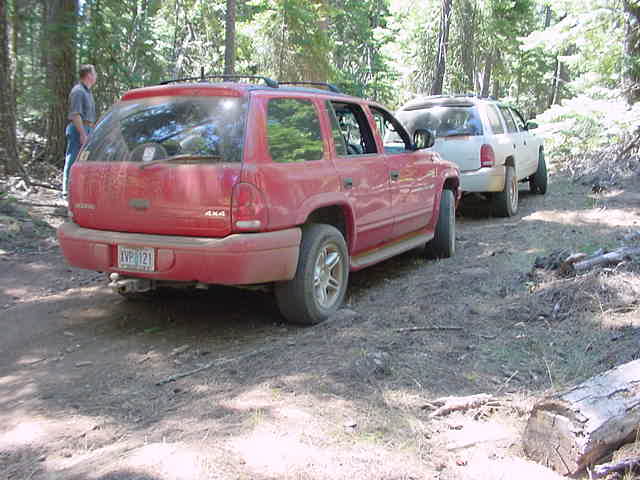
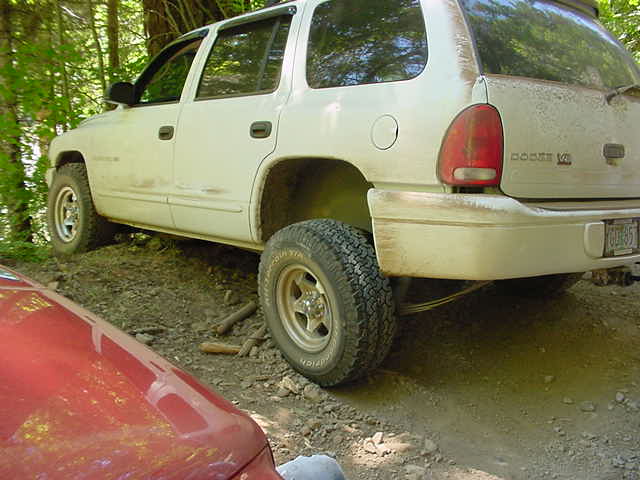
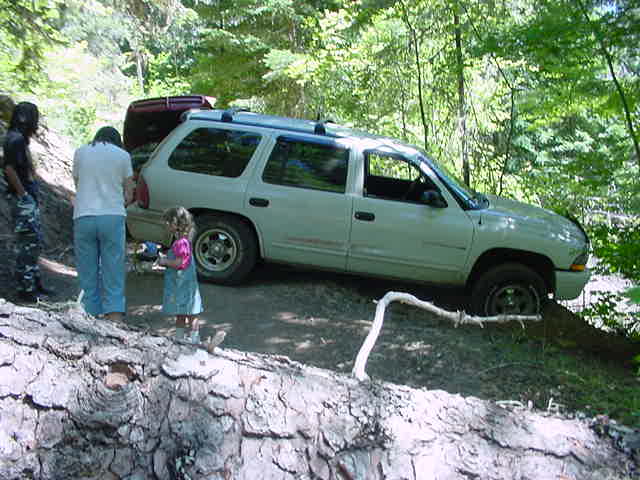
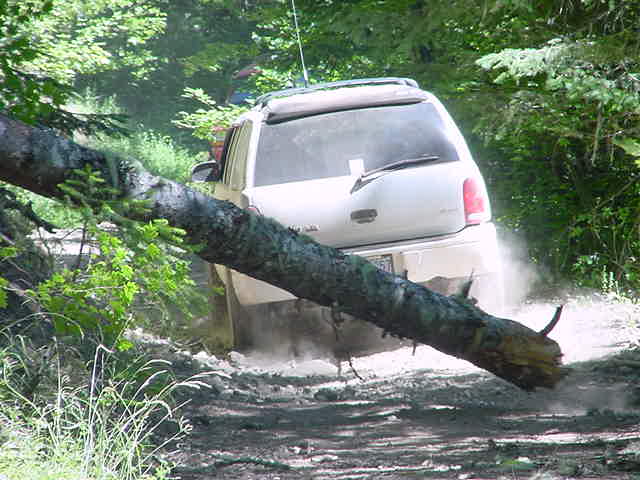
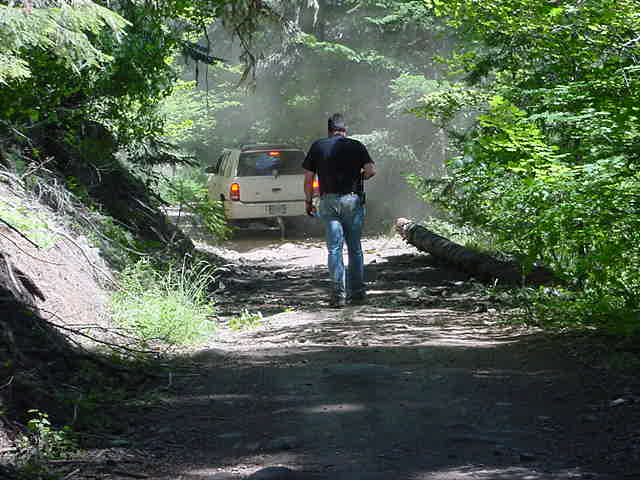
On July 19th, as a prelude to the Mount Saint Helens Durango Rendezvous, Pat Redden, Adam Williams and Angela Morrow took a 4X4 trip out the Barlow Toll Road.
Trail history:
Sam Barlow traveled with his wife and 4 children with the migration to Oregon in 1845. Upon reaching the end of the wagon road at The Dalles in Oregon, Barlow decided to attempt the first wheeled vehicle crossing of the Cascade Mountains instead of taking the usual raft trip down the Columbia River. Displaying his confidence, he believed that "God never made a mountain that he didn't make a way to get over it." Barlow, his family, and a small party traveled south to the Tygh Valley before turning west to climb through the Cascades at a point now known as Barlow Pass. The journey was difficult, dangerous and time consuming. Their late arrival at Government Camp just west of the pass led the party to cache their wagons and supplies and rush to lower elevations at a trading post on the Clackamas River in order to avoid wintry mountain conditions.
The next year Barlow retraced his route and gained authority from the Oregon Provisional Government to build a toll road. Upon opening in 1846 the toll charges were set at $5.00 for a team and $1.00 for each person or head of cattle. However, the road failed to become profitable because many who used it could not afford to pay or were allowed to pass by a tolerant toll keeper. Over the decades the road reverted to a more primitive state until it was reconstructed 30 years later. Ownership of the road was transferred to the State of Oregon in 1919.
Despite it's failure as a financial venture, the Barlow Toll Road played an important role in the early development of Oregon. It carried an estimated 75% of the early immigrants to the Willamette Valley and was described as the most difficult section of the entire Oregon Trail. |