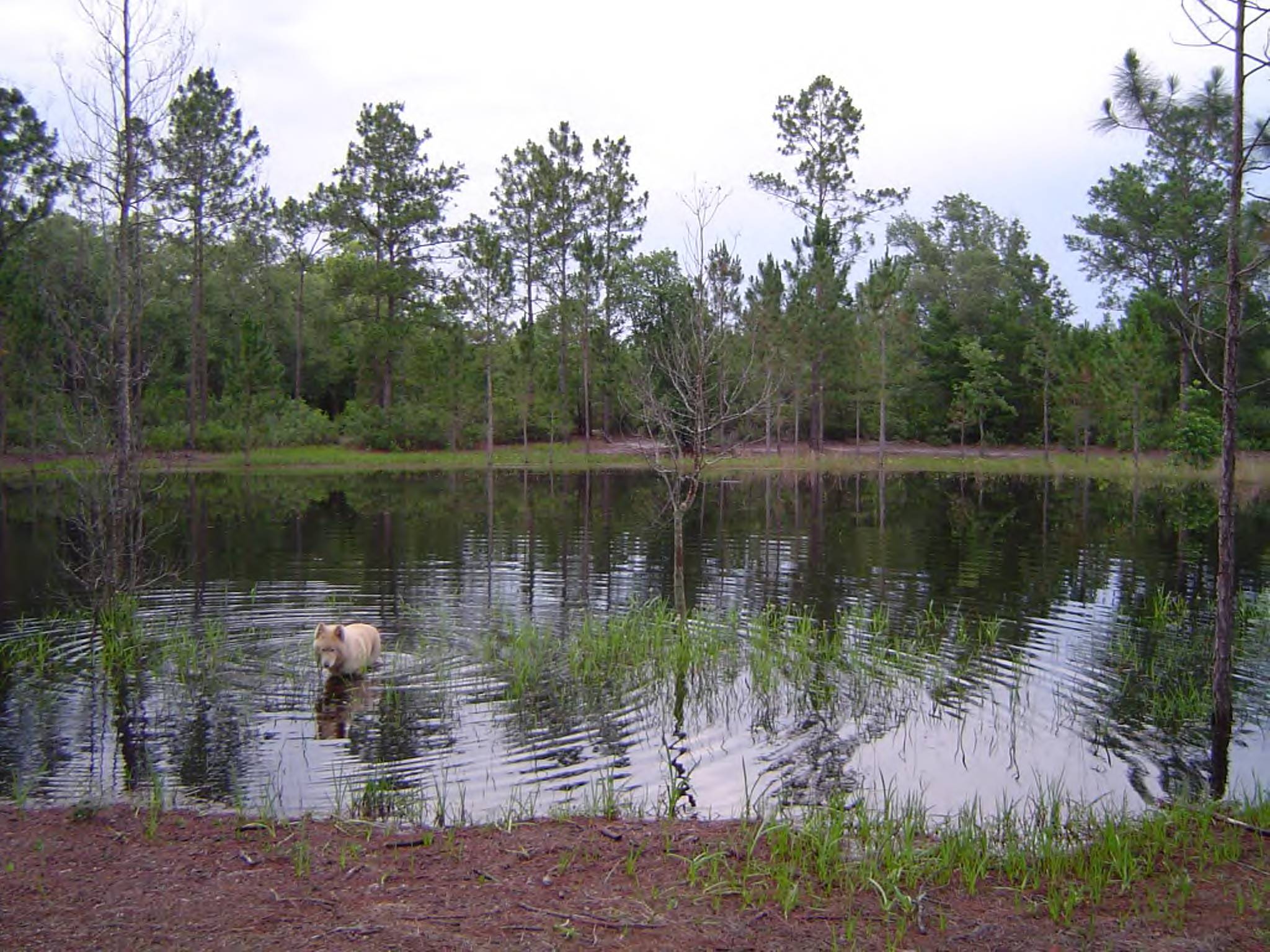
 ~ Rock in his pond ~
~ Rock in his pond ~
When asking poacher and people who kill animals why they do such, the top answers are "to see it up close" or "to get it's medicine". This made me decide to start saving my wolves' naturally shed hair, spin it and create wearable art. I, also, save their naturally shed baby teeth and mount them in jewelry. Let's call attention to the living and make them valuable - not just the dead! This practice of worshiping the dead at the expense of the living has got to go. Dead gods, dead animals, dead dead - what about worshiping life and the living?? It just makes so much more since on our dieing planet!
Everyone loves knowing abit about the wolf that a hat or bag came from - her hobbies or favorite foods! A living wolf that can love you and take you on walks will teach you far more than some poor senselessly murdered fellow that most definately has absolutely no reason to like you. My wolves think it's neat when someone is wearing their fur. It's good for a smile and a wag. Their fur is an arctic coat type in that they are triple coated. They have long guard hairs that can get 4 inches long and show color, then a fur that is basically white but might have alittle color on the tips with the fur next to the skin being a soft down layer. This layer gets thicker with cold weather stimulation. Mine like the wood stove and had rather stay in if it's very cold. However, they love nothing more than a nice long mountain run on a very cold very dark night. They are wolves!!!!!!!!
McKenzie Arctic Wolves are large fun loving predators that bear witness as the Teacher Totem of North America. They are from the McKenzie Mountain Range, the northern most area of the Rocky Mountains (that runs into the Arctic Circle). Queen Victoria established the 1st national park there - the McKenzie National Park. This is the current home of the McKenzie Valley Arctic Timber Wolves. These are very severe extreme mountain area of very severe extremes. McKenzie wolves have a large range and often maintain a 500 mile perimeter around there lair. This could have helped them develop their near 200 pound body mass and their very deep pack notes. Living in both the arctic area and the timber lines, they are consider both an arctic and a timber wolf with Canus Lupi McKenius and Canus Lupis Occenditalas being called the McKenzie wolves (the 2 largest wolves on Earth). Canus Lupi McKenius is white and stays white while Occidentalus is chameleon-like in that it changes colors turning white in winter.
I take very good care of their hair all year, then brush them during their Spring shedding and wash/dry this fur. It is then given to a professional spinner for spinning/carding/cleaning. The fur is returned as yarn and is used for our crocheting pleasure. The different wolf's fur is processed separately so each piece is from a specific wolf with a separate wolf write-up. Pieces still have wolf lanolin/smell and are much softer and warmer than lambs wool.
WOLF FLIER
McKenzie Arctic Wolves are large fun loving predators that bear witness as the Teacher Totem of North America. They are from the McKenzie Mountain Range, the northern most area of the Rocky Mountains that runs into the Arctic Circle. Queen Victoria established the 1st national park there - the McKenzie National Park. This is currently the protected home of the McKenzie Valley Arctic Timber Wolves. They live in both the arctic area and the timber lines so they are consider both an arctic and a timber wolf. Both Canus Lupi McKenius and Canus Lupis Occenditalas are considered the McKenzie wolves and are 2 of the largest wolves on Earth. Canus Lupi McKenius is white and stays white while Occidentalus is chameleon-like in that it changes colors and can turn white. These are very severe extreme mountain area of very severe extremes. McKenzie wolves have a large range and often maintain a 500 mile perimeter around there lair. This could have helped them develop their near 200 pound body mass. They weight about a pound at birth in litters of about 8, about 80 pounds at 6 months and 120 pounds at 10 months (when they are around 25 to 27 inches at the shoulder). The shewolves are smaller. This fast growth rate requires maximum quality and maximum quanity food. They must have a meat based diet throughout their lives. Raw meat makes for a nice treat and is a necessary dietary supplement. I suggest raw frozen chicken or chicken popcycles. An interesting way to give them herbal supplements is to place the dosages you want in each of an ice trays cube slots and fill it with chicken broth, freeze, put into bags and give to critter. McKenzies have some of the hugest and most beautiful teeth in the wolf world along with some of the heaviest bones so a high, balanced calcium level is very important. While they eat primarily mice and small rodents in the wild they still consume a large of amount of bone, cartilage and high calcium meats. One of the first symptoms of defecenties is perminate vision damage and blindness. Wolves are sweet, goofy, gentle, incredibly loving and one of the planet's most fiercely successful pack predator. They are smart, crafty, stealthy and up for competitive games. "Hide and go seek", ambush and control and singing are their favorite childhood past times. They never grow up! Our pack note is A flat and anytime or anywhere it goes off - they go off. Window rattling loud! Mom howls over them while they are 1 to 3 days old, until they have then they have their pack note for life. They do a pack howl at dusk and dawn to gather the pack or in a serious situation but singing is usually done in the early evenings. One sings a melody then another repeats it exactly then changes the ending. They sort of bat around a melody like a vollyball. They love human participation but one must respect their rules. It's interesting to hear a pack of wolves all howling the same note from a variety of locations. It seems impossible to pinpoint one or have any idea how many their are. It is a sound that plays with echos, as well. They seem to howl the felling of the bowls of the Earth. They are blues singers to the ultimate max!! They reveal their heart and soul in one long note of passion and total expression. I have heard them copy bird songs and Maria Carrie music often. The whin, also ant that seems to be their language. Small short whins giving their location or intent in a expressive way. In some way music has evolved within some species and is some type of selection advantage. Maybe it all started with simple self expression of emotion?
When asking poacher and people who kill animals why they do, the top answer is to see it up close or to get it's medicine. This made me decide to start saving their naturally shed hair, having it spun and made into wearable art. I save their naturally shed baby teeth and mount them in metals as jewelry and wearable art. Let's call attention to the living and make them valuable - not just the dead. This practice of worshiping the dead at the expense of the living has got to go. Dead gods, dead animals, dead dead - what about worshiping life and the living?? It just makes so much more since on a dieing planet! People love knowing abit about the wolf that their hat or bag came from - her hobbies or favorite food! A living wolf that likes you and take you on walk can teach you far more than some poor senselessly murdered fellow that most definately has no reason to like you. My wolves think it's neat when someone is wearing their fur. It's good for a smile and a wag. Their fur is an arctic coat type in that they are triple coated. They have long guard hairs that can get 4 inches long and show color, then fur that is basically white but might have alittle color on the tips and next to the skin a soft down layer. This layer gets thicker with cold weather stimulation. Mine like the wood stove and had rather stay in if it's very cold. However, they love nothing more than a nice long mountain run on a very cold very dark night!! They are wolves.
Wolves are carnivores preying namely on wild game - namely deer and caribou - however, they also live on rodents, fowl, fish and other smaller prey. They have been known to consume berries and other vegetable matter on occasion too. Their eating habits can be defined as 'Feast or Famine". A wolf may go hungry for several days, and after a kill consume as much as 20 lbs of meat after which the wolf will stagger away - meat drunk - to sleep and digest the meal.
Roaming
Wolves are territorial - establishing hunting territories which they constantly scent mark to keep intruders away and demarcate their territorial boundaries. Their keen sense of smell makes them scent-oriented animals and will use urine and feces to mark leave marks territory which tell other wolves about each others presence. Wolves can also tell the type of diet, the sex, and the health of the wolf based on these olfactory messages. To enhance this 'calling card' wolves also have scent glands located along the sides of the muzzle, at the base of the tail, and on bottom of their paws.
Gray Wolf
Canis lupus With the largest range of any other land mammal, gray wolves are higly adaptable. There are many subspecies encompassed within the 'gray wolf' label but most fit into the standard - 30"-38" at the shoulders - weighing approximately 75-140 lbs depending on subspecies. Gray wolves subsist on anything as small as mice and voles to deer, caribou and moose. Gray wolves are being reintroduced into areas of Montana Wyoming and Idaho.
Arctic Wolf
Canis lupus arcticus is not really a separate species, but rather a subspecies of gray wolves - they share many of the characteristics of grays except for their uniformly white coloration and smaller ears to prevent heat loss. Because of little exposure to man, they appear more tame and approachable than grays. It stands approximately 31"-38" at the shoulder - weighing approximately 75-140lbs. Diet is similar to that of gray wolves.
How do wolves select which prey to kill?
Begin with a classic case the took place in Wood Buffalo National Park, Alberta, Canada, in 1951. Two buffalo bulls (males) and two cows (female buffalo) are lying in the grass. Three of them are in good health; one cow is lame (in bad health). The wolves approach and withdraw a number of times...At each approach, the lame cow becomes agitated and begins to look around. The three other buffalo ignore the wolves. When one wolf comes within 25 feet, the lame cow gets up on shaky legs to face it alone. It seems clear that prey selection is something both animals play a role it.
The story above is classic of wolf prey interaction. Maybe from this we can start to see why wolves kill so few of the animals they actually go after. It seems wolves test animals to see if they are ready to die.
Wolves almost always kill animals that are weak, old, or very young. Wolves usually do not kill animals in prime condition.
Wolf Clan
When Ma'una created this world he made four wolves: Blue Wolf (H�tcoga), Black Wolf, White Wolf, and Gray Wolf. The names of Blue Wolf and Black Wolf refer to the day and night skies respectively. They were the ancestors of the present Wolf Clan. Originally, all four of these wolves lived on the surface of the earth (some say in a lodge in the middle of the ocean). Each was married, and one of them had ten children, and the youngest of these and his wife crossed over to the land. When they arrived, they saw a footprint of a bear, and they said, "Our friend has passed by." It is because they met there that the Wolf and Bear Clans love one another. They observed how the humans lived, and when they returned to their home in the middle of the ocean, they asked if they might not go and live with the humans. This they were granted, and they started out a second time, swimming to the shore, and as they left they generated two waves in front of them. As they swam to the shore, they came singing. Because of the nature of these wolves, whenever the tribe comes to a stream and the wind is blowing hard, they call upon a Wolf clansmen to still the wind. Water is sacred to the Wolf clansmen. They are in control of water stuff.
Later all except Gray Wolf went to live below ground, and now are only seen on rare occasions. The offspring of the four wolves lived as animals, ignorant of both clothing and fire, but gradually they evolved into human beings. It is traditional in the Wolf Clan to name the first four sons after the first four wolves created by Earthmaker.
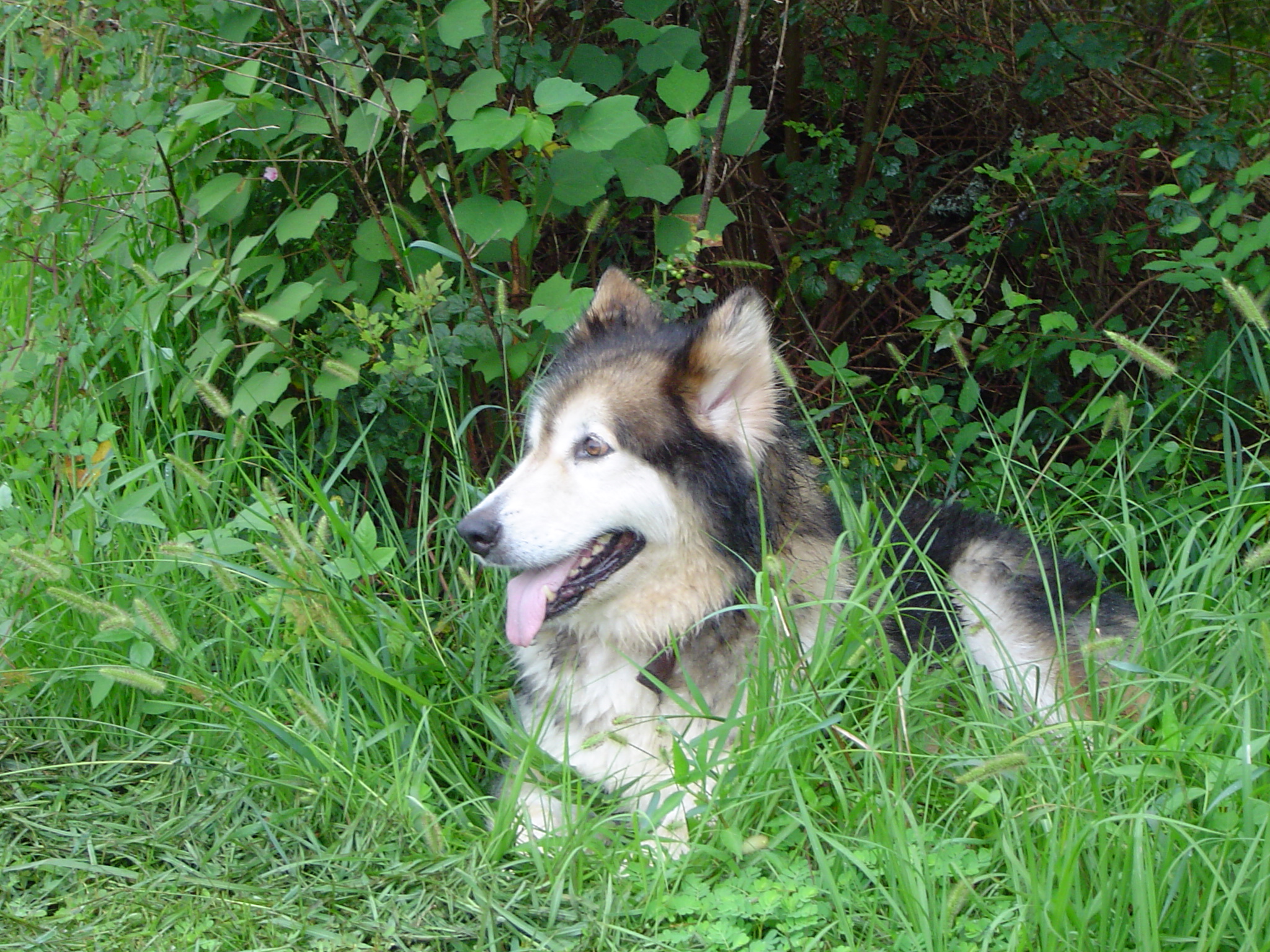 ~ Lilith at Rodman Dam ~
