|
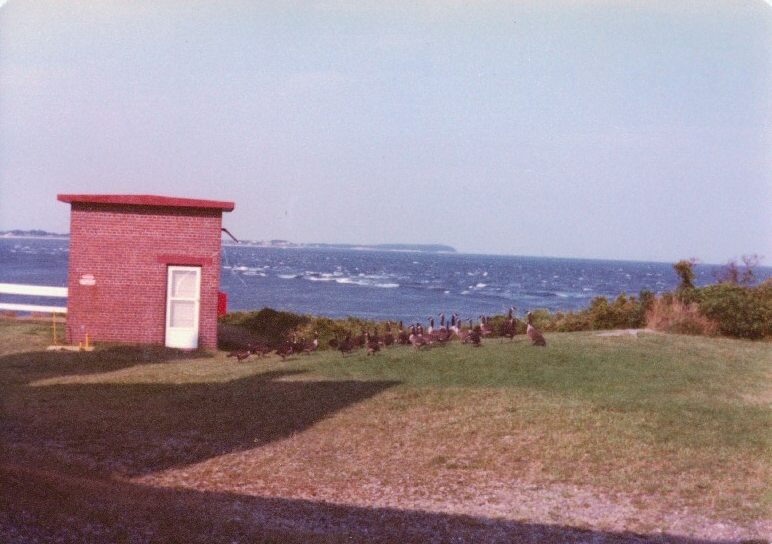
In addition to the regular workday, we would each stand a rotational eight hour watch. While on watch you were responsible for monitoring weather conditions, answering the telephone and of course, lighting and extinguishing the beacon. If visibility became diminished, you were also required to activate the fog horn on the Orient Point Light and the siren located in our auxiliary generator shack (now destroyed from erosion). Lighting the beacon was performed one-half before sunset every night and involved more than just throwing a switch. With the exception of the electric light itself, the light mechanism and lens operated much like it had for over a century. A one-hundred pound counter weight suspended by a cable, traveled through passageways cut in each floor level. Several minutes of arm-tiring cranking would raise the weight to the top, translating to about eight hours of operation. This energy source would power the clockworks which rotated the Fresnel Lens at a constant speed, thereby giving interval flashes of light within its sight. I believe our designated interval at the time was a flash every 4.5 seconds. I remember we use to calibrate the rotation speed of the lens to: one complete turn every forty-five seconds. There was a little thumb screw inside the clockworks that would adjust the rotation speed. Should we lose electrical power on the island, we had a back-up emergency generator to maintain the beacon. We even had a oil lamp incase there was a problem with the generator. Being this use to be the primary source of illumination, the Lantern Room was equipped with a flue to exhaust the fumes and make-up air vents to keep the flame burning properly. One section of the lens was hinged so you could open it to remove the bulb and place the oil lamp in the center. We did test the oil lamp on occasions, but I do not recall ever having to use it. When you think about it, its amazing, how many things today are built to last over a century with such precision and accuracy? Not many that I am aware of. |
|