WHAT AM I DOING HERE?
The question: "What am I doing here, on this planet?" has been persistently demanding a satisfactory answer. To say that I have got the final answer would be an exaggeration, but it does seem that I have a fair idea of what it should be. I share my experiences in the hope that it would help others seek their own answer. We could then discuss our perspectives and hopefully be mutually benefited.
It is more than thirty years since I started looking for an answer to this nagging question in some earnestness. Of course I was faced with this question for the first time in early childhood. I recall vividly listening to a radio play in which Abhimanyu, the son of Arjuna, is slayed in battle, and the Pandavas are grieving. I asked my mother:"Where has Abhimanyu gone; why can't he come back?" It was a difficult question to answer to a twelve year old boy. I was told that someday everyone dies, never to return again. It was such a great shock for me to realise that my grandfather, to whom I was so attached, would also die and I would have to live without him. I cried for the better part of the night, totally bewildered. But in a few days the whole issue got sidetepped in playing and school home-work. The god of death did remind me about the evanscence of life again and again, but it took quite some time, and the death of many near and dear ones, before I took the cue. Eventually I realized that a proper understanding of the phenomenon of death was directly linked to our purpose of life, and that an insight into these was the essence of spiritual quests.
I started reading the complete works of Vivekananda earnestly in 1974. Everyday, during the lunch break, Prof.Gaur and I would sit together and read Vivekananda's inspiring talks. It was Prof.Bhimbraw (my HOD in Delhi College of Engineering, while I was studying there during 1965-70) who first advised me to take the next step, i.e. to visit Ramkrishna-Mission on Sundays to listen to the weekly discourse of the presiding swamiji. This he felt would actually initiate me into the path of spiritual enquiry. It did. This 'live' interaction with a saintly person was quite enriching. The studies continued, from Vivekananda, to Upanisads, Bhagvadgeeta, Shankaracharya's other works, Commentaries on these etc.
Simultaneously, I was busy working overtime doing 'research' in my area of technical specialization. By 1980 I had guided numerous projects, including three Ph.D. projects, and participated in a major sponsored project. Numerous family problems, mostly due to serious illness of children, but also due to some domestic discord, surfaced and this nagging question became all the more prominent. I decided to temporarily halt taking Ph.D. students till there was clarity on what we should really be doing here even in I.I.T.Delhi.
An earnest debate with friends like Prof.Gaur ensued. An opportunity was provided by the first seminar called by BERP of IITDelhi seeking views on " Thrust areas of research in I.I.T. Delhi" for the next five-year plan. It was a unique experience, four friends discussing this issue forcefully, without any pretensions and false images, for over a month. It became clear that most of the research being done by us at I.I.T. Delhi was irrelevant to the real needs of the nation-a shocking revelation for most of us. In fact most of the time it was motivated by extraneous reasons- some extension of the work being done abroad, ease of publication, attending international conferences, quick recognition from abroad etc. We were not addressing the real technical problems of the country since these demanded unconventional 'low tech' work, not likely to result in all such international 'recognition'. The most urgent challenge therefore was to give up hypocritical pretensions regarding the importance of our research work, become really truthful and compassionate. Only then would we become sensitive to the plight of millions of impoverished people of the country, and work on technologies that promote the welfare of people, and not just of the industrialists. This essentially meant improving the value system of our society, giving up strong cravings and aversions. This conclusion was evidently dovetailing with the spiritual enquiry that was being simultaneously pursued. But how to do so, was the moot question.
1980-85 was a period of great inner discoveries. As they say, the nature helps those who seek earnestly. I had the opportunity of coming in touch with many saintly persons who used to visit Delhi every year. Swami Chinmyanada, Swami Bhoomananda Tirtha, ShriA.K.Parthsarthy, Swami Sanatan Shri, Swami Muktananda, being the most prominent; and reading their writings. Many issues got clarified. It became clear that a satisfactory answer to the key question could emerge only from self-realization. But that had a pre-requisite: cultivation of dispassion, reducing attachment and aversion towards the world. I tried forceful abstention from sensory pleasures; but all such attempts at self-repression proved exasperating. How to move ahead was not clear at all.
All teachers advised meditation as the key to self-realization. But they had different prescriptions for how to meditate. Tried various kinds of meditations, mostly through instructions given in books. Also attended a two-day intensive programme conducted by sanyasins of Ganeshpuri where meditation on breath along with a mantra was taught; but the experience was very disappointing. I could easily see that the students were being subtly manipulated through suggestions and that there was excessive dependence on the Guru's benediction. It was not my cup of tea!
Swami Sanatan Shri, with whom I had the most intimate interaction, advised intelligent use of autosuggestions (based on intellectual understanding of reality) and meditation on divine form. Focussing attention on different parts of the body, he advised visualizing that these are parts of the body of the personal God of whom one is a devotee. Thus through a systematic practice one would eventually become one with the object of devotion and come out of the stubborn illusion of individuality - the root cause of attachments and aversions. I tried to practice it, but could not succeed much. There was an inner resistance to imagination, and autosuggestions. I could soon 'see' with closed eyes whatever form I meditated upon, and this created so many doubts even about the practice of other saints: what was Shri Ramakrishna Paramhansa doing? Was he also getting into this 'trap' of interpreting self-projections as the visions of goddess? But my devotion to him was so strong that I could never accept such 'intellectual' conclusions. After all he also had the experience of "nirvikalpa samadhi" after cutting off mental picture of the goddess. What 'nirvikalpa samadhi' meant was beyond me. The literature termed it to be the experience of Transcendental Reality, the imperishable, immutable, absolute Truth.
I continued with other practices like japa and attempting to observe the thoughts as advised by Swami Chinmayanada, with some little success-fleeting glimpses of deep tranquility. There was however a great transformation in understanding the merits of yajnas, which we used to traditionally perform at home on special occasions. Thanks to the exposition of Vedas given by Swami Sanatan Shri, these were now seen in a very different spiritual perspective, a wonderful combination of 'devotion' with 'knowledge'. Within a few years I felt greatly buoyed up, the tensions, which had gripped me during early eighties, reduced considerably; the benefits of interaction with Swamiji were evident.
At the IIT front too, there was a happy coincidence of meeting Ananthuji and through him Prof.D.S.Kothari. An intimate interaction followed. Prof.Gaur and I took a year's sabbatical and worked on a new course entitled "Science and Humanism" which we started teaching in 1983. Now we were supposed to be discussing the "fundamental question" even in the class. The need for clarity was so pressing.
It was the Dussehra festival day in 1984.A discourse on Vipassana by Shri S.N.Goenka had been organized in IIT Convocation Hall and I had also gone to hear him. The discourse made very good impact, but on reflecting on his exhortation, and my friend's suggestion, to sit for a 10-day course I felt," Where is the need? I am already free from sectarian fetters and understand well that dharma is universal. I am privileged to have the direct counsel from an 'enlightened' saint who also teaches the dharma in a manner which should be universally acceptable, then where is the need to try something else?" And so when I was told that a special camp was being organized for ' a select group of intellectuals' in December 1984 in Simla, I didn't join. I didn't feel motivated to spend 10-days in just trying out yet another kind of meditation. But Nature had its own designs!
1984 was a particularly difficult year for all sensitive people in India. Operation Bluestar in Punjab resulting in massive bloodshed in a much revered temple, Mrs. Gandhi's assassination followed by horrible riots in Delhi and other parts of North India, and then the industrial disaster in Bhopal. The King of Death never seemed more devastating. Inspite of all this turmoil, I could maintain equanimity, seeing this all as His 'divine play', albeit inscrutable.
In December, while Goenkaji was conducting that special 10-day camp for 'intellectuals' in Simla, which I had refused to join, my elder son fell ill; and on 4th Jan 1985, he breathed his last. Throughout the three weeks he was in hospital he was so calm and composed, doing his japa regularly, keeping himself busy in reading and discussing inspiring books, that we never realized, in spite of numerous hints from the doctors, that his illness was fatal. Needless to add, the shock of his death was immense. Nevertheless, I regained my composure quickly, and ensured that this incident didn't upset our faith and devotion, the atmosphere in the home didn't become despondent and gloomy, and we could live up to our intellectual understanding of the whole world being His 'divine play'. My spiritual training indeed stood me in good stead, but not for very long.
As months passed by I felt a strange uneasiness creeping deep inside. Numerous doubts arose-could he have been saved by better treatment; why should he, such a noble soul, die so young; why do I have to suffer so much even though I have never done any unwholesome deed? , etc. Slowly but surely, I was getting unsettled internally, and it began to show even outwardly. The veneer of equanimity, which I had maintained for months, was falling apart. I was finding it difficult to even to do the official duties. I had to come out of this turmoil, and the only way I knew was through intellectual ratiocination. I confined myself in our prayer room for three days and nights to do so, calling upon all my 'wisdom' to accept the reality, but with only little success. Somehow I managed to hang on till the semester ended in May.
My family was very concerned as I was evidently very ill, but audaciously refused to accept it. I took leave and we went to Haridwar, a place for which I always had great devotion, and spent lot of time on the bank of the Ganges in quiet contemplation. Slowly it dawned to me: May be that Goenkaji's assertion regarding the inability of our traditional spiritual practices to penetrate into the deeper recesses of the mind is right! After all I perfectly understand that there is no reason to be upset, and yet I am in inner turmoil. Soon after return, I decided that I should 'give a try' to Goenkaji's meditation, and in July went to Jaipur with my colleague to sit a course.
The first course was a very difficult experience, not because of long hours of sitting or enforcement of silence; it was the evening discourses that were very difficult to 'tolerate'. These discourses challenged my cherished beliefs and seemed to be making snide and derogatory comments about some of the most revered saints of the past. I confronted Goenkaji, who was himself conducting the course, with my objections. Not feeling satisfied with his response, and with the discourses becoming more and more strident, I even 'decided' to leave the course after the third day. Goenkaji responded very affectionately: You have a scientific background, why not complete the experiment before coming to conclusions. You need not agree to all that is said in the discourse, just practice what is being advised, and then after 10 days draw your own conclusions. And thus when he refused to grant permission to go, I said to myself: Why not defer judgement and try to experiment sincerely for the rest of the days. And at the end of the course, the effect was evident. I felt so light and happy, as I had never felt in my life, in spite of the fact that, due to my strong reaction to the evening discourses, I could not observe the noble silence as scrupulously as I should have.
Unfortunately, on returning home, I fell ill and could not continue the practice for some days. And then, there also was the difficulty of giving up suddenly the past practices. But the pleasant memories of the experience after 10-days of camp always motivated me not to give up this practice completely. So, after a few months, when it was decided that we should organize a camp at I.I.T.Delhi for the benefit of our students and staff, I advised my wife Susheela to sit, and I volunteered to serve.
The camp was a turning point for us. It had a cathartic effect on Susheela and she felt very much relieved of the deep-seated anguish of losing a dear son. I had another opportunity to meditate continuously for a few hours daily, in the proximity of a meditation teacher and experienced again the beneficial effects of sustained practice. I was convinced of the efficacy of Vipassana and decided to practice it regularly. And there was no looking back thereafter.
After a few years' practice it became quite clear that Vipassana held the key to that nagging question for it actually showed the way to get rid of all impediments to the path of realization of Truth, viz. the cravings, aversions and delusions with regard to the world.
The sustained practice of self-observation produced many salutary results.
It slowly revealed to me numerous weaknesses, which earlier I thought, were not there in me. These negative benefits- negative in the sense that facing this reality was at times very painful- resulted in significant: reduction in inner vanity and in the tendency to pick holes in other's coats, increase in forbearance, quicker realization of own mistakes etc.
The most conspicuous benefit has been the development of inner conviction based on my own numerous experiences, especially of the long duration camps, about the efficacy of Vipassana. I can now "see" very clearly how multifarious spiritual practices have arisen by mistaking various milestones on the way as the destination. All the lurking doubts about the correctness of my spiritual path have vanished. The resulting feeling of assurance and ease is really hard to describe. To know for sure one is on the right path, even though the journey is long and arduous,is a great relief indeed. Surely, there is no greater protection than an earnest refuge in Truth!
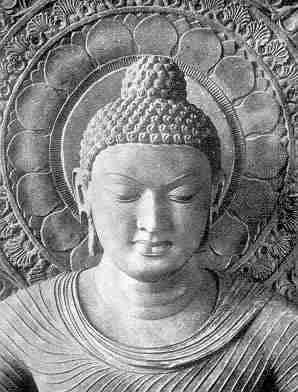
I can 'see' very clearly that as the mental defilements get progressively reduced the Truth becomes progressively clearer, the 'intimations of immortality' more distinct. As the all too obvious fact of impermanence of the entire sensory domain becomes internalized into the depths of the psyche, the stubborn habit of reacting to the sensory stimuli is slowly giving way. Even this little ability to maintain an inner distance from 'things' (including my 'own' thoughts), and the resultant attenuation in 'suffering', gives a hope, based on personal experience, of the possibility of perfect detachment, and eventual extinction of all 'suffering'. As I continue this practice of non-reactive observation of the entire body-mind complex, it is becoming increasingly clear that behind these phenomena there is no abiding entity to whom these events or mental states personally belong. Myriad sensations arise and pass away; various states of mind arise and pass away in accordance with the laws of nature. One has no control or suzerainty over the events. Slowly the great insight of Anatta, as expounded by the Exalted One, "There is no ego here to be found", is beginning to make sense. As I get fleeting glimpses of the freedom resulting from even partial abdication of ego, the conviction about its complete extinction, and the resulting liberation from the thralldom of senses becomes stronger.
The nagging question now has an experiential answer: 'I' am here in this particular situation, reaping the consequences of 'my' past karmas. The future depends on my actions here, in this world. If I continue to lead a 'mechanical' life-getting up, eating, going to work, rearing children, amusing myself, sleeping, and getting up again- I would remain caught in this snare of repeated births and deaths. If I live with awareness, purifying the mind through self-observation, I can liberate myself from the delusions caused by the sensory world, and thus become free from this snare. The choice is entirely mine!
The conviction about the efficacy of Vipassana has been greatly strengthened after I started conducting courses myself, and interacting with the prisoners in Tihar Jail in 1993. We had heard the story of murderer Angulimal getting transformed after learning this meditation from the Buddha, Tihar provided a proof that this alchemy works even today. The film "Doing Time Doing Vipassana" depicts this transformation so well. The feedback from many young students of I.I.T.Delhi further confirmed its need for modern youth. It now seems so clear to me that propagation of pure dharma as taught by Gautama the Buddha, especially this technique of self-observation, is the key to ending all strife in the society and ushering an era of peace, harmony and brotherhood. Surely if it could happen over two millennia ago in the reign of the great Mauryan emperor Asoka, it can happen again today.
And all this has resulted in defining the mission of my life: freedom from the thralldom of the six senses through continual practice of self-awareness, and helping in propagating this message to all. I perceive that the most desirable time to learn this art of self-observation is in the childhood, and so wish to start schools where this could be done earnestly. A charitable society named Society for Holistic Education is being founded for this purpose. Within I.I.T. Delhi, we are working towards the introduction of value education to make the students sensitive to the higher dimensions of human existence. To properly plan and coordinate this work across the country, our suggestion to set up a "National Resource Centre for Value Education in Engineering" has been accepted by the Ministry of Human Resource Development.
This has also resulted in re-orientation of my area of technical research. I am presently working on developing new eco-friendly technology for air-conditioning (in tune with my specialized knowledge). For over ten years we have been making attempts to create opportunities for IIT faculty's direct involvement in poverty alleviation by contributing towards up-gradation of rural industries. Extensive discussions with Khadi and Village Industries Commission have now borne fruit and we have taken up a major three years' project ( 2001-2004) to create a nodal agency to coordinate and fund such R&D work on rural industrialization. It has now been named Mahatma Gandhi Institute for Rural Industrialization and is being set up at the old JBCRI Campus, a hallowed place where the Mahatma spent over two years during the formation of All India Village Industries Association in 1930s. The work carried out till now already shows the tremendous possibilities of improvement by providing Science, Technology and Management inputs in a well coordinated manner to this neglected, but very crucial, sector of our economy. More than thirty faculty members of IITD are involved in this task , and efforts are underway to involve other IITs and reputed NITs in this mission of strengthening the process of rural industrialization in the country. Involvement in such R&D activities could bring about a qualitative change in the outlook of the highly talented faculty of IITs and other technical and mangement institutions , by promoting appreciation of the social reality of the country, thus increasing their sensitivity and compassion.
And while letting the body and mind getting involved in so many diverse activities, there is an earnest attempt, often unsuccessful, not to lose sight of the mission by anchoring fast to continual practice of self-awareness, to sila, samadhi and pannya as taught by the Exalted One, Gautama the Buddha.
May this earnest sharing of experience be beneficial to all!