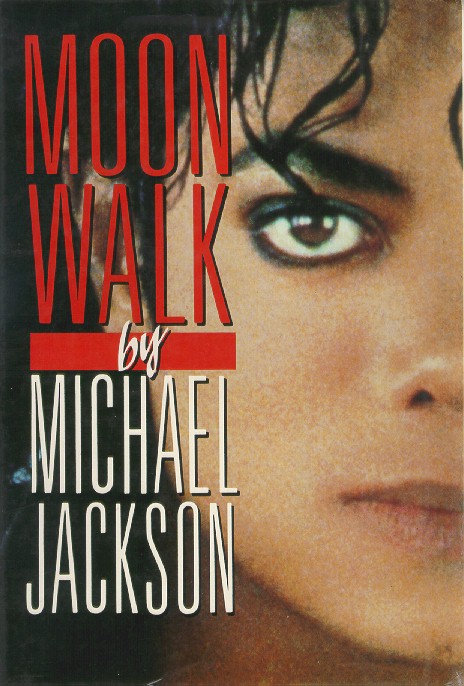
Moonwalk -
Chapter Five -
The Moonwalk
Chapter One - Just Kids With a Dream
Chapter Two - The Promised Land
Chapter Three - Dancing Machine
Chapter Four - Me And Q
Chapter Five - The Moonwalk
Chapter Six - All You Need Is Love
PART 2
To be continued...
The next day I called my management office and said, "Please order me a spy's hat, like a cool fedora - something that a secret agent would wear." I wanted something sinister and special, a real slouchy kind of hat. I still didn't have a very good idea of what I was going to do with "Billie Jean."
During the Thriller sessions, I had found a black jacket, and I said, "You know, someday I'm going to wear this to perform. It was so perfect and so show business that I wore it on Motown 25 .
But the night before the taping, I still had no idea what I was going to do with my solo number. So I went down to the kitchen of our house and played "Billie Jean." Loud. I was in there by myself, the night before the show, and I pretty much stood there and let the song tell me what to do. I kind of let the dance create itself. I really let it talk to me; I heard the beat come in, and I took this spy's hat and started to pose and step, letting the "Billie Jean" rhythm create the movements. I felt almost compelled to let it create itself. I couldn't help it. And that - being able to "step back" and let the dance come through - was a lot of fun.
I had also been practising certain steps and movements, although most of the performance was actually spontaneous. I had been practising the Moonwalk for some time, and it dawned on me in our kitchen that I would finally do the Moonwalk in public on Motown 25.
Now the Moonwalk was already out on the street by this time, but I enhanced it a little when I did it. It was born as a break-dance step, a "popping" type of thing that blacks kids had created dancing on the street corners in the ghetto. Black people are truly innovative dancers; they create many of the new dances, pure and simple. So I said, "This is my chance to do it," and I did it. These three kids taught it to me. They gave me the basics - and I had been doing it a lot in private. I had practised it together with certain other steps. All I was really sure of was that on the bridge to "Billie Jean" I was going to walk backward and forward at the same time, like walking on the moon.
One the day of the taping, Motown was running behind schedule. Late. So I went off and rehearsed by myself. By then I had my spy hat. My brothers wanted to know what the hat was for, but I told them they'd have to wait and see. But I did ask Nelson Hayes for a favour. "Nelson - after I do the set with my brothers and the lights go down, sneak the hat out to me in the dark. I'll be in the corner, next to the wings, talking to the audience, but you sneak that hat back there and put it in my hand in the dark."
So after my brothers and I finished performing, I walked over to the side of the stage and said, "You're beautiful! I'd like to say those were the good old days; those were magic moments with all my brothers, including Jermaine. But what I really like" - and Nelson is sneaking the hat into my hand - "are the newer songs." I turned around and grabbed the hat and went into "Billie Jean," into that heavy rhythm; I could tell that people in the audience were really enjoying my performance. My brothers told me they were crowding the wings watching me with their mouths open, and my parents and sisters were out there in the audience. But I just remember opening my eyes at the end of the thing and seeing this sea of people standing up, applauding. And I felt so many conflicting emotions. I knew I had done my best and felt good, so good. But at the same time I felt disappointed in myself. I had planned to do one really long spin and to stop on my toes, suspended for a moment, but I didn't stay on my toes as long as I wanted. I did the spin and I landed on one toe. I wanted to just stay there, just freeze there, but it didn't work quite as I'd planned.
When I got backstage, the people back there were congratulating me. I was still disappointed about the spin. I had been concentrating so hard and I'm such a perfectionist. At the same time I knew this was one of the happiest moments of my life. I knew that for the first time my brothers had really gotten a chance to watch me and see what I was doing, how I was evolving. After the performance, each of them hugged and kissed me backstage. They had never done that before, and I felt happy for all of us. It was so wonderful when they kissed me like that. I loved it! I mean, we hug all the time. My whole family embraces a lot, except for my father. He's the only one who doesn't. Whenever the rest of us see each other, we embrace, but when they all kissed me that night, I felt as if I had been blessed by them.
The performance was still gnawing at me, and I wasn't satisfied until a little boy came up to me backstage. He was about ten years old and was wearing a tuxedo. He looked up at me with stars in his eyes, frozen where he stood, and said, "Man, who ever taught you to dance like that?" I kind of laughed and said, "Practice, I guess." And this boy was looking at me, awestruck. I walked away, and for the first time that evening I felt really good about what I had accomplished that night. I said to myself, I must have done really well because children are honest. When that kid said what he did, I really felt that I had done a good job. I was so moved by the whole experience that I went right home and wrote down everything which had happened that night. My entry ended with my encounter with the child.
The day after the Motown 25 show, Fred Astaire called me on the telephone. He said - these are his exact words - "You're a hell of a mover. Man, you really put them on their asses last night." That's what Fred Astaire said to me. I thanked him. Then he said, "You're an angry dancer. I'm the same way. I used to do the same thing with my cane."
I had met him once or twice in the past, but this was the first time he had ever called me. He went on to say, "I watched the special last night; I taped it and I watched it again this morning. You're a hell of a mover." It was the greatest compliment I had ever received in my life, and the only one I had ever wanted to believe. For Fred Astaire to tell me that meant more to me than anything. Later my performance was nominated for an Emmy Award in a musical category, but I lost to Leontyne Price. It didn't matter. Fred Astaire had told me things I would never forget - that was my reward. Later he invited me to his house, and there were more compliments from him until I really blushed. He went over my "Billie Jean" performance, step by step. The great choreographer Hermes Pan, who had choreographed Fred's dances in the movies, came over, and I showed them how to Moonwalk and demonstrated some other steps that really interested them.
Not long after that Gene Kelly came by my house to visit and also said he liked my dancing. It was a fantastic experience, that show, because I felt I had been inducted into an informal fraternity of dancers, and I felt so honoured because these were the people I most admired in the world.
Right after Motown 25 my family read a lot of stuff in the press about my being "the new Sinatra" and as "exciting as Elvis" - that kind of thing. It was very nice to hear, but I knew the press could be so fickle. One week they love you, and the next week they act like you're rubbish. Later I gave the glittery black jacket I wore on Motown 25 to Sammy Davis as a present. He said he was going to do a takeoff of me on stage, and I said, "Here, you want to wear this when you do it?" He was so happy. I love Sammy. He's such a fine man and a real showman. One of the best. I had been wearing a single glove for years before Thriller . I felt that one glove was cool. Wearing two gloves seemed so ordinary, but a single glove was different and was definitely a look. But I've long believed that thinking too much about your look is one of the biggest mistakes you can make, because an artist should let his style evolve naturally, spontaneously. You can't think about these things; you have to feel your way into them.
I actually had been wearing the glove for a long time, but it hadn't gotten a lot of attention until all of a sudden it hit with Thriller in 1983. I was wearing it on some of the old tours back in the 1970s, and I wore one glove during the Off the Wall tour and on the cover of the live album that came out afterward.
It's so show business that one glove. I love wearing it. Once, by coincidence, I wore a black glove to the American Music Awards ceremony, which happened to fall on Martin Luther King, Jr.'s birthday. Funny how things happen sometimes. I admit that I love starting trends, but I never thought wearing white socks was going to catch on. Not too long ago it was considered extremely square to wear white socks. It was cool in the 1950s, but in the �60s and �70s you wouldn't be caught dead in white socks. It was too square to even consider - for most people.
But I never stopped wearing them. Ever. My brothers would call me a dip, but I didn't care. My brother Jermaine would get upset and call my mother, "Mother, Michael's wearing his white socks again. Can't you do something? Talk to him." He would complain bitterly. They'd all tell me I was a goofball. But I still wore my white socks, and now it's cool again. Those white socks must have caught on just to spite Jermaine. I get tickled when I think about it. After Thriller came out, it even became okay to wear your pants high around your ankles again.
My attitude is if fashion says it's forbidden, I'm going to do it.
When I'm at home, I don't like to dress up. I wear anything that's handy. I used to spend days in my pyjamas. I like flannel shirts, old sweaters and slacks, simple clothes.
When I go out, I dress up in sharper, brighter, more tailored clothes, but around the house and in the studio anything goes. I don't wear much jewellery - usually none - because it gets in my way. Occasionally people give me gifts of jewellery and I treasure them for the sentiment, but usually I just put them away somewhere. Some of it has been stolen. Jackie Gleason gave me a beautiful ring. He took it off his finger and gave it to me. It was stolen and I miss it, but it doesn't really bother me because the gesture meant more than anything else, and that can't be taken from me. The ring was just a material thing. What really makes me happy, what I love is performing and creating. I really don't care about all the material trappings. I love to put my soul into something and have people accept it and like it. That's a wonderful feeling.
I appreciate art for that reason. I'm a great admirer of Michelangelo and of how he poured his soul into his work. He knew in his heart that one day he would die, but that the work he did would live on. You can tell he painted the ceiling of the Sistine Chapel with all his soul. At one point he even destroyed it and did it over because he wanted it to be perfect. He said, "If the wine is sour, pour it out."
I can look at a painting and lose myself. It pulls you in, all the pathos and drama. It communicates with you. You can sense what the artist was feeling. I feel the same way about photography. A poignant or strong photograph can speak volumes. As I said earlier, there were many changes in my life in the aftermath of Motown 25 . We were told that forty-seven million people watched that show, and apparently many of them went out and bought Thriller . By the fall of 1983 the album had sold eight million copies, eclipsing, by far, CBS's expectations for the successor to Off the Wall . At that point Frank Dileo said he'd like to see us produce another video or short film.
It was clear to us that the next single and video should be "Thriller," a long track that had plenty of material for a brilliant director to play with. As soon as the decision was made, I knew who I wanted to have direct it. The year before I had seen a horror film called An American Werewolf in London , and I knew that the man who made it, John Landis, would be perfect for "Thriller," since our concept for the video featured the same kind of transformations that happened to his character.
So we contacted John Landis and asked him to direct. He agreed and submitted his budget, and we went to work. The technical details of this film were so awesome that I soon got a call from John Branca, my attorney and one of my closest and most valued advisers. John had been working with me ever since the Off the Wall days; in fact he even helped me out by donning many hats and functioning in several capacities when I had no manager after Thriller was released. He's one of those extremely talented, capable men who can do anything. Anyway, John was in a panic because it had become obvious to him that the original budget for the "Thriller" video was going to double. I was paying for this project myself, so the money for the budget overruns was coming out of my pocket. But at this point John came up with a great idea. He suggested we make a separate video, financed by somebody else, about the making of the "Thriller" video. It seemed odd that no one had ever done this before. We felt sure it would be an interesting documentary, and at the same time it would help pay for our doubled project. It didn't take John long to put this deal together. He got MTV and the Showtime cable network to put up the cash, and Vestron released the video after "Thriller" aired.
The success of The Making of Thriller was a bit of a shock to all of us. In its cassette form it sold about a million copies by itself. Even now, it holds the record as the best-selling music video of all time.
The "Thriller" film was ready in late 1983. We released it in February and it made its debut on MTV. Epic released "Thriller" as a single and sales of the album went crazy. According to statistics, the "Thriller" film and the release of the single resulted in fourteen million additional album and tape sales within a six-month period. At one point in 1984, we were selling a million records a week.
I'm still stunned by this response. By the time we finally closed down the Thriller campaign a year later, the album was at the thirty-two million mark. Today sales are at forty million. A dream come true.
During this period I changed my management as well. My contract with Weisner and DeMann had expired in early 1983. My father was no longer representing me and I was looking at various people. One day I was at the Beverly Hills Hotel, visiting Frank Dileo, and I asked him if he had any interest in leaving Epic and managing my career. Frank asked me to think about it some more and if I was certain to call him back on Friday. Needless to say, I called him back.
The success of Thriller really hit me in 1984, when the album received a gratifying number of nominations for the American Music Awards and the Grammy Awards. I remember feeling an overwhelming rush of jubilation. I was whooping with joy and dancing around the house, screaming. When the album was certified as the best-selling album of all time, I couldn't believe it. Quincy Jones was yelling, "Bust open the champagne!" We were all in a state. Man! What a feeling! To work so hard on something, to give so much and to succeed! Everyone involved with Thriller was floating on air. It was wonderful. I imagined that I felt like a long-distance runner must feel when breaking the tape at the finish line. I would think of an athlete, running as hard and as fast as he can. Finally he gets close to the finish line and his chest hits that ribbon and the crowd is soaring with him. And I'm not even into sports!
But I identify with that person because I know how hard he's trained and I know how much that moment means to him. Perhaps a whole life has been devoted to this endeavour, this one moment. And then he wins. That's the realisation of a dream. That's powerful stuff. I can share that feeling because I know.
One of the side effects of the Thriller period was to make me weary of constantly being in the public eye. Because of this, I resolved to lead a quieter, more private life. I was still quite shy about my appearance. You must remember that I had been a child star and when you grow up under that kind of scrutiny people don't want you to change, to get older and look different. When I first became well known, I had a lot of baby fat and a very round, chubby face. That roundness stayed with me until several years ago when I changed my diet and stopped eating beef, chicken, pork, and fish, as well as certain fattening foods. I just wanted to look better, live better, and be healthier. Gradually, as I lost weight, my face took on its present shape and the press started accusing me of surgically altering my appearance, beyond the nose job I freely admitted I had, like many performers and film stars. They would take an old picture from adolescence of high school, and compare it to a current photograph. In the old picture my face would be round and pudgy. I'd have an Afro, and the picture would be badly lit. The new picture would show a much older, more mature face. I've got a different hairstyle and a different nose. Also, the photographer's lighting is excellent in the recent photographs. It's really not fair to make such comparisons. They have said I had bone surgery done on my face. It seems strange to me that people would jump to that conclusion and I thought it was very unfair.
Judy Garland and Jean Harlow and many others have had their noses done. My problem is that as a child star people got used to seeing me look one way.
I'd like to set the record straight right now. I have never had my cheeks altered or my eyes altered. I have not had my lips thinned, nor have I had dermabrasion or a skin peel. All of these charges are ridiculous. If they were true, I would say so, but they aren't. I have had my nose altered twice and I recently added a cleft to my chin, but that is it. Period. I don't care what anyone else says - it's my face and I know.
I'm a vegetarian now and I'm so much thinner. I've been on a strict diet for years . I feel better than I ever have, healthier and more energetic. I don't understand why the press is so interested in speculating about my appearance anyway. What does my face have to do with my music or my dancing?
The other day a man asked me if I was happy. And I answered, "I don't think I'm ever totally happy." I'm one of the hardest people to satisfy, but at the same time, I'm aware of how much I have to be thankful for and I am truly appreciative that I have my health and the love of my family and friends.
I'm also easily embarrassed. The night I won eight American Music Awards, I accepted them wearing my shades on the network broadcast. Katharine Hepburn called me up and congratulated me, but she gave me a hard time because of the sunglasses. "Your fans want to see your eyes," she scolded me. "You're cheating them." The following month, February 1984, at the Grammy show, Thriller had walked off with seven Grammy Awards and looked like it was going to win as eighth. All evening I had been going up to the podium and collecting awards with my sunglasses on. Finally, when Thriller won for Best Album, I went up to accept it, took off my glasses, and stared into the camera. "Katherine Hepburn," I said, "this is for you." I knew she was watching and she was.
You have to have some fun.
� Michael Joseph Jackson - Moonwalk
Books by Michael Jackson | Main Page | My e-mail: [email protected]
Copyright � 2000 Jessi