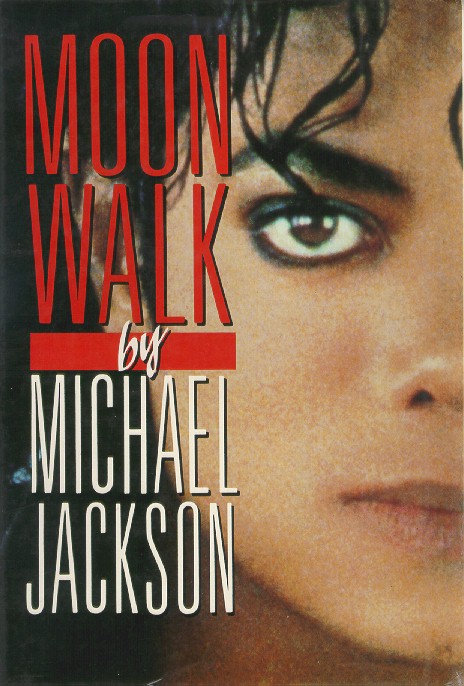
Moonwalk -
Chapter Three -
Dancing Machine
Chapter One - Just Kids With a Dream
Chapter Two - The Promised Land
Chapter Three - Dancing Machine
Chapter Four - Me And Q
Chapter Five - The Moonwalk
Chapter Six - All You Need Is Love
PART 2
To be continued...
After Going Places was in the stores, Dad asked me to accompany him to a meeting with Ron Alexenburg. Ron signed us for CBS, and he really believed in us. We wanted to convince him that we were ready now to take charge of our own music. We felt that CBS had evidence of what we could do on our own, so we stated our case, explaining that we'd originally wanted Bobby Taylor to work with us. Bobby had stuck with us through all those years, and we had thought he'd be a fine producer for us. Epic wanted Gamble and Huff because they had the track record, but maybe they were the wrong jockeys or we were the wrong horses for them, because we were letting them down in the sales department through no fault of our own. We had a strong work ethic that backed up everything we did.
Mr. Alexenburg was certainly used to dealing with performers, although I'm sure that among his business friends he could be just as cutting about musicians as we musicians could be when we were swapping our own stories among ourselves. But Dad and I were on the same wavelength when it came to the business side of music. People who make music and people who sell records are not natural enemies. I care as much about what I do as a classical musician, and I want what I do to reach the widest possible audience. The record people care about their artists, and they want to reach the widest market. As we sat in the CBS boardroom eating a nicely catered lunch, we told Mr. Alexenburg that Epic had done its best, and it wasn't good enough. We felt we could do better, that our reputation was worth putting on the line.
When we left that skyscraper known as Black Rock, Dad and I didn't say much to each other. The ride back to the hotel was a silent one, with each of us thinking our own thoughts. There wasn't much to add to what we had already said. Our whole lives had been leading to that single, important confrontation, however civilised and aboveboard it was. Maybe Ron Alexenburg has had reason to smile over the years when he remembers that day.
When that meeting took place at CBS headquarters in New York, I was only nineteen years old. I was carrying a heavy burden for nineteen. My family was relying on me more and more as far as business and creative decisions were concerned, and I was so worried about trying to do the right thing for them; but I also had an opportunity to do something I'd wanted to do all my life - act in a film. Ironically the old Motown connection was paying a late dividend.
Motown had bought the rights to film the Broadway show known as The Wiz even as we were leaving the company. The Wiz was an updated, black-orientated version of the great movie The Wizard of Oz , which I had always loved. I remember that when I was a kid The Wizard of Oz was shown on television once a year and always on a Sunday night. Kids today can't imagine what a big event that was for all of us because they've grown up with videocassettes and the expanded viewing that cable provides.
I had seen the Broadway show too, which was certainly no letdown. I swear I saw it six or seven times. I later became very friendly with the star of the show, Stephanie Mills, the Broadway Dorothy. I told her then, and I've always believed since, that it was a tragedy that her performance in the play could not have been preserved on film. I cried time after time. As much as I like the Broadway stage, I don't think I'd want to play on it myself. When you give a performance, whether on record or on film, you want to be able to judge what you've done, to measure yourself and try to improve. You can't do that in an untaped or unrecorded performance. It makes me sad to think of all the great actors who have played roles we would give anything to see, but they're lost to us because they couldn't be, or simply weren't, recorded.
If I had been tempted to go onstage, it would probably have been to work with Stephanie, although her performances were so moving that I might have cried right there in front of the audience. Motown bought The Wiz for one reason, and as far as I was concerned, it was the best reason possible: Diana Ross.
Diana was close to Berry Gordy and had her loyalties to him and to Motown, but she did not forget us just because our records now had a different label on them. We had been in touch throughout the changes, and she had even met up with us in Las Vegas, where she gave us tips during our run there. Diana was going to play Dorothy, and since it was the only part that was definitely cast, she encouraged me to audition. She also assured me that Motown would not keep me from getting a part just to spite me or my family. She would make sure of that if she had to, but she didn't think she'd have to.
She didn't. It was Berry Gordy who said he hoped I'd audition for The Wiz . I was very fortunate he felt that way, because I was bitten by the acting bug during that experience. I said to myself, this is what I'm interested in doing when I have a chance - this is it. When you make a film, you're capturing something elusive and you're stopping time. The people, their performances, the story become a thing that can be shared by people all over the world for generations and generations. Imagine never having seen Captains Courageous or To Kill a Mockingbird ! Making movies is exciting work. It's such a team effort and it's also a lot of fun. Someday soon I plan to devote a lot of my time to making films.
I auditioned for the part of the Scarecrow because I thought his character best fit my style. I was too bouncy for the Tin Man and too light for the Lion, so I had a definite goal, and I tried to put a lot of thought into my reading and dancing for the part. When I got the call back from the director, Sidney Lumet, I felt so proud but also a little scared. The process of making a film was new to me, and I was going to have to let go of my responsibilities to my family and my music for months. I had visited New York, where we were shooting, to get the feel for Harlem that The Wiz �s story called for, but I had never lived there. I was surprised by how quickly I got used to the lifestyle. I enjoyed meeting a whole group of people I'd always heard about on the other coast but had never laid eyes on.
Making The Wiz was an education for me on so many levels. As a recording artist I already felt like an old pro, but the film world was completely new to me. I watched as closely as I could and learned a lot.
During this period in my life, I was searching, both consciously and unconsciously. I was feeling some stress and anxiety about what I wanted to do with my life now that I was an adult. I was analysing my options and preparing to make decisions that could have a lot of repercussions. Being on the set of The Wiz was like being in a big school. My complexion was still a mess during the filming of the movie, so I found myself really enjoying the makeup. It was an amazing makeup job. Mine took five hours to do, six days a week; we didn't shoot on Sundays. We finally got it down to four hours flat after doing it long enough. The other people who were being made up were amazed that I didn't mind sitting there having this done for such long periods of time. They hated it, but I enjoyed having the stuff put on my face. When I was transformed into the Scarecrow, it was the most wonderful thing in the world. I got to be somebody else and escape through my character. Kids would come visit the set, and I'd have such fun playing with them and responding to them as the Scarecrow.
I'd always pictured myself doing something very elegant in the movies, but it was my experience with the makeup and costume and prop people in New York that made me realise another aspect of how wonderful film-making could be. I had always loved the Charlie Chaplin movies, and no one ever saw him doing anything overtly elegant in the silent movie days. I wanted something of the quality of his characters in my Scarecrow. I loved everything about the costume, from the coil legs to the tomato nose to the fright wig. I even kept the orange and white sweater that came with it and used it in a picture session years later.
The film had marvellous, very complicated dance numbers, and learning them was no problem. But that in itself became an unexpected problem with my costars.
Ever since I was a very little boy, I've been able to watch somebody do a dance step and then immediately know how to do it. Another person might have to be taken through the movement step by step and told to count and put this leg here and the hip to the right. When your hip goes to the left, put your neck over there . . . that sort of thing. But if I see it, I can do it.
When we were doing The Wiz , I was being instructed in the choreography along with my characters - the Tin Man, the Lion, and Diana Ross - and they were getting mad at me. I couldn't figure out what was wrong until Diana took me aside and told me that I was embarrassing her. I just stared at her. Embarrassing Diana Ross? Me? She said she knew I wasn't aware of it, but I was learning the dances much too quickly. It was embarrassing for her and the others, who just couldn't learn steps as soon as they saw the choreographer do them. She said he'd show us something and I'd just go out there and do it. When he asked the others to do it, it took them longer to learn. We laughed about it, but I tried to make the ease with which I learned my steps less obvious.
I also learned that there could be a slightly vicious side to the business of making a movie. Often when I was in front of the camera, trying to do a serious scene, one of the other characters would start making faces at me, trying to crack me up. I had always been drilled in serious professionalism and preparedness and therefore I thought it was a pretty mean thing to do. This actor would know that I had important lines to say that day, yet he would make these really crazy faces to distract me. I felt it was more than inconsiderate and unfair.
Much later Marlon Brando would tell me that people used to do that to him all the time.
The problems on the set were really few and far between and it was great working with Diana so closely. She's such a beautiful, talented woman. Doing this movie together was very special for me. I love her very much. I have always loved her very much.
The whole Wiz period was a time of stress and anxiety, even though I was enjoying myself. I remember July 4 of that year very well, because I was on the beach at my brother Jermaine's house, about half a block away along the waterfront. I was messing around in the surf, and all of a sudden I couldn't breathe. No air. Nothing. I asked myself what's wrong? I tried not to panic, but I ran back to the house to find Jermaine, who took me to the hospital. It was wild. A blood vessel had burst in my lung. It has never reoccurred, although I used to feel little pinches and jerks in there that were probably my imagination. I later learned that this condition was related to pleurisy. It was suggested by my doctor that I try to take things a little slower, but my schedule would not permit it. Hard work continued to be the name of the game.
As much as I liked the old Wizard of Oz , this new script, which differed from the Broadway production in scope rather than spirit, asked more questions than the original movie and answered them too. The atmosphere of the old movie was that of a magic kingdom sort of fairy tale. Our movie, on the other hand, had sets based on realities that kids could identify with, like schoolyards, subway stations, and the real neighbourhood that our Dorothy came from. I still enjoy seeing The Wiz and reliving the experience. I am especially fond of the scene where Diana asks, "What am I afraid of? Don't know what I'm made of..." because I've felt that way many times, even during the good moments of my life. She sings about overcoming fear and walking straight and tall. She knows and the audience knows that no threat of danger can hold her back.
My character had plenty to say and to learn. I was propped up on my pole with a bunch of crows laughing at me, while I sang "You Can't Win." The song was about humiliation and helplessness - something that so many people have felt at one time or another - and the feeling that there are people out there who don't actively hold you back as much as they work quietly on your insecurities so that you hold yourself back. The script was clever and showed me pulling bits of information and quotations out of my straw while not really knowing how to use them. My straw contained all the answers, but I didn't know the questions.
The great difference between the two Wizard movies was that all the answers are given to Dorothy by the Good Witch and by her friends in Oz in the original, while in our version Dorothy comes to her own conclusions. Her loyalty to her three friends and her courage in fighting Elvina in that amazing sweatshop scene make Dorothy a memorable character. Diana's singing and dancing and acting have stayed with me ever since. She was a perfect Dorothy. After the evil witch had been defeated, the sheer joy of our dancing took over. To dance with Diana in that movie was like an abridged version of my own story - my knock-kneed walk and "bigfoot" spin were me in my early days; our tabletop dance in the sweatshop scene was where we were right then. Everything was onward and upward. When I told my brothers and father I had gotten this part, they thought it might be too much for me, but the opposite was true. The Wiz gave me new inspiration and strength. The question became what to do with those things. How could I best harness them?
As I was asking myself what I wanted to do next, another man and I were travelling parallel paths that would converge on the set of The Wiz . We were in Brooklyn rehearsing one day, and we were reading our parts out loud to one another. I had thought that learning lines would be the most difficult thing I'd ever do, but I was pleasantly surprised. Everyone had been kind, assuring me that it was easier that I thought. And it was.
We were doing the crows' scene that day. The other guys wouldn't even have their heads visible in this scene because they'd be in crow costumes. They seemed to know their parts backward and forward. I'd studied mine too, but I hadn't said them aloud more than once or twice.
The directions called for me to pull a piece of paper from my straw and read it. It was a quote. The author's name, Socrates, was printed at the end. I had read Socrates, but I had never pronounced his name, so I said, "Soh-crates," because that's the way I had always assumed it was pronounced. There was a moment's silence before I heard someone whisper, "Soh-ruh-teeze." I looked over at this man I vaguely recognised. He was not one of the actors, but he seemed to belong there. I remember thinking he looked very self-confident and had a friendly face.
I smiled, a little embarrassed at having mispronounced the name, and thanked him for his help. His face was naggingly familiar, and I was suddenly sure that I had met him before. He confirmed my suspicions by extending his hand.
"Quincy Jones. I'm doing the score."
� Michael Joseph Jackson - Moonwalk
Books by Michael Jackson | Main Page | My e-mail: [email protected]
Copyright � 2000 Jessi