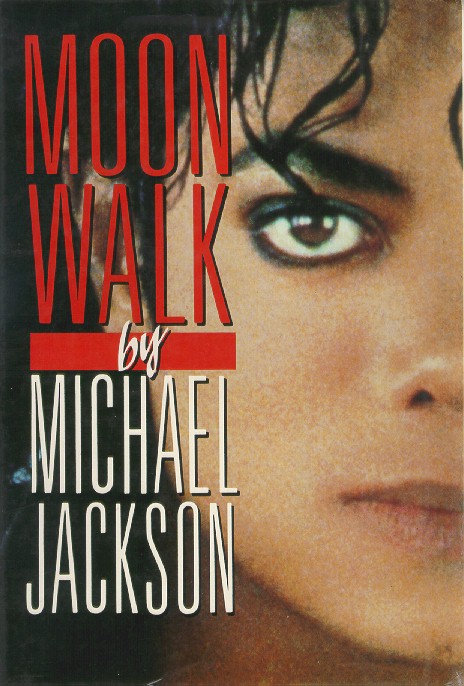
Moonwalk -
Chapter One -
Just Kids With a Dream
Chapter One - Just Kids With a Dream
Chapter Two - The Promised Land
Chapter Three - Dancing Machine
Chapter Four - Me And Q
Chapter Five - The Moonwalk
Chapter Six - All You Need Is Love
PART 2
To be continued...
We started collecting trophies with our act when I was six. Our lineup was set; the group featured me at second from the left, and Jackie on my right. Tito and his guitar took stage right, with Marlon next to him. Jackie was getting tall and he towered over Marlon and me. We kept that setup for contest after contest and it worked well. While other groups we'd meet would fight among themselves and quit, we were becoming more polished and experienced. The people in Gary who came regularly to see the talent shows got to know us, so we would try to top ourselves and surprise them. We didn't want them to begin to feel bored by our act. We knew change was always good, that it helped us grow, so we were never afraid of it.
Winning an amateur night or talent show in a ten-minute, two-song set took as much energy as a ninety-minute concert. I'm convinced that because there's no room for mistakes, your concentration burns you up inside more on one or two songs than it does when you have the luxury of twelve or fifteen in a set. These talent shows were our professional education. Sometimes we'd drive hundreds of miles to do one song or two and hope the crowd wouldn't be against us because we weren't local talent. We were competing against people of all ages and skills, from drill teams to comedians to other singers and dancers like us. We had to grab that audience and keep it. Nothing was left to chance, so clothes, shoes, hair, everything had to be the way Dad planned it. We really looked amazingly professional. After all this planning, if we performed the songs the way we rehearsed them, the awards would take care of themselves. This was true even when we were in the Wallace High part of town where the neighbourhood had its own performers and cheering sections and we were challenging them right in their own backyards. Naturally, local performers always had their own very loyal fans, so whenever we went off our turf and onto someone else's, it was very hard. When the master of ceremonies held his hand over our heads for the "applause meter," we wanted to make sure that the crowd knew we had given them more than anyone else.
As players, Jermaine, Tito, and the rest of us were under tremendous pressure. Our manger was the kind who reminded us that James Brown would fine his Famous Flames if they missed a cue or bent a note during a performance. As lead singer, I felt I - more than the others - couldn't afford an "off night." I can remember being onstage at night after being sick in bed all day. It was hard to concentrate at those times, yet I knew all the things my brothers and I had to do so well that I could have performed the routines in my sleep. At times like that, I had to remind myself not to look in the crowd for someone I knew, or at the emcee, both of which can distract a young performer. We did songs that people knew from the radio or songs that my father knew were already classics. If you messed up, you heard about it because the fans knew those songs and they knew how they were supposed to sound. If you were going to change an arrangement, it needed to sound better than the original.
We won the citywide talent show when I was eight with our version of the Temptations' song "My Girl." The contest was held just a few blocks away at Roosevelt High. From Jermaine's opening bass notes and Tito's first guitar licks to all of us singing the chorus, we had people on their feet for the whole song. Jermaine and I traded verses while Marlon and Jackie spun like tops. It was a wonderful feeling for all of us to pass that trophy, our biggest yet, back and forth between us. Eventually it was propped on the front seat like a baby and we drove home with Dad telling us, "When you do it like you did tonight they can't not give it to you."
We were now Gary city champions and Chicago was our next target because it was the area that offered the steadiest work and the best word of mouth for miles and miles. We began to plan our strategy in earnest. My father's group played the Chicago sound of Muddy Waters and Howlin' Wolf, but he was open-minded enough to see that the more upbeat, slicker sounds that appealed to us kids had a lot to offer. We were lucky because some people his age weren't that hip. In fact, we knew musicians who thought the sixties sound was beneath people their age, but not Dad. He recognised great singing when he heard it, even telling us that he saw the great doo-wop group from Gary, the Spaniels, when they were stars not that much older than we. When Smokey Robinson of the Miracles sang a song like "Tracks of My Tears" or "Ooo, Baby Baby," he'd be listening as hard as we were. The sixties didn't leave Chicago behind musically, Great singers like the Impressions with Curtis Mayfield, Jerry Butler, Major Lance, and Tyrone Davis were playing all over the city at the same places we were. At this point my father was managing us full-time, with only a part-time shift at the mill. Mom had some doubts about the soundness of this decision, not because she didn't think we were good but because she didn't know anyone else who was spending the majority of his time trying to break his children into the music business. She was even less thrilled when Dad told her he had booked us as a regular act at Mr. Lucky's, a Gary nightspot. We were being forced to spend our weekends in Chicago and other places trying to win an ever-increasing number of amateur shows, and these trips were expensive, so the job at Mr. Lucky's was a way to make it all possible. Mom was surprised at the response we were getting and she was very pleased with the awards and the attention, but she worried about us a lot. She worried about me because of my age. "This is quite a life for a nine-year-old," she would say, staring intently at my father.
I don't know what my brothers and I expected, but the nightclub crowds weren't the same as the Roosevelt High crowds. We were playing between bad comedians, cocktail organists, and strippers. With my Witness upbringing, Mom was concerned that I was hanging out with the wrong people and getting introduced to things I'd be better off learning much later in life. She didn't have to worry; just one look at some of those strippers wasn't going to get me that interested in trouble - certainly not at nine years old! That was an awful way to live, though, and it made us all the more determined to move on up the circuit and as far away from that life as we could go.
Being at Mr. Lucky's meant that for the first time in our lives we had a whole show to do - five sets a night, six nights a week - and if Dad could get us something out of town for the seventh night, he was going to do it. We were working hard, but the bar crowds weren't bad to us. They liked James Brown and Sam and Dave just as much as we did and, besides, we were something extra that came free with the drinking and the carrying on, so they were surprised and cheerful. We even had some fun with them on one number, the Joe Tex song "Skinny Legs and All." We'd start the song and somewhere in the middle I'd go out into the audience, crawl under the tables, and pull up the ladies' skirts to look under. People would throw money as I scurried by, and when I began to dance, I'd scoop up all the dollars and coins that had hit the floor earlier and push them into the pockets of my jacket.
I wasn't really nervous when we began playing in because of all the experience I'd had with talent show audiences. I was always ready to go out and perform, you know, just do it - sing and dance and have some fun.
We worked in more than one club that had strippers in those days. I used to stand in the wings of this one place in Chicago and watch a lady whose name was Mary Rose. I must have been nine or ten. This girl would take off her clothes and her panties and throw them to the audience. The men would pick them up and sniff them and yell. My brothers and I would be watching all this, taking it in, and my father wouldn't mind. We were exposed to a lot doing that kind of circuit. In one place they had cut a little hole in the musician's dressing room wall that also happened to act as a wall in the ladies' bathroom. You could peek through this hole, and I saw stuff I've never forgotten. Guys on that circuit were so wild, they did stuff like drilling little holes into the walls of the ladies' loo all the time. Of course, I'm sure that my brothers and I were fighting over who got to look through the hole. "Get outta the way, it's my turn!" Pushing each other away to make room for ourselves.
Later, when we did the Apollo Theater in New York, I saw something that really blew me away because I didn't know things like that existed. I had seen quite a few strippers, but that night this one girl with gorgeous eyelashes and long hair came out and did her routine. She put on a great performance. All of a sudden, at the end, she took off her wig, pulled a pair of big oranges out of her bra, and revealed that she was a hard-faced guy under all that makeup. That blew me away. I was only a child and couldn't even conceive of anything like that. But I looked out at the theatre audience and they were going for it. applauding wildly and cheering. I'm just a little kid, standing in the wings, watching this crazy stuff. I was blown away.
As I said, I received quite an education as a child. More than most. Perhaps this freed me to concentrate on other aspects of my life as an adult.
One day, not long after we'd been doing successfully in Chicago clubs, Dad brought home a tape of some songs we'd never heard before. We were accustomed to doing popular stuff off the radio, so we were curious why he began playing these songs over and over again, just one guy singing none too well with some guitar chords in the background. Dad told us that the man on the tape wasn't really a performer but a songwriter who owned a recording studio in Gary. His name was Mr. Keith and he had given us a week to practice his songs to see if we could make a record out of them. Naturally, we were excited. We wanted to make a record, any record.
We worked strictly on the sound, ignoring the dancing routines we'd normally work up for a new song. It wasn't as much fun to do a song that none of us knew, but we were already professional enough to hide our disappointment and give it all we could. When we were ready and felt we had done our best with the material, Dad got us on tape after a few false starts and more than a few pep talks, of course. After a day or two of trying to figure out whether Mr. Keith liked the tape we had made for him, Dad suddenly appeared with more of his songs for us to learn for our first recording session.
Mr. Keith, like Dad, was a mill worker who loved music, only he was more into the recording and business end. His studio and label were called Steeltown. Looking back on all this, I realize Mr. Keith was just as excited as we were. His studio was downtown, and we went early one Saturday morning before "The Road Runner Show," my favourite show at the time. Mr. Keith met us at the door and opened the studio. He showed us a small glass booth with all kinds of equipment in it and explained what various tasks each performed. It didn't look like we'd have to lean over any more tape recorders, at least not in this studio. I put on some big metal headphones, which came halfway down my neck, and tried to make myself look ready for anything.
As my brothers were figuring out where to plug in their instruments and stand, some backup singers and a horn section arrived. At first I assumed they were there to make a record after us. We were delighted and amazed when we found out they were there to record with us. We looked over at Dad, but he didn't change expression. He'd obviously known about it and approved. Even then people knew not to throw Dad surprises. We were told to listen to Mr. Keith, who would instruct us while we were in the booth. If we did as he said, the record would take care of itself.
After a few hours, we finished Mr. Keith's first song. Some of the backup singers and horn players hadn't made records either and found it difficult, but they also didn't have a perfectionist for a manager, so they weren't used to doing things over and over the way we were. It was at times like these that we realized how hard Dad worked to make us consummate professionals. We came back the next few Saturdays, putting the songs we'd rehearsed during the week into the can and taking home a new tape of Mr. Keith's each time. One Saturday, Dad even brought his guitar in to perform with us. It was the one and only time he ever recorded with us. After the records were pressed, Mr. Keith gave us some copies so that we could sell them between sets and after shows. We knew that wasn't how the big groups did it, but everyone had to start someplace, and in those days, having a record with your group's name on it was quite something. We felt very fortunate.
That first Steeltown single, "Big Boy," had a mean bass line. It was a nice song about a kid who wanted to fall in love with some girl. Of course, in order to get the full picture, you have to imagine a skinny nine-year-old singing this song. The words said I didn't want to hear fairy tales any more, but in truth I was far too young to grasp the real meanings of most of the words in these songs. I just sang what they gave me.
When that record with its killer bass line began to get radio play in Gary, we became a big deal in out neighborhood. No one could believe we had our own record. We had a hard time believing it.
After that first Steeltown record, we began to aim for all the big talent shows in Chicago. Usually the other acts would look me over carefully when they met me, because I was so little, particularly the ones who went on after us. One day Jackie was cracking up, like someone had told him the funniest joke in the world. This wasn't a good sign right before a show, and I could tell Dad was worried he was going to screw up onstage. Dad went over to say a word to him, but Jackie whispered something in his ear and soon Dad was holding his sides, laughing. I wanted to know the joke too. Dad said proudly that Jackie had overheard the headlining act talking among themselves. One guy said, "We'd better not let those Jackson 5 cut us tonight with that midget they've got."
I was upset at first because my feelings were hurt. I thought they were being mean. I couldn't help it that I was the shortest, but soon all the other brothers were cracking up too. Dad explained that they weren't laughing at me. He told me that I should be proud, the group was talking trash because they thought I was a grown-up posing as a child like one of the Munchkins in The Wizard Of Oz. Dad said that if I had those slick guys talking like the neighborhood kids who gave us grief back in Gary, then we had Chicago on the run.
We still had some running of our own to do. After we played some pretty good clubs in Chicago, Dad signed us up for the Royal Theatre amateur night competition in town. He had gone to see B. B. King at the Regal the night he made his famous live album. When Dad gave Tito that sharp red guitar years earlier, we had teased him by thinking of girls he could name his guitar after, like B. B. King's Lucille. We won that show for three straight weeks, with a new song every week to keep the regular members of the audience guessing. Some of the other performers complained that it was greedy for us to keep coming back, but they were after the same thing we were. There was a policy that if you won the amateur night three straight times, you'd be invited back to do a paid show for thousands of people, not dozens like the audiences we were playing to in bars. We got that opportunity and the show was headlined by Gladys Knight and the Pips, who were breaking in a new song no one knew called "I Heard It Through The Grapevine." It was a heady night.
After Chicago, we had one more big amateur show we really felt we needed to win: the Apollo Theatre in New York City. A lot of Chicago people thought a win at the Apollo was just a good luck charm and nothing more, but Dad saw it as much more than that. He knew New York had a high caliber of talent just like Chicago and he knew there were more record people and professional musicians in New York than Chicago. If we could make it in New York, we could make it anywhere. That's what a win at the Apollo meant to us.
Chicago had sent a kind of scouting report on us to New York and our reputation was such that the Apollo entered us in the "Superdog" finals, even though we hadn't been to any of the preliminary competitions. By this time, Gladys Knight had already talked to us about coming to Motown, as had Bobby Taylor, a member of the Vancouvers, with whom my father had become friendly. Dad had told them we'd be happy to audition for Motown, but that was in out future. We got to the Apollo at 125th Street early enough to get a guided tour. We walked through the theatre and stared at all of the pictures of the stars who'd played there, white as well as black. The manager concluded by showing us to the dressing room, but by then I had found pictures of all my favourites.
While my brothers and I were paying dues on the so-called "chitlin' circuit," opening for other acts, I carefully watched all the stars because I wanted to learn as much as I could. I'd stare at their feet, the way they held their arms, the way they gripped a microphone, trying to decipher what they were doing and why they were doing it. After studying James Brown from the wings, I knew every step, every grunt, every spin and turn. I have to say he would give a performance that would exhaust you, just wear you out emotionally. His whole physical presence, the fire coming out of his pores, would be phenomenal. You'd feel every bead of sweat on his face and you'd know what he was going through. I've never seen anybody perform like him. Unbelievable, really. When I watched somebody I liked, I'd be there. James Brown, Jackie Wilson, Sam and Dave, the O'Jays - they all used to really work an audience. I might have learned more from watching Jackie Wilson than from anyone or anything else. All of this was a very important part of my education.
We would stand offstage, behind the curtains, and watch everyone come off after performing and they'd be all sweaty. I'd just stand aside in awe and watch them walk by. And they would all wear these beautiful patent-leather shoes. My whole dream seemed to center on having a pair of patent-leather shoes. I remember being so heartbroken because they didn't make them in little boys' sizes. I'd go from store to store looking for patent-leather shoes and they'd say, "We don't make them that small." I was so sad because I wanted to have shoes that looked the way those stage shoes looked, polished and shining, turning red and orange when the lights hit them. Oh, how I wanted some patent-leather shoes like the ones Jackie Wilson wore.
Most of the time I'd be alone backstage. My brothers would be upstairs eating and talking and I'd be down in the wings, crouching real low, holding on to the dusty, smelly curtain and watching the show. I mean, I really did watch every step, every move, every twist, every turn, every grind, every emotion, every light move. That was my education and my recreation. I was always there when I had free time. My father, my brothers, other musicians, they all knew where to find me. They would tease me about it, but I was so absorbed in what I was seeing, or in remembering what I had just seen, that I didn't care. I remember all those theatres: the Regal, the Uptown, the Apollo - too many to name. The talent that came out of those places is of mythical proportions. The greatest education in the world is watching the masters at work. You couldn't teach a person what I've learned just standing and watching. Some musicians - Springsteen and U2, for example - may feel they got their education from the streets. I'm a performed at heart. I got mine from the stage.
Jackie Wilson was on the wall at the Apollo. The photographer captured him with one leg up, twisted, but not out of position from catching the mike stand he'd just whipped back and forth. He could have been singing a sad lyric like "Lonely Teardrops," and yet he had that audience so bug-eyed with his dancing that no one could feel sad or lonely.
Sam and Dave's picture was down the corridor, next to an old big-band shot. Dad had become friendly with Sam Moore. I remember being happily amazed that he was nice to me when I met him for the first time. I had been singing his songs for so long that I thought he'd want to box my ears. And not far from them was "The King of Them All, Mr. Dynamite, Mr. Please Please Himself," James Brown. Before he came along, a singer was a singer and a dancer was a dancer. A singer might have danced and a dancer might have sung, but unless you were Fred Astaire or Gene Kelly, you probably did one better than the other, especially in a live performance. But he changed all that. No spotlight could keep up with him when he skidded across the stage - you had to flood it! I wanted to be that good.
We won the Apollo amateur night competition, and I felt like going back to those photos on the walls and thanking my "teachers." Dad was so happy he said he could have flown back to Gary that night. He was on top of the world and so were we. My brothers and I had gotten straight A's and we were hoping we might get to skip a "grade." I certainly sensed that we wouldn't be doing talent shows and strip joints much longer.
In the summer of 1968 we were introduced to the music of a family group that was going to change our sound and our lives. They didn't all have the same last name, they were black and white, men and women, and they were called Sly and the Family Stone. They had some amazing hits over the years, such as "Dance to the Music," "Stand," "Hot Fun in the Summertime." My brothers would point at me when they heard the line about the midget standing tall and by now I'd laugh along. We heard these songs all over the dial, even on the rock stations. They were a tremendous influence on all of us Jacksons and we owe them a lot.
After the Apollo, we kept playing with one eye on the map and one ear to the phone. Mom and Dad had a rule about no more than five minutes a call, but when we came back from the Apollo, even five minutes was too long. We had to keep the lines clear in case anyone from a record company wanted to get in touch with us. We lived in fear of having them get a busy signal. We wanted to hear from one record company in particular, and if they called, we wanted to answer.
While we waited, we found out that someone who had seen us at the Apollo had recommended us to "The David Frost Show" in New York City. We were going to be on TV! That was the biggest thrill we'd ever had. I told everyone at school, and told the ones who didn't believe me twice. We were going to drive out there in a few days. I was counting the hours. I had imagined the whole trip, trying to figure out what the studio would be like and how it would be to look into a television camera.
I came home with the travelling work my teacher had made up in advance. We had one more dress rehearsal and then we'd make a final song selection. I wondered which songs we'd be doing.
That afternoon, Dad said the trip to New York was cancelled. We all stopped in our tracks and just stared at him.
We were shocked. I was ready to cry. We had been about to get our big break. How could they do this to us? What was going on? Why had Mr. Frost changed his mind? I was reeling and I think everyone else was, too. "I cancelled it," my father announced calmly. Again we all stared at him, unable to speak. "Motown called." A chill ran down my spine.
I remember the days leading up to that trip with near-perfect clarity. I can see myself waiting outside Randy's first-grade classroom. It was Marlon's turn to walk him home, but we switched for today.
Randy's teacher wished me luck in Detroit, because Randy had told her we were going to Motown to audition. He was so excited that I had to remind myself that he didn't really know what Detroit was. All the family had been talking about was Motown, and Randy didn't even know what a city was. The teacher told me he was looking for Motown on the globe in the classroom. She said that in her opinion we should do "You Don't Know Like I Know" the way she saw us do it at the Regal in Chicago when a bunch of teachers drove over to see us. I helped Randy put his coat on and politely agreed to keep it in mind - knowing that we couldn't do a Sam and Dave song at a Motown audition because they were on Stax, a rival label. Dad told us the companies were serious about that kind of stuff, so he wanted us to know there'd be no messing around when we got there. He looked at me and said he'd like to see his ten-year-old singer make it to eleven.
We left the Garrett Elementary School building for the short walk home, but we had to hurry. I remember getting anxious as a car swept by, then another. Randy took my hand, and we waved to the crossing guard. I knew La Toya would have to go out if her way tomorrow to take Randy to school because Marlon and I would be staying over in Detroit with the others.
The last time we played at the Fox Theatre in Detroit, we left right after the show and got back to Gary at five o'clock in the morning. I slept in the car most of the way, so going to school that morning wasn't as bad as it might have been. But by the afternoon three o'clock rehearsal I was dragging around like someone with lead weights for feet.
We could have left that night right after our set, since we were third on the bill, but that would have meant missing the headliner, Jackie Wilson. I'd seen him on other stages, but at the Fox he and his band were on a rising stage that moved up as he start his show. Tired as I was after school the next day, I remember trying some of those moves in rehearsal after practising in front of a long mirror in the bathroom at school while the other kids looked on. My father was pleased and we incorporated those steps into one of my routines.
Just before Randy and I turned the corner onto Jackson Street, there was a big puddle. I looked for cars but there weren't any, so I let go of Randy's hand and jumped the puddle, catching on my toes so I could spin without getting the cuffs of my corduroys wet. I looked back at Randy, knowing that he wanted to do the things I did. He stepped back to get a running start, but I realised that it was a pretty big puddle, too big for him to cross without getting wet, so, being a big brother first and a dance teacher second, I caught him before he landed short and got wet.
Across the street the neighbourhood kids were buying candy, and even some of the kids who were giving me a hard time at school asked when we were going to Motown. I told them and bought candy for them and Randy, too, with my allowance. I didn't want Randy to feel bad about my going away.
As we approached the house I heard Marlon yell, "Someone shut that door!" The side of out VW minibus was wide open, and I shuddered, thinking about how cold it was going to be on the long ride up to Detroit. Marlon had beat us home and was already helping Jackie load the bus with our stuff. Jackie and Tito got home in plenty of time for once: They were supposed to have basketball practice, but the winter in Indiana had been nothing but slush and we were anxious to get a good start. Jackie was on the high school basketball team that year, and Dad liked to say that the next time we went to play in Indianapolis would be when Roosevelt went to the state championships. The Jackson 5 would play between the evening and morning games, and Jackie would sink the winning shot for the title. Dad liked to tease us, but you never knew what might happen with the Jacksons. He wanted us to be good at many things, not just music. I think maybe he got that drive from his father, who taught school. I know my teachers were never as hard on us as he was, and they were getting paid to be tough and demanding.
To be continued...
Books by Michael Jackson | Main Page | My e-mail: [email protected]
Copyright � 2000 Jessi