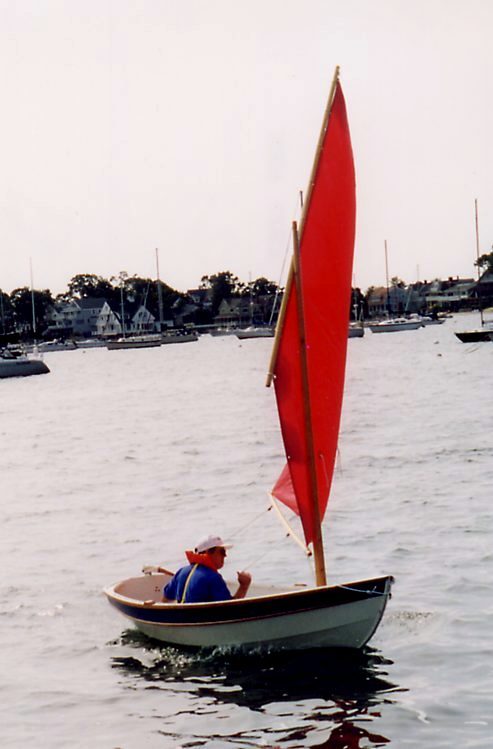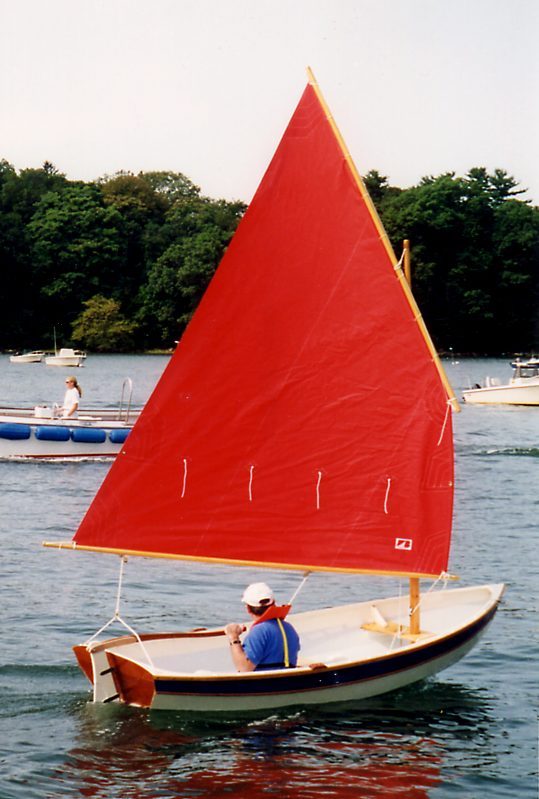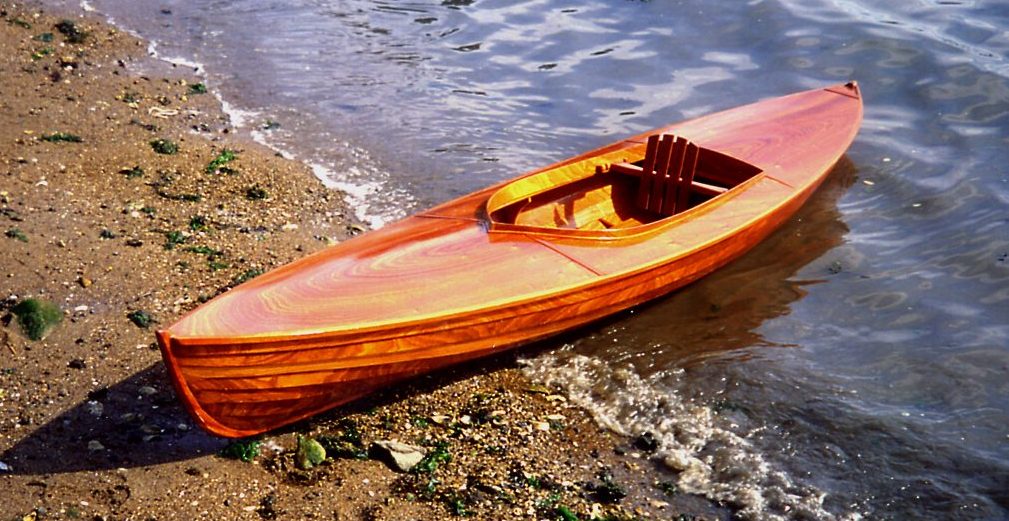
But if I can build one, anyone can, and I think it�s actually a very forgiving method for a beginner. First, all the pieces are small. When you totally screw up something (see above) you are only throwing away a small part, not a big one. Compare this to stitch-and-glue � mess up a side panel, and you are tossing out about half the boat. You can work at your own pace � I never hung more than one plank a night.
And the greatest blessing science has bestowed on us since distilling and the battery-powered drill is the �gap-filling� properties of the amateur boat-builders greatest friend � epoxy. These boats aren�t going to leak, and if they do, dribble some more epoxy into the plank lands. A small amount of goop makes glued lap boats light and tough, compared to the gallons of epoxy you�ll use with stitch-and-glue or the many years you�ll spend in the company of Greg Rossel at WoodenBoat School before you can actually produce a single carvel plank for a stick-built boat.
Finally, you get a boat that looks like a boat, with beautiful curves and wonderful shadow-lines coming off the planking. And its real wood (well, kinda) that you can paint and varnish without a chemistry book.
If a canoe or daysailer scares you, try a Nutshell pram or a Shellback. I was a total rookie when I built mine, but it came out fine. Ian Oughtred�s pram plans are beautifully drawn and his modified Shetland faerings (Whilly Boat, etc.) don�t look all that hard. There are some bigger designs from Joel White that probably don't require that much more work than my fussy little canoe. Andy then, of course, there are the designs of my mentor John Brooks for the exquisite dinghy Nancy and a couple pulling boats. I am really going off the deep end on this boatbuilding stuff to the point where I spend hours just looking at plans. John's are so detailed and so beautifully drawn that they approach fine art. The only problem is, John hasn't drawn enough of them (hint).
I wouldn�t use a kit unless your basic reason for building is that you want a boat more than you want a boatbuilding experience. You won�t learn nearly as much.