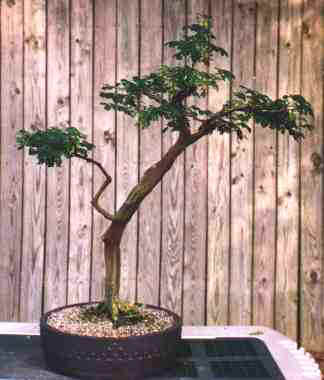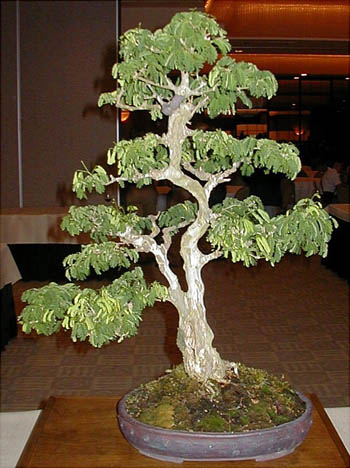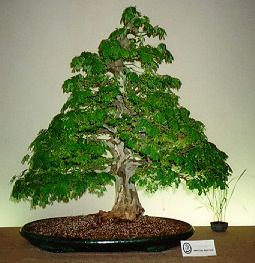
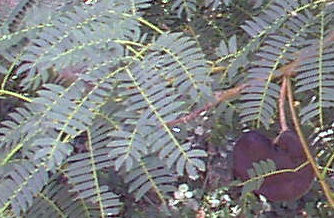
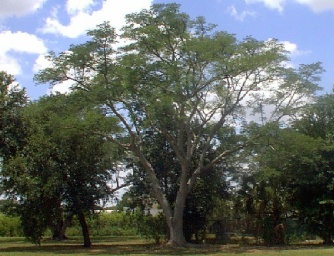
Few people realize that this magnificent Rain Forest tree can be raised inside in containers. Its name comes from the fact that when it rains, the fern like foliage closes up to let the rain pass through. Bears Beautiful glowing Pink Flowers followed by attractive Green and Black Pods that contain a sweet pulp that is eaten by monkeys in its jungle habitat. Very easy to raise from seeds. Amazingly, this also makes a wonderful Bonsai Plant.
Bonsai Resources for links to lots of bonsai sites!
Rainforest seed growing instructions
Please follow these instructions for optimum care of your seeds and seedlings.
Preparation
1. You should soak your rainforest seeds before you plant them.
2. Place the seeds in a small glass bowl and add fresh, lukewarm water.
3. Soak for 24 hours. If possible change the water after twelve hours. If seeds are large you should soak another 24 hours. The seeds should look like they are getting plump. (Some seeds have a hard outer casing that needs to be softened before planting. If it is very hard you can hasten the germination time by scraping the shell with sandpaper or a small nail file. This helps to open the pores. This is called scarification.)Planting
1. Use sterilized, clean potting soil from your local nursery. It should be loose and porous.
2. You can use your favorite pots or peat pots. Make sure they have been cleaned or sterilized.
3. Cover the seed to twice its size with the soil. (If you have a seed with wings, plant with the wing upwards. Flat seed should be planted on edge.)
4. The best germination occurs at constant temperatures of 70-80 degrees. (The top of the refrigerator usually generates enough heat for this. Or you can use small propagators or a heat mat.)
5. When the seed sprouts, it can go to room temperature and full light.
6. Cover the seedlings with clear bags or plastic wrap to retain moisture.
7. Be patient. Germination could take from 10-40 days. (Palms take longer.) The wait is rewarding and worth it.Watering
1. Be gentle and avoid washing out the soil.
2. Don’t let the soil completely dry out and be careful not to let the soil become soggy or the seeds could rot.
Light
1. After the seedlings appear, they should be slowly introduced to full light, whether it be grow lights, florescent, or a sunny window. They need at least 8 hours of light per day.
Fertilizing
1. Feed once a month with a diluted solution of fertilizer. You can use organic solutions, such as sea kelp, or a water soluble, diluted commercial fertilizer. (Such as Peter’s) Use these ratios:
- Leafy plants -15-15-15
- Flowering plants -15-30-15
- Fruiting 15-15-302. When plant is dormant (not growing rapidly) hold off on the fertilizer.
Transplanting
When seedlings get their second set of true leaves, you can plant to a larger pot of 4" or so. Transplant as necessary as plant grows. Remember that the growth of tropical plants can be controlled by the size of the container they are in.