About the Video Game Series:
All of the licensed Pok�mon properties overseen by the Pok�mon Company are divided roughly by generation. There have been three generations, defined by the Pok�mon which appear therein, with a fourth in development. Each of these generations has been first introduced in a pair of Pok�mon video games for the Game Boy or its successors (including the Nintendo DS), beginning (in most countries) with Pok�mon Red and Blue. Each generation introduces a slew of new Pok�mon and a handful of new general concepts.
These generations are roughly chronological divisions by release; a handful of Pok�mon from a subsequent generation appear in the anime, manga, or trading card game before the main Game Boy games which demarcate the generation are released, but the anime, manga, and even (of late) the card game divides itself into sagas or generations by the same scheme as the games.
Some of the general concepts were introduced elsewhere, before being introduced in the games. Two-on-two battles appeared in the anime long before appearing in the games, and Pok�mon Abilities are similar to Pok�mon Powers, introduced long before in the Pok�mon Trading Card Game.
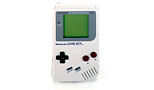
First (�Game Boy�) generation
This first generation started with Pok�mon Red and Blue. The first generation introduced the original 151 Pok�mon, as well as the basic concepts of trading and battling Pok�mon. In Japan, the first generation included Pok�mon Red, Green, and later Blue (with changes to the artwork and dungeon layout), while other regions started with Red and Blue (both featuring the updated elements), but never got a Green. This generation was completed by the game Pok�mon Yellow: Special Pikachu Edition, loosely based upon the anime, in which the player started with a Pikachu who refused to go into its Pok� Ball.
These versions of the games revolved around the Kanto region. This generation also introduced the idea of a rival trainer whom the player faced a number of times, as well as a team of evil Pok�mon trainers; however, Pok�mon Red and Blue focus on the entire mostly-faceless organization of Team Rocket (the Team Rocket trainers from the anime, Jessie, James, and Meowth, appear only in Pok�mon Yellow).
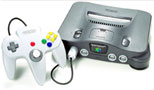
These games were compatible with the N64 game Pok�mon Stadium and its sequel, Pok�mon Stadium 2. Remakes of the first two games, called Pok�mon FireRed and Pok�mon LeafGreen, were released in the third �Advance� generation.
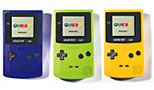
Second (�GBC�) generation
Beginning with Pok�mon Gold and Silver, this second generation introduced the next one hundred Pok�mon and the new region of Johto. Innovations included use of the Game Boy Color�s IR port for recieving a �Mystery Gift� item, a day and night system (see below), and the concept of plants which actively grew and bore Berries (items with special healing properties) and Apricorns (for creating custom Pok� Balls (items used to capture and store Pok�mon). In these games, the protagonist could also customise his bedroom and breed Pok�mon. Breeding is the only way to obtain baby Pok�mon (a new class of Pok�mon). Also, two new types of Pok�mon, the Steel and Dark types were introduced. Even the Pok�mon themselves had some different properties, most notably being assigned genders. Previously, the only Pok�mon to be specifically gendered was Nidoran, which has unusually high level of dimorphism.
The games also featured a new tool, the Pok�gear, a device which served as a mobile phone, a radio and a watch. The mobile phone function was used to communicate with in-game NPCs for conversation or a potential battle. The radio station chosen would influence the rate at which wild Pok�mon could be found. There was also one station announcing which Pok�mon could be found and where. The watch included the time and day of the week and the option to change from Summer Time to Mean Time (and visa versa). Knowing the time was important because different Pok�mon appeared or evolved at different times of day, and some events revolved around the time and the day of the week. The sun would shine from 6 a.m. until 6 p.m., and the rest of the time it would be night.
This generation of the games was completed by Pok�mon Crystal, which was most notably the only GBC-exclusive Pok�mon RPG and the first which allowed the player to choose the protagonist�s sex. It was also the first to feature Pok�mon who would do a battle dance when encountered and on-screen text to announce when the protagonist entered a new location. Crystal version also featured a slight alteration of the encounter with the three Legendary Pok�mon, in which the player would eventually encounter Suicune and be able to catch it. However, the other two still had to be found in the normal way.
These games were compatible with Pok�mon Stadium 2.
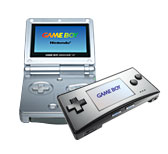
Third (�Advance(d)�) generation
Starting over by hearkening back to Red and Blue, Pok�mon Ruby and Sapphire added another 135 Pok�mon from the Hoenn region, as well as Pok�mon natures (25 distinct Pok�mon personality types), Pok�mon Abilities (always-on special innate abilities), Pok�blocks and Pok�mon Contests , and two-on-two Pok�mon battles. However, this generation saw the loss of the overt night and day system and the calender, although the time mechanic did exist to the extent that a clock appeared and that certain Pok�mon would only evolve into certain Pok�mon at specific times of the day or night. These versions also introduced the ability to grow berries in certain places, each which had set lengths of time for their flowering, and the ability to make �Secret Bases� in trees or caves in which dolls, tables, chairs, plants, and other objects could be placed.
The third game in this series was Pok�mon Emerald, which updated the Pok�NAV�s Trainers Eyes feature for a return to the mobile phone system of the previous generation (but modified, allowing players to contact Pok�mon Gym Leaders for rematches, but no longer allowing them to remove NPC trainers). Emerald version also saw a return of the Pok�mon battle dance when encountering an enemy Pok�mon. These 3 versions all appeared on the Game Boy Advance. The Emerald version also shipped with the GBA wireless adapter for wireless battles.
This generation was rounded out on handhelds by Pok�mon FireRed and LeafGreen for the GBA, enhanced remakes of the first two Pok�mon games, including a playable female character (based on concept art for a playable female the original designers considered but were unable to implement), new items and regions, move tutors, and all the features of the 2nd and 3rd generations, excluding the day/night system and (except in Japan) e-reader compatibility.
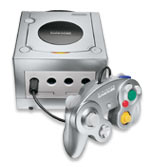
All five GBA games are compatible with the storage program Pok�mon Box: Ruby & Sapphire for Nintendo GameCube, and also with Pok�mon Colosseum and Pok�mon XD: Gale of Darkness. The first Pok�mon RPGs for home consoles, these titles introduced the desert country of Orre, as well as corrupted shadow Pok�mon, and �Snag�ging, the ability to steal/rescue them from their trainers and eventually �purify� them.
Unlike games in the second generation, third-generation games cannot trade with previous games in the series, due to hardware limitations. This initially resulted in many Pok�mon becoming unavailable, a situation rectified by the release of Pok�mon Colosseum, Pok�mon FireRed and Leaf Green, and Pok�mon Emerald. Pok�mon such as Celebi and Mew, only obtained from Nintendo directly, had to be handed out again as well.
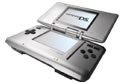
Fourth generation
Slated to be introduced in Pok�mon Ranger: the Road to Diamond and Pearl for the Nintendo DS. A handful of new Pok�mon from this generation have made cameo appearances in the seventh and eighth Pok�mon movies (Pok�mon: Destiny Deoxys and Lucario and the Mystery of Mew, respectively), as well as Pok�mon XD and Pok�mon Mysterious Dungeon Blue & Red. Recently, four additional new Pok�mon (which will make appearances in the ninth movie, Pok�mon Ranger and the Prince of the Sea: Manaphy) have been revealed by CoroCoro magazine and the Official Movie Website. In addition, the anime has featured the capture of three out of the nine currently known fourth generation Pok�mon. The known fourth generation Pok�mon are:
Munchlax (pre-evolution of Snorlax)
Bonsly (pre-evolution of Sudowoodo)
Lucario
Manyula (evolution of Sneasel)
Manene (pre-evolution of Mr. Mime)
Manaphy
Perappu
Buizeru
Tamanta (pre-evolution of Mantine)
Summary
First Generation Games
The following games are considered to be the "first generation" of games, named as such because they are associated with the first series of Pok�mon games. Other equivalent terms that are used are chromatic generation, color generation, or monochrome era.
Pok�mon Blue for the Nintendo Game Boy
Pok�mon Red for the Nintendo Game Boy
Pok�mon Stadium for the Nintendo 64
Pok�mon Yellow for the Nintendo Game Boy
Pok�mon Green for the Nintendo Game Boy (Japan only)
Second Generation Games
The following games are considered to be the "second generation" of games, named as such because they are associated with the second series of games. Other terms used include metallic generation, metal generation, or color era.
Pok�mon Crystal for the Nintendo Game Boy Color
Pok�mon Gold for the Nintendo Game Boy Color
Pok�mon Silver for the Nintendo Game Boy Color
Pok�mon Stadium 2 for the Nintendo 64
Third Generation Games
The following games are considered to be the "third generation" of games, named as such because they are associated with the third series of games. Other equivalent terms that are used are gem generation, advance generation, or advanced era.
Pok�mon Ruby for the Nintendo Game Boy Advance
Pok�mon Sapphire for the Nintendo Game Boy Advance
Pok�mon Colosseum for the Nintendo GameCube
Pok�mon Box: Ruby and Sapphire for the Nintendo GameCube
Pok�mon FireRed for the Nintendo Game Boy Advance
Pok�mon LeafGreen for the Nintendo Game Boy Advance
Pok�mon Emerald for the Nintendo Game Boy Advance
Pok�mon XD: Gale of Darkness for the Nintendo GameCube
Pokemon Mysterious Dungeon: Blue Ranger for the Nintendo DS (Japan Only)
Pokemon Mysterious Dungeon: Red Ranger for the Nintendo Game Boy Advance (Japan Only)
Miscellaneous Games
Hey You, Pikachu! for the Nintendo 64
Pok�mon Channel for the Nintendo GameCube
Pok�mon Dash for the Nintendo DS
Pok�mon Pinball for the Nintendo Game Boy
Pok�mon Pinball: Ruby and Sapphire for the Nintendo Game Boy Advance
Pok�mon Puzzle Challenge for the Nintendo Game Boy Color
Pok�mon Puzzle League for the Nintendo 64
Pok�mon Snap for the Nintendo 64
Pok�mon Trading Card Game for the Nintendo Game Boy
Pok�mon Trading Card Game 2 for the Nintendo Game Boy (Japan Only) |