
|
|
|
Agent J(esus)?!
Agatha Guidaben What could have been Rizal's greatest work doesn't even have a title. In this offbeat novel, agitated heavenly personages send Jesus and Saint Peter back to Earth on an undercover mission: to investigate the perversion of religion in the Philippines. The manuscript is originally written in two notebooks and is approximately 40 pages long. Rizal was probably too busy lampooning religious affairs and laughing at the genius of his satires-- he forgot to write the title. Thus, in a contemporary English translation, scholar-author Juan Collas offered one as plain as "Friars and Filipinos." 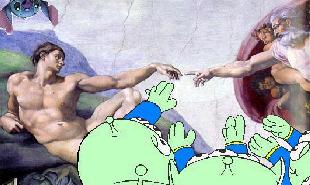 upstaged The unimaginative substitute title starkly contrasts with the intriguing concepts presented in the story, where God is depicted as a Creator unwittingly upstaged by his Creation. In the opening paragraph alone, we learn that we are not alone in the universe! At a time when mankind's religious practices border on idolatry, God turns away and devotes his time on other planets instead. These other planets' style of worship, "with a pure and simple cult," is more to His liking than the overzealous frivolity on earth. But of course, He cannot completely ignore earth. He casts a glance at it every once in a while. In a conversation with the angel Gabriel, God learns of how Spain governed and acquired lands (i.e., the Philippines) in His name. He is taken aback at the thought that people claim His creation as theirs. 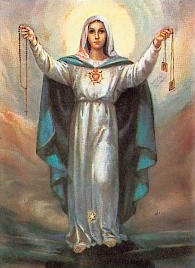 God is later joined by Andrew, Confucius, Augustine, Dominic, Peter, the Virgin Mary, and Jesus. All share the same sentiment: the essence of Christianity is lost. In the Philippines, more so, where people have forgotten love and charity and instead wallowed in tyranny and oppression. God is later joined by Andrew, Confucius, Augustine, Dominic, Peter, the Virgin Mary, and Jesus. All share the same sentiment: the essence of Christianity is lost. In the Philippines, more so, where people have forgotten love and charity and instead wallowed in tyranny and oppression.
None of them knew for certain what caused this misconstruction of religion. To clarify the issue, God and company interrogate a friar and a devout woman, who are both in heaven. Neither helps, so God decides to send Jesus and Peter to investigate for themselves. Jesus and Peter oblige, but not without having to disguise themselves first: the former as a Filipino, and the latter as Chinese. The 'agents' encounter misadventures. Hessel sums it up in the following paragraph: "Both Jesus and Peter had considerable trouble in entering the Philippines because of elaborate government regulations, bribes required, the fact that Peter was disguised as a Chinaman, etc. When discovered on Jesus' person the notebook containing his observation, he was called a "Filibuster" by the custom's agent and whisked off to jail. Peter, taking advantage of the confusion, flees." The story ends there. Well, it's not supposed to, but Rizal probably got busy already and he never got around to writing the rest of it. Darn-- Bitin! |
Rizal's two unfinished manuscripts ("State of Religiosity in the Philippines" and an untitled novel) reflect the national hero's belief that substance precedes the form, not the other way around. God is depicted as a Creator unwittingly upstaged by his Creation... In the opening paragraph alone, we learn that we are not alone in the universe! |
|
All rights reserved. ©2002 University of the Philippines, Diliman Submitted to Prof. Monico M. Atienza In partial fulfillment of the requirements for PI 100 Last updated October 17, 2002 |