"Witton Roost" (page one)
"Witton Roost" (page one)
This and the following page show you the internal and external construction of our giant bat roost, which takes up much of our roof space. Images on this page are outside shots, page two contains some inside photos and diagrams showing the construction.
images with a blue border or which change your mouse pointer when you hover the mouse over them are clickable to take you to a larger version of the image.
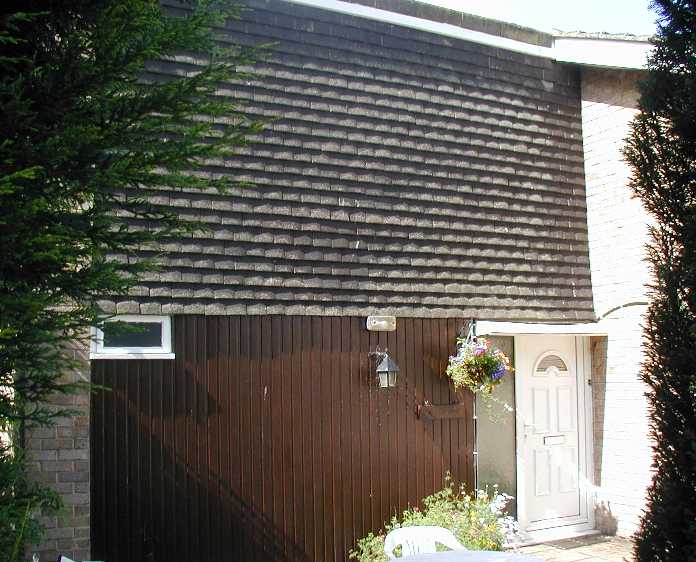
The Roost from outside, showing the front door. The entrance/exit is situated directly above the front door, in the corner where the pan tiles meet the brickwork and roof.
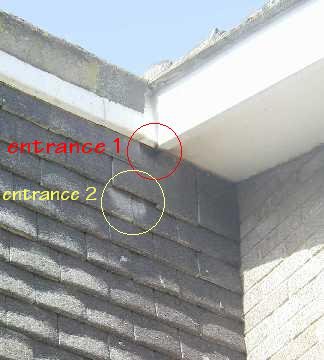
Close-up of the roost entrances, you can see the topmost (main) entrance, is a dark hole where a tile is missing, and you can probably see the dark "grease mark" above and around it, the secondary entrance is just below it at a loose tile, and is surrounded by a whitish grease mark - this is a typical sign of a roost in your house - we watch them use these entrances on an evening, the main part of the roost is behind ALL the pan tiles - that is one BIG bat box!
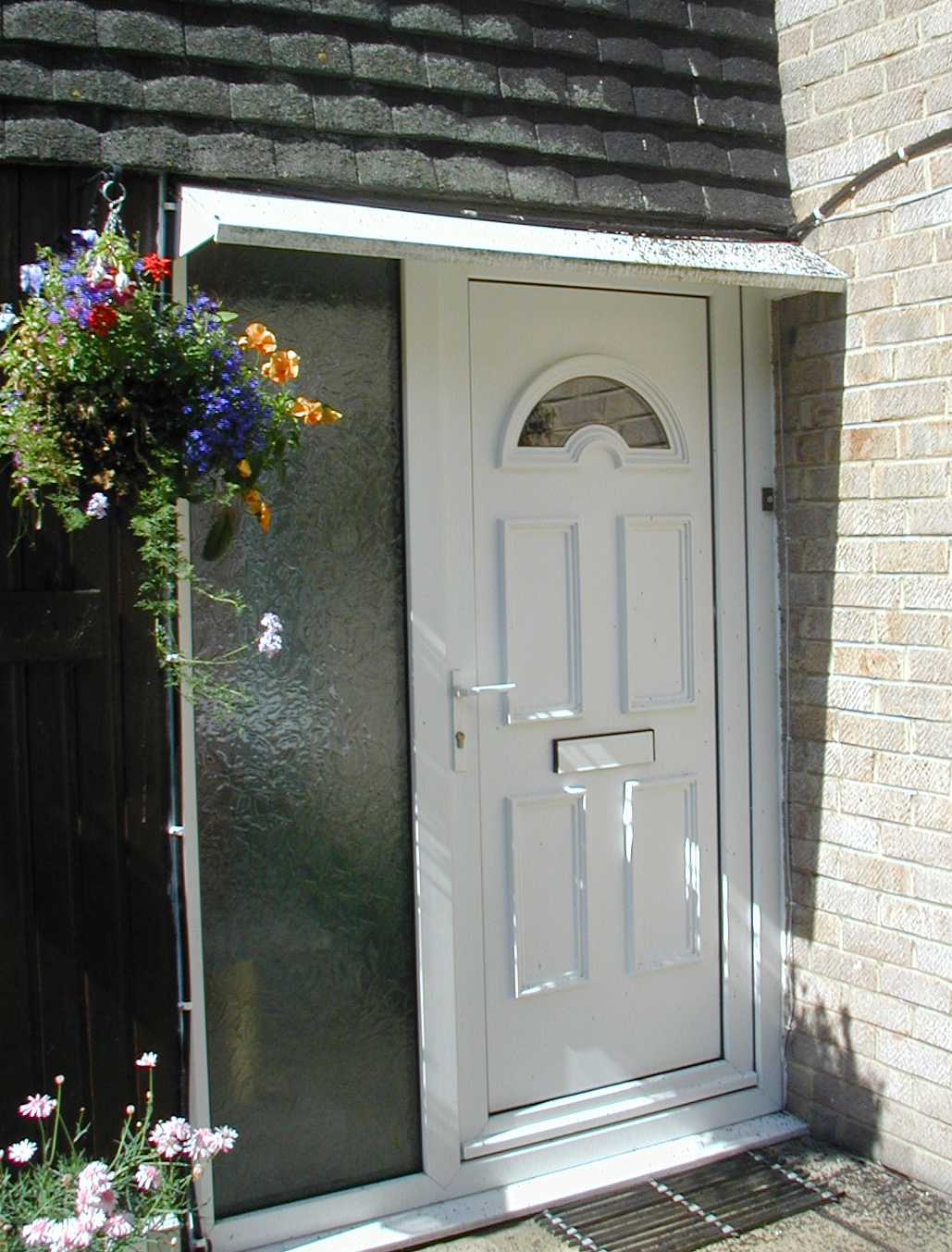
To stop the bat droppings from sticking to the front door we affixed a UPVC overhang to deflect the bulk of the droppings, we then sweep them up and use them as fertilizer on the garden.
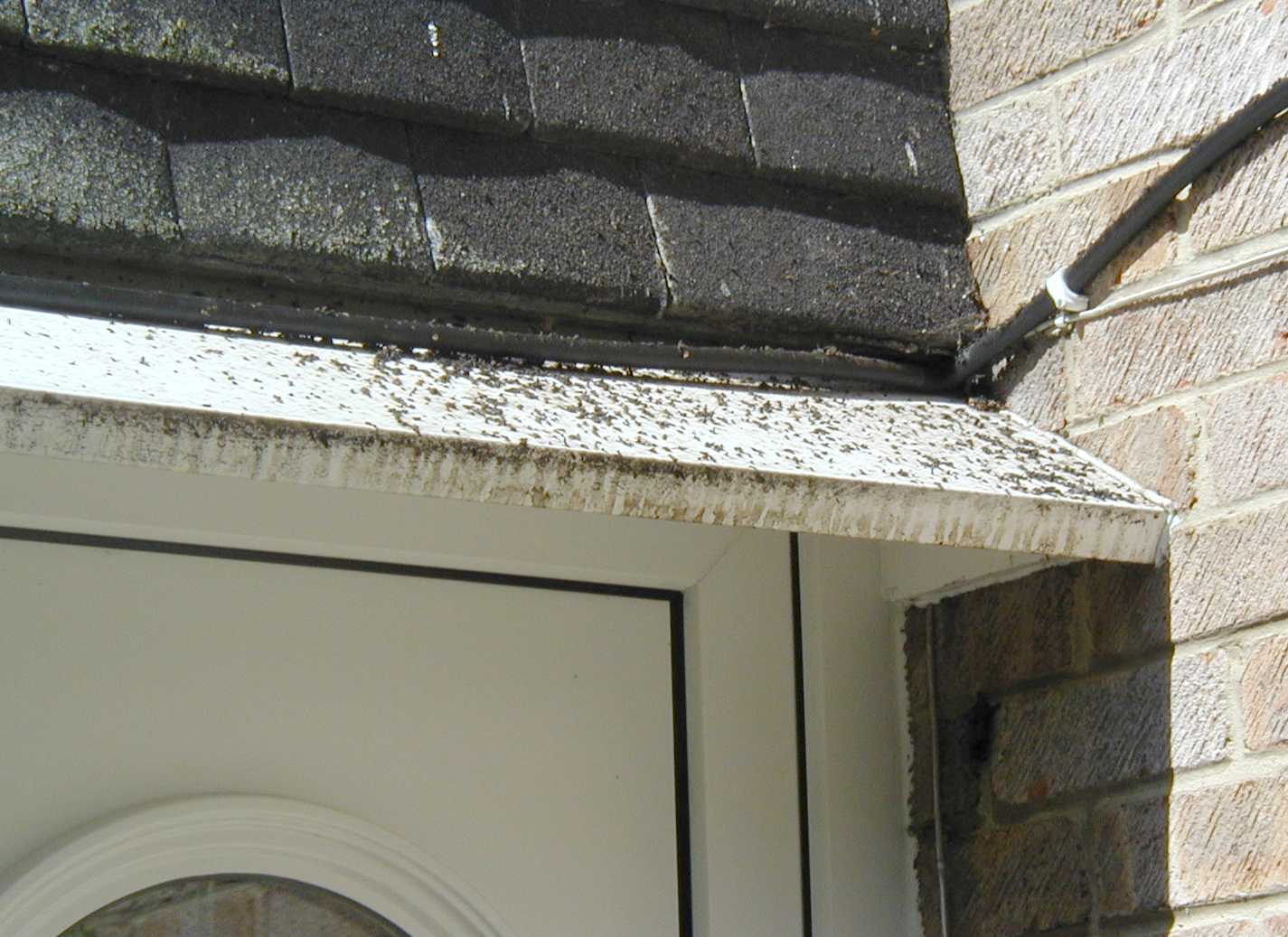
close-up of the "guano shield".
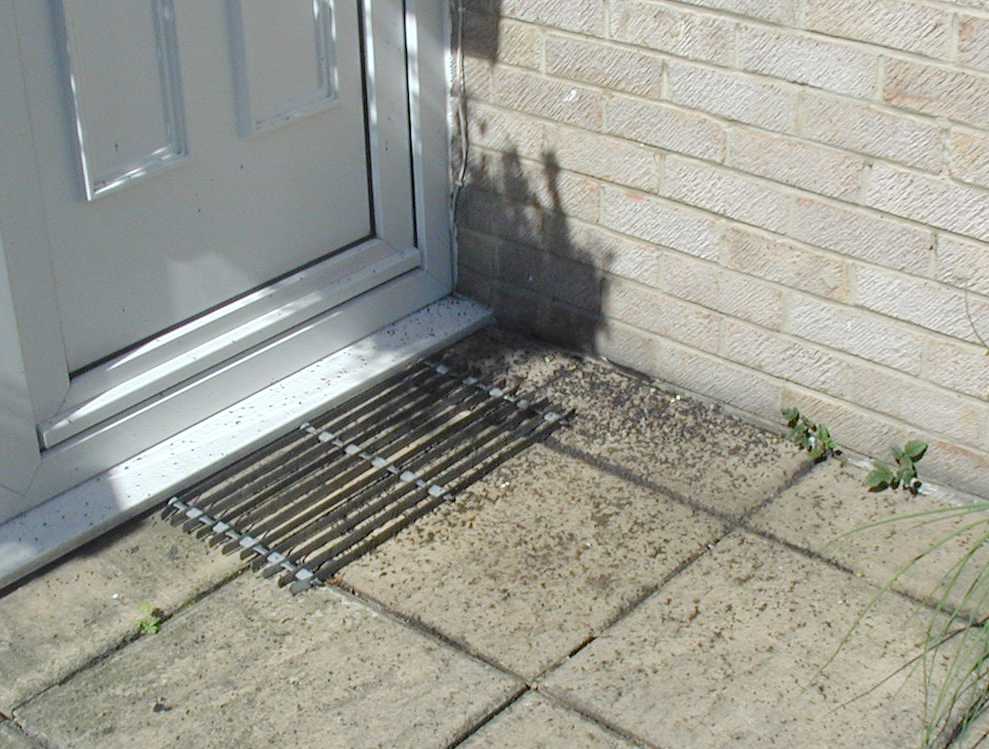
well, yes I suppose they *do* make a *bit* of a mess, in winter you hardly notice it though, only sweeping up once every two weeks or so, but in summer when it is a maternity roost and we get the most bat activity we do have to sweep up every other day.
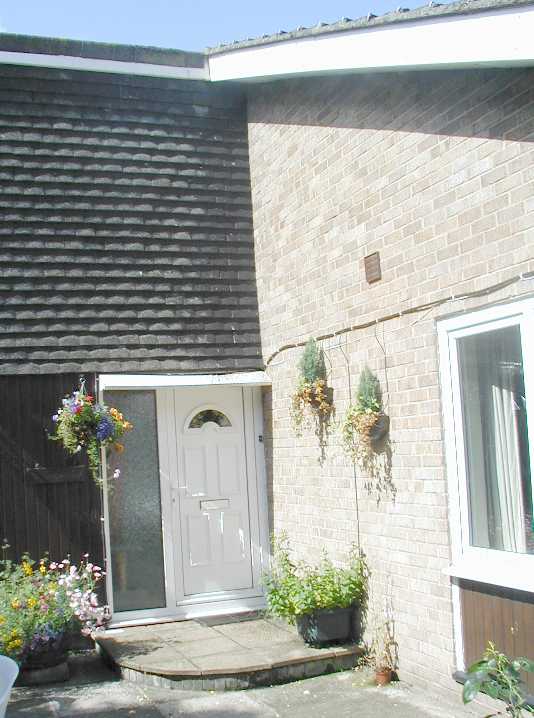
Another view of the main roost. The WHOLE wall of pan-tiles is sealed off behind (in the loft) to give about 4 inches/100 centimetres wide continuous bat-space between the tiles and the loft - this space has lagging and roof frame for the bats to hang onto.
You can probably also see where the half roof turns into full (two sided) roof for the rest of the house - the bats also use the apex of the roof as a crawl space and even live under the roof tiles either side of the apex. The apex crawl-space leads them to another enclosed, though smaller, pan-tiled area at the other end of the house at right angles to the first pan tile roost.
In total the bats have the choice of north, east, west or south-facing roosts according to their temperature needs. All roost spaces are easily accesible from within the house, making it an ideal prospect for monitoring programmes, so if anybody is reading this with a view to research, then we would welcome them to contact us and we are happy to help, although ANY activity that involves disturbing the bats in ANY way will need to be approved/carried out by a representative of Durham Bat Group or a regional Wildlife officer, in full accordance with UK Wildlife protection laws.
In particular I feel our roosts are not only an excellent example of how to adapt your house to provide bat accomodation, but would also offer an excellent location for filming (even webcam filming) outside and within the roost as it would be easy to insert a low-light camera into the roost from behind, within the loft area, to see and monitor the bats within. It is not something we have done yet though, as it would require approval from the regional wildlife officer.
I am happy to provide diagrams on the internal construction of the bat roost, they are either available on page two or I can email or snail mail the images to you, just email: [email protected] If you live in the North East of England then I'd reccomend Pinkney Building Contractors who carried out the work on our house under guidance of Durham Bat Group.
BACK to the Witton Bats homepage.