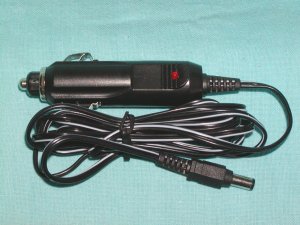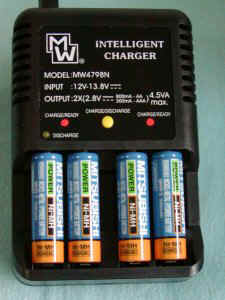
The Compact Intelligent Charger (CIC) is basically a scaled down version of the Intelligent Charger reviewed elsewhere on this site. Unlike the Intelligent Charger, it can only support up to a maximum of 4 AA/AAA sized batteries. Its specifications are as follows:
| Input: | 12V DC 800mA. 110V/120V or 230V/240 separate AC/DC adaptor |
| Charge Current: | 800mA PWM Constant Pulse Current for AA sized batteries. 300mA PWM Constant Pulse Current for AAA sized batteries |
| Boost Charge Current: | 1/2
Constant
Pulse
Current. |
| Trickle Charge Current: | 1/10
Constant
Pulse
Current. |
| Discharge Current: | 300mA |
| Detection: | +dV
and
-dV. |
| Type of Batteries: | Nickel Cadmium (Ni-Cd) and Nickel Metal Hydride (Ni-Mh) AAA and AA. |
There are two modes of operation, charge and discharge. The yellow button located in the center toggles between the two modes. The CIC has two separate charging circuitries, each with its own LED status indicator. Like its bigger brother, the Intelligent Charger, it is also a microprocessor equipped smart charger that constantly monitors the capacities of the batteries. This will ensure optimum charge without the risks of damaging the batteries through overcharging.
Charge Mode
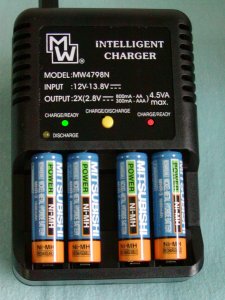 The
CIC can
charge 2/4
batteries
at any one
time. For
partially
discharged
and fully
discharged
batteries,
the CIC
will begin
charging
using the
ultra-fast
charge
mode. This
is
indicated
by the red
LED for
the
respective
charging
circuitry.
Once the
batteries
are fully
charged,
it will
automatically
switch
over to a
trickle
charge
mode and
the LED
turns
green.
When the
indicator
turns
green, the
batteries
can be
taken out for use or
they can
be left in
the
compartment
without
damage. A
small
trickle
charge
current
will be
used to
keep the
batteries
charged at optimum
capacities.
The CIC
will not
boost
charge
batteries
which are
already
full
charged,
unlike
typical
time based
chargers.
The
CIC can
charge 2/4
batteries
at any one
time. For
partially
discharged
and fully
discharged
batteries,
the CIC
will begin
charging
using the
ultra-fast
charge
mode. This
is
indicated
by the red
LED for
the
respective
charging
circuitry.
Once the
batteries
are fully
charged,
it will
automatically
switch
over to a
trickle
charge
mode and
the LED
turns
green.
When the
indicator
turns
green, the
batteries
can be
taken out for use or
they can
be left in
the
compartment
without
damage. A
small
trickle
charge
current
will be
used to
keep the
batteries
charged at optimum
capacities.
The CIC
will not
boost
charge
batteries
which are
already
full
charged,
unlike
typical
time based
chargers.
Discharge Mode
The CIC can discharge 2 batteries at any one time, using a discharge current of 300mA. Only the first two compartments on the left can be used for discharging. Once the batteries are almost discharged, CIC automatically switches over the charge mode and initiates the charging process.
Performance
 Its
a mixed
bag of
results.
Compared
to the
Intelligent
Charger,
the CIC
offers
similar
performance
when
charging 2
AA sized
batteries.
It is
however,
slower
when it
comes down
to
charging
only 2 AAA
sized
batteries
as it uses
only 300mA
of
charging
current.
The true
potential
of the CIC
is
unleashed
when you
need to
charge 4
batteries simultaneously.
The CIC is
capable of
recharging
4
batteries
simultaneously
at maximum
charge
current!
This is
something
not even
the
Intelligent
Charger is
capable
of. 4
pieces of
Mitsubishi
1600mAh
Ni-Mhs,
drained
after some
photo takings
with my
Olympus
C-700UZ
digital
camera,
only
requires 2.5
hours
for a full
recharge.
This is
the fastest
charger
that I
have come
across for
charging 4
pieces of
AA sized
batteries.
You will
not get
such
performance
even with
the pricey
original
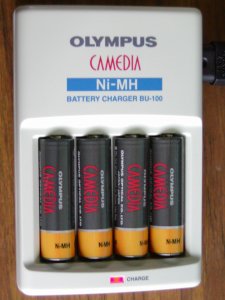
Olympus BU-100
charger
(which is
capable of
charging 4
pieces of
AA sized
batteries
in 3.5
hours,
very quick
by any
standards)
from
Japan.
This is
good news
for owners
of digital
cameras,
flash
units,
power
drives/winders,
etc. It
means a
whole lot
less down
time and
you no
longer
need to
purchase
additional
sets of
chargers.
Its
a mixed
bag of
results.
Compared
to the
Intelligent
Charger,
the CIC
offers
similar
performance
when
charging 2
AA sized
batteries.
It is
however,
slower
when it
comes down
to
charging
only 2 AAA
sized
batteries
as it uses
only 300mA
of
charging
current.
The true
potential
of the CIC
is
unleashed
when you
need to
charge 4
batteries simultaneously.
The CIC is
capable of
recharging
4
batteries
simultaneously
at maximum
charge
current!
This is
something
not even
the
Intelligent
Charger is
capable
of. 4
pieces of
Mitsubishi
1600mAh
Ni-Mhs,
drained
after some
photo takings
with my
Olympus
C-700UZ
digital
camera,
only
requires 2.5
hours
for a full
recharge.
This is
the fastest
charger
that I
have come
across for
charging 4
pieces of
AA sized
batteries.
You will
not get
such
performance
even with
the pricey
original
Olympus BU-100
charger
(which is
capable of
charging 4
pieces of
AA sized
batteries
in 3.5
hours,
very quick
by any
standards)
from
Japan.
This is
good news
for owners
of digital
cameras,
flash
units,
power
drives/winders,
etc. It
means a
whole lot
less down
time and
you no
longer
need to
purchase
additional
sets of
chargers.
Conclusion
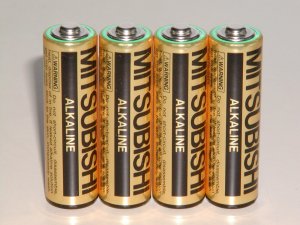 I
strongly
recommend
the CIC
and
rechargeable
batteries
for
photographers.
Just for
comparison's
sake, a
set of
disposable
Mitsubishi
alkalines lasted
only for about 13
shots (LCD
switched
on,
without
flash and
about
45mins of
PC
connection)
with my
Olympus
C-700UZ.
Using a
set of
Mitsubishi
1600mAh
Ni-Mhs, I
managed to
get about
65 shots (LCD
switched
on, 40 with
flash and
2.5 hours
of PC
connection).
The
difference
in
performance
is
significant,
not to
mention
the cost
savings! For
people on
the move
such as
professional
photographers,
journalists,
etc., get
the
optional
12V DC car
adaptor
kit and
you can
even
charge
your
batteries
in the
car. You
will
always be
ready
wherever
the action
takes you
to,
without
being
caught off guard
with dead
batteries
for your
equipment.
I
strongly
recommend
the CIC
and
rechargeable
batteries
for
photographers.
Just for
comparison's
sake, a
set of
disposable
Mitsubishi
alkalines lasted
only for about 13
shots (LCD
switched
on,
without
flash and
about
45mins of
PC
connection)
with my
Olympus
C-700UZ.
Using a
set of
Mitsubishi
1600mAh
Ni-Mhs, I
managed to
get about
65 shots (LCD
switched
on, 40 with
flash and
2.5 hours
of PC
connection).
The
difference
in
performance
is
significant,
not to
mention
the cost
savings! For
people on
the move
such as
professional
photographers,
journalists,
etc., get
the
optional
12V DC car
adaptor
kit and
you can
even
charge
your
batteries
in the
car. You
will
always be
ready
wherever
the action
takes you
to,
without
being
caught off guard
with dead
batteries
for your
equipment.