
The History Behind My Site.
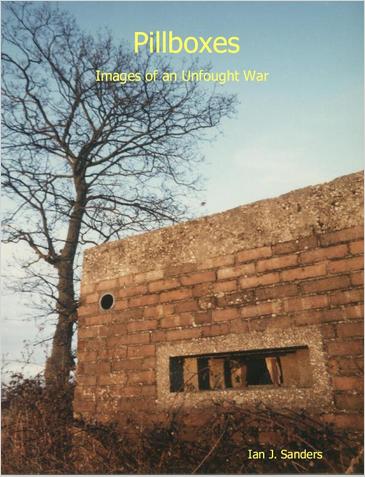 ** NEW BOOK ** Pillboxes - Images of an Unfought Battle ** NEW BOOK ** click here to see more 128 pages and 95+ images of the best of Pillboxesuk.co.uk.Click here to read more. |
I have always been interested in history, since I can remember. I had a least two relatives who served in the Great War, my grandfather
Acting 2nd Corporal James Hunt no 34902 of the Royal Engineers, originally 2nd Batt Ox & Bucks Light Infantry, MM, DCM. who survived. And my Great Uncle
Second Lieutenant Sydney Elphick Sanders 6th Bn. Queens Own (Royal West Kent Regiment) who didn't. KIA 30th Nov 1917.
My father also served with the 51st Highland Division in Normandy and the Rhine Crossing during the Second World War so military history runs in the family.
|
|---|
Nowadays, they are largely ignored and left to the elements and the vandals even though these structures should rank in British History alongside the Norman castles as reminders of what Winston Churchill called "Their Finest Hour".
If the Battle of Britain had turned out differently our fathers or grandfathers might have died in one defending the freedoms which many take for granted.
They were built in a hurry as part of the measures to resist an expected German invasion of Britain which was expected in 1940. Made by local construction companies to many different designs, they were often further modified to suit a particular site.
They were supported by further defences of barbed wire, trenches and other earthworks, however these defences are now largely without trace, leaving the pillbox as the sole reminder.
It is worth looking around if you come across one, because there are often more in the same area. They were sited to cover road junctions, river crossings and other important places. It was also usual to site them to give each other covering fire when they were in a group. Many were disguised in some way or built into other buildings like barns and bridges or even houses. Other defence remains are often nearby such as concrete
anti-tank obstacles .
The letters and 6 digit numbers next to the photos signify the Ordnance Survey Map Reference and maps and arial views are available of most locations.
If anyone has any pictures, or any information about the locations shown, aswell as new locations that they would like to send me, I will put them on the site with full credit given. You can email me at [email protected]
Many thanks to Jim Apps, Mick Ackrill, Phil Baggerley, Mark Brotherton, Tim Denton, Mark Dyson and Dave Pemberton amongst others who have already sent me photos.
Ian Sanders January 2003
|
|
|---|
All contents
copyright � 2001-2070, Ian Sanders; all rights reserved.
All photos taken by or from the collection of Ian Sanders,
except where specifically noted. Please respect my
property rights,
and do not copy these photos or reproduce them in any other way.
This site is intended
for historical research only, and no political
or philosophical aims should be assumed.
You can e-mail the author at [email protected]

